
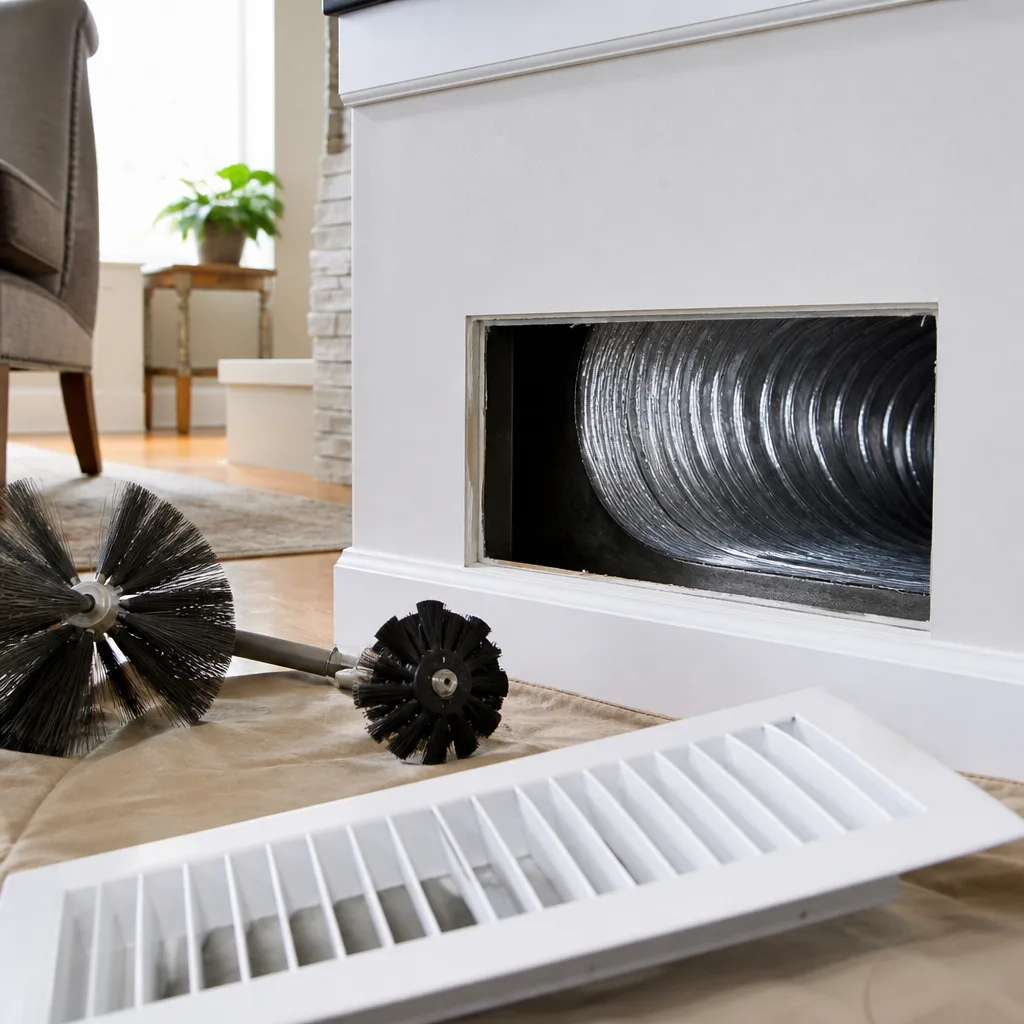
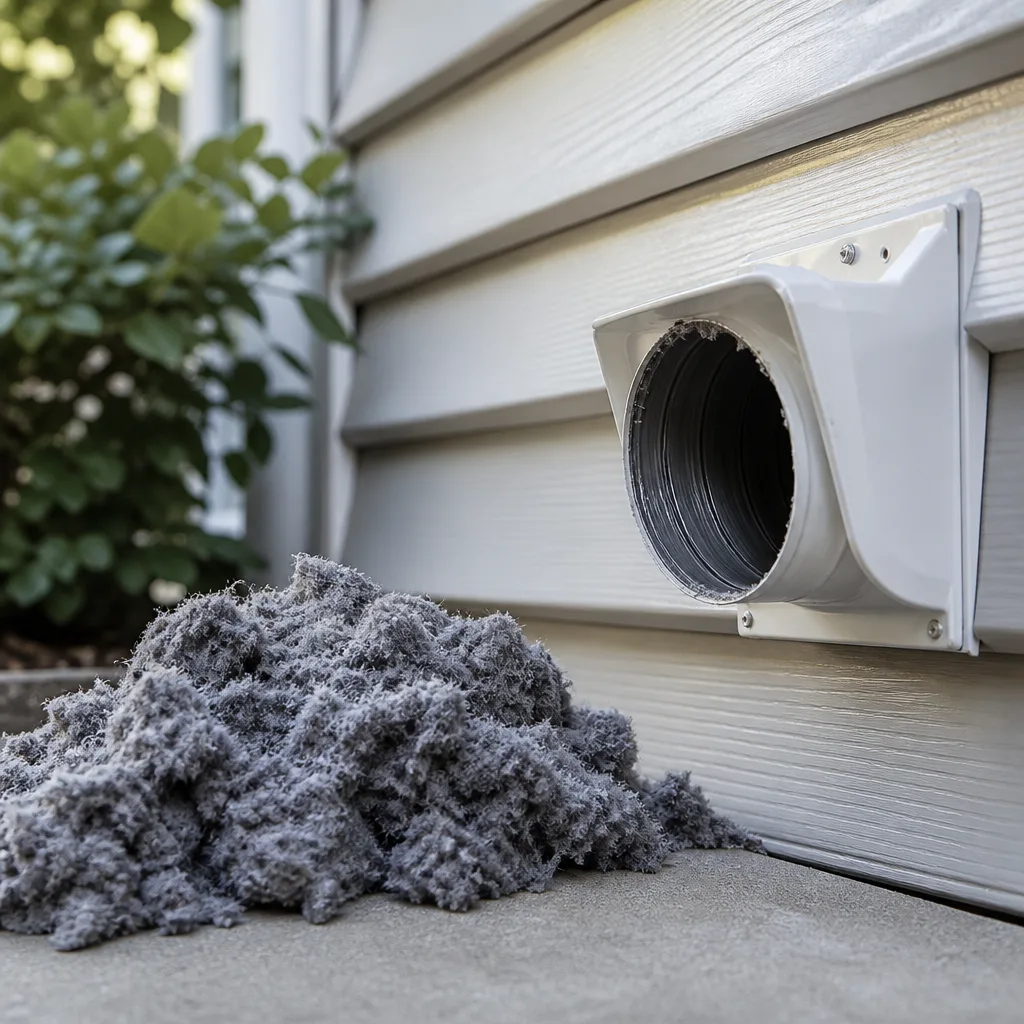
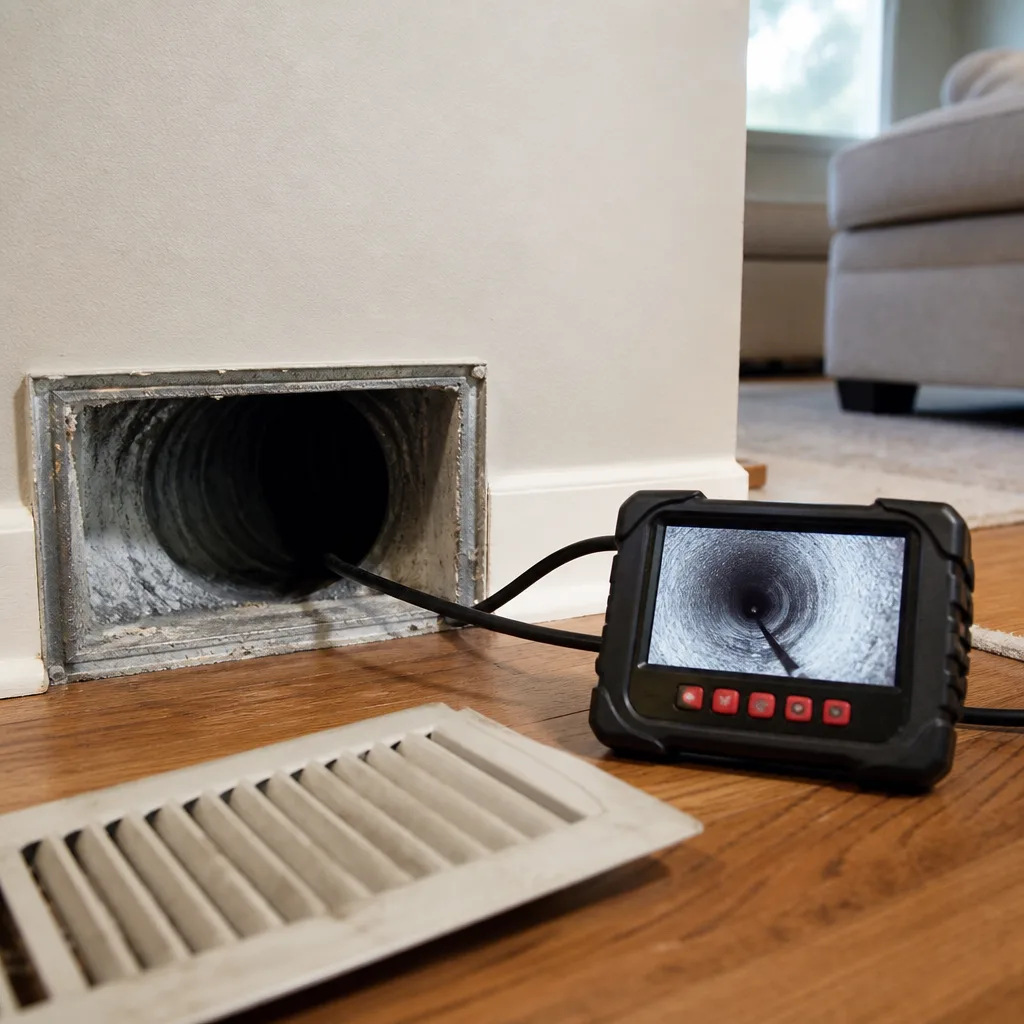
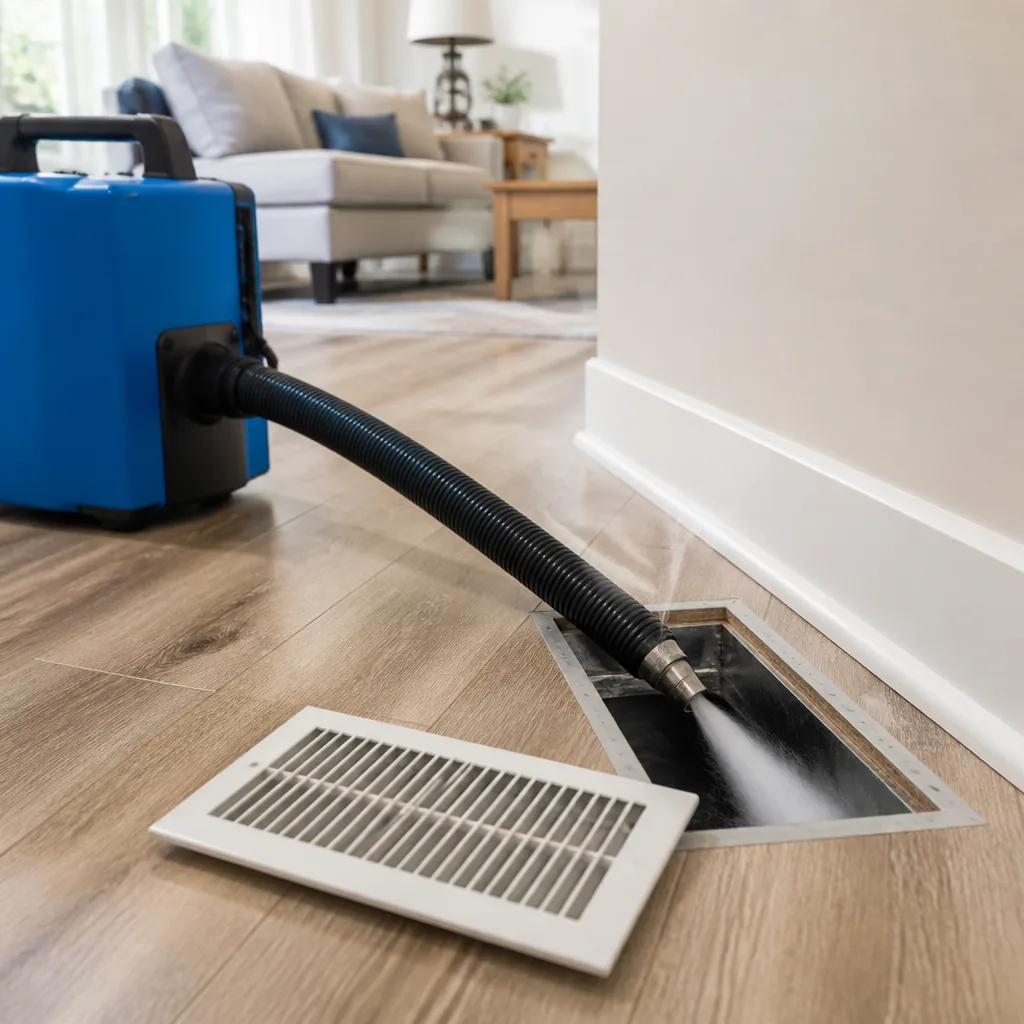
Whole-system duct and dryer vent check with before-and-after photos - you see exactly what came out of your vents
That "$99 whole-house special" is a bait ad - the real number appears once they are in your hallway, or the "clean" is a shop-vac at the register. We photograph the inside of your ducts before and after instead.
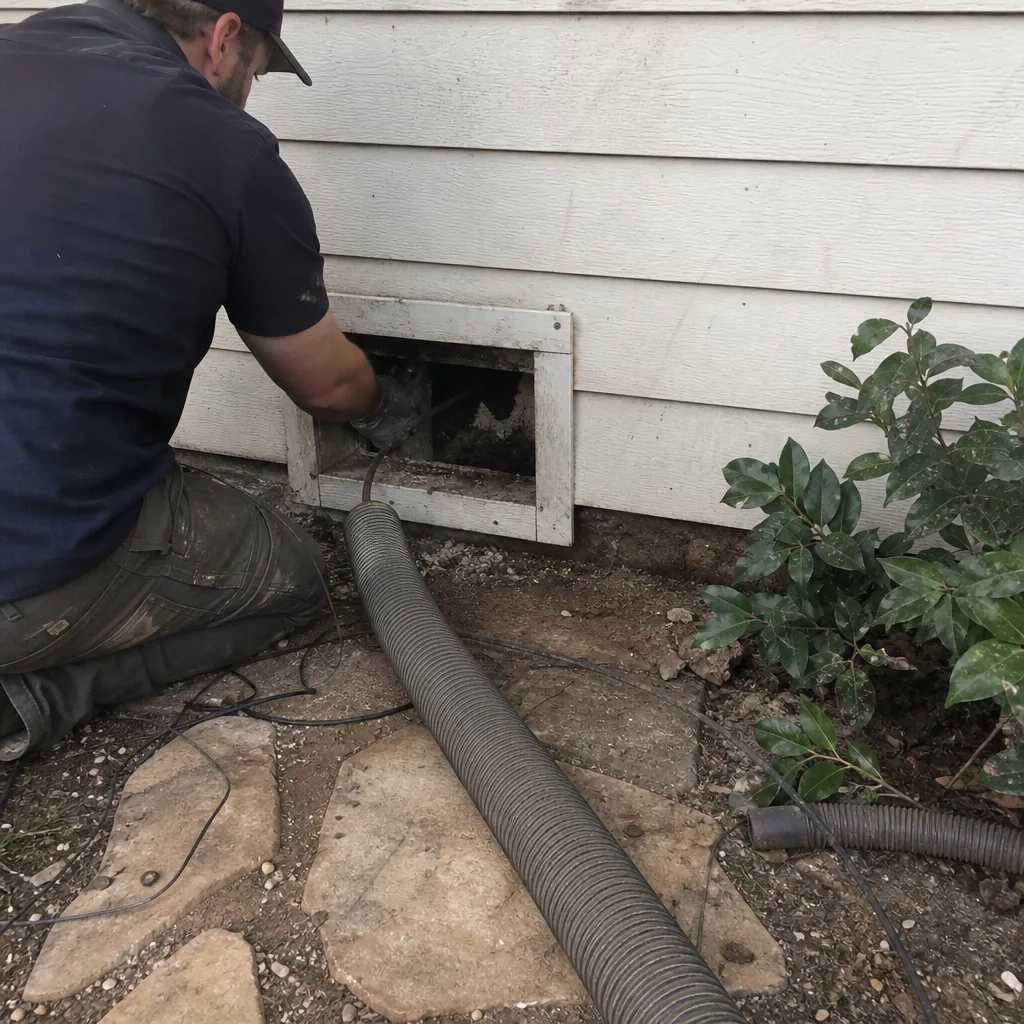 Before
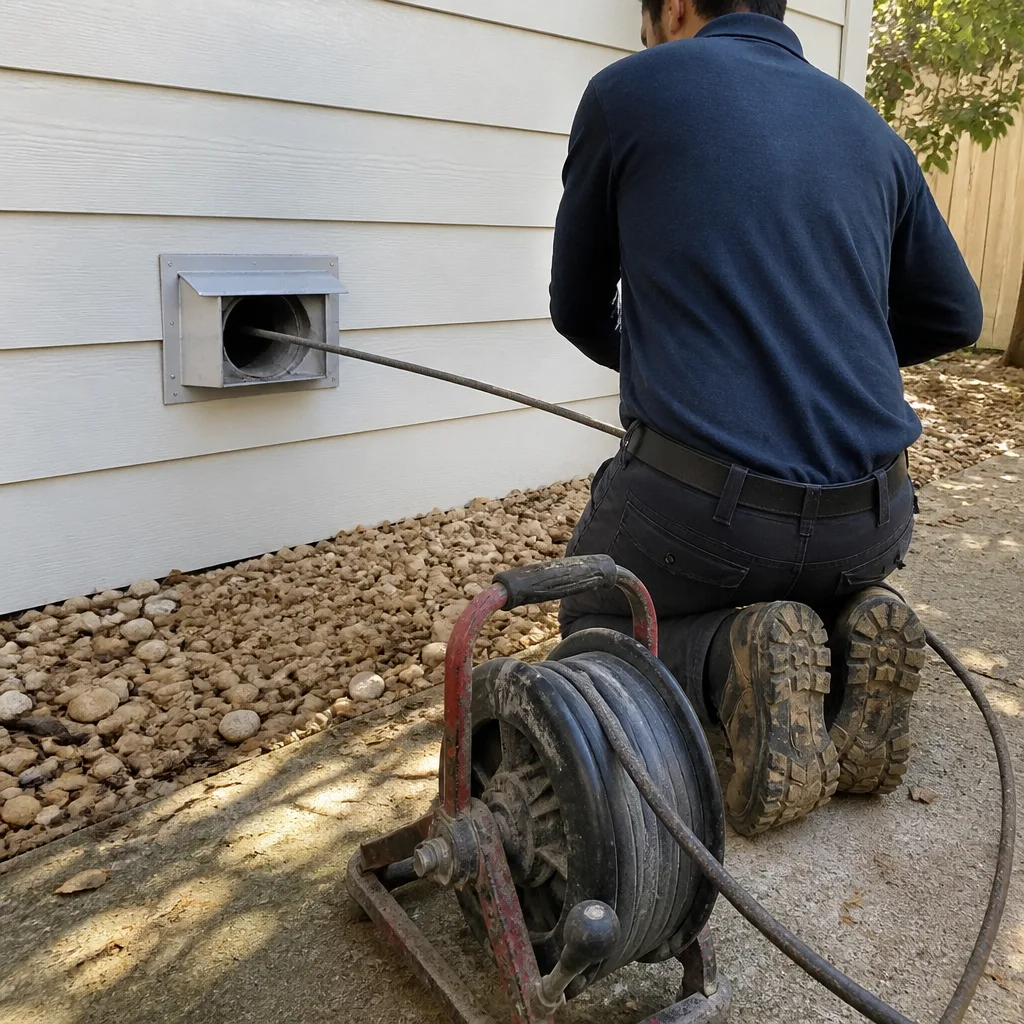 After
After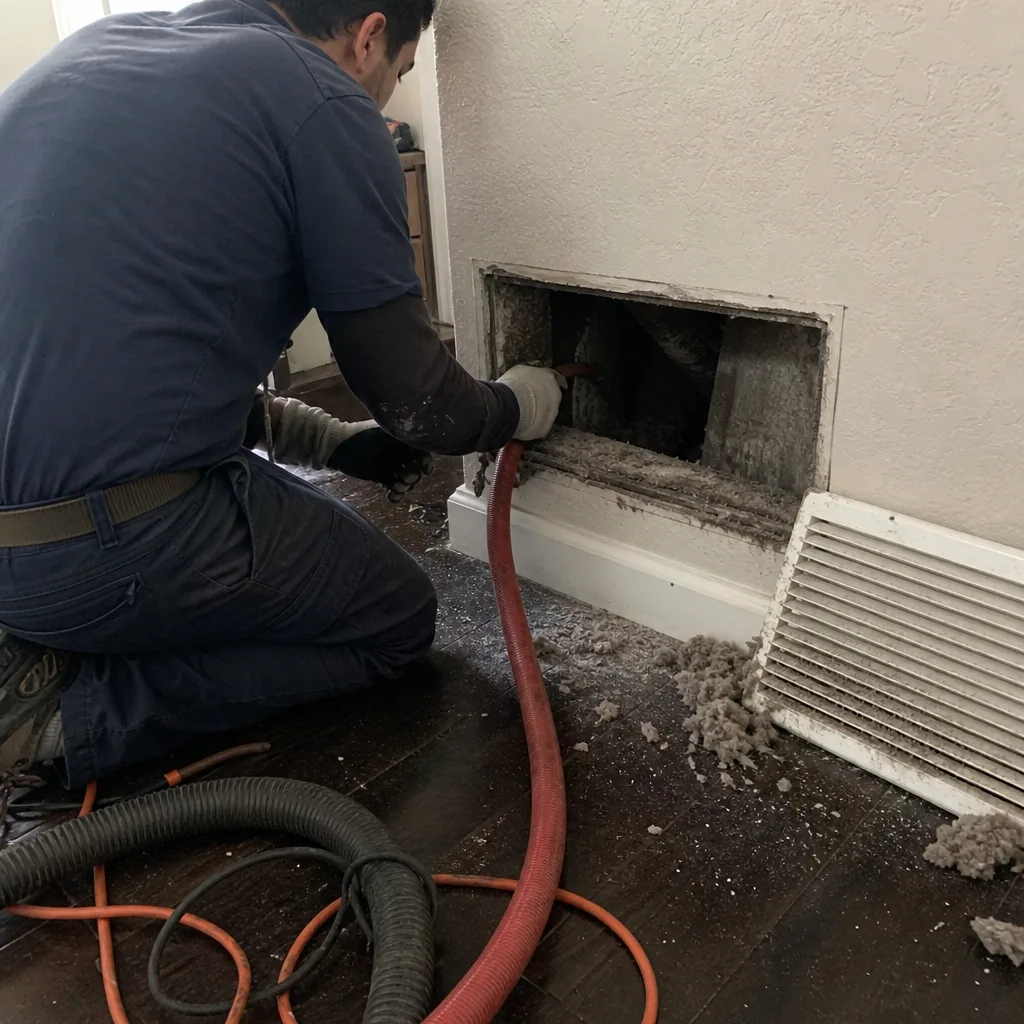 Before
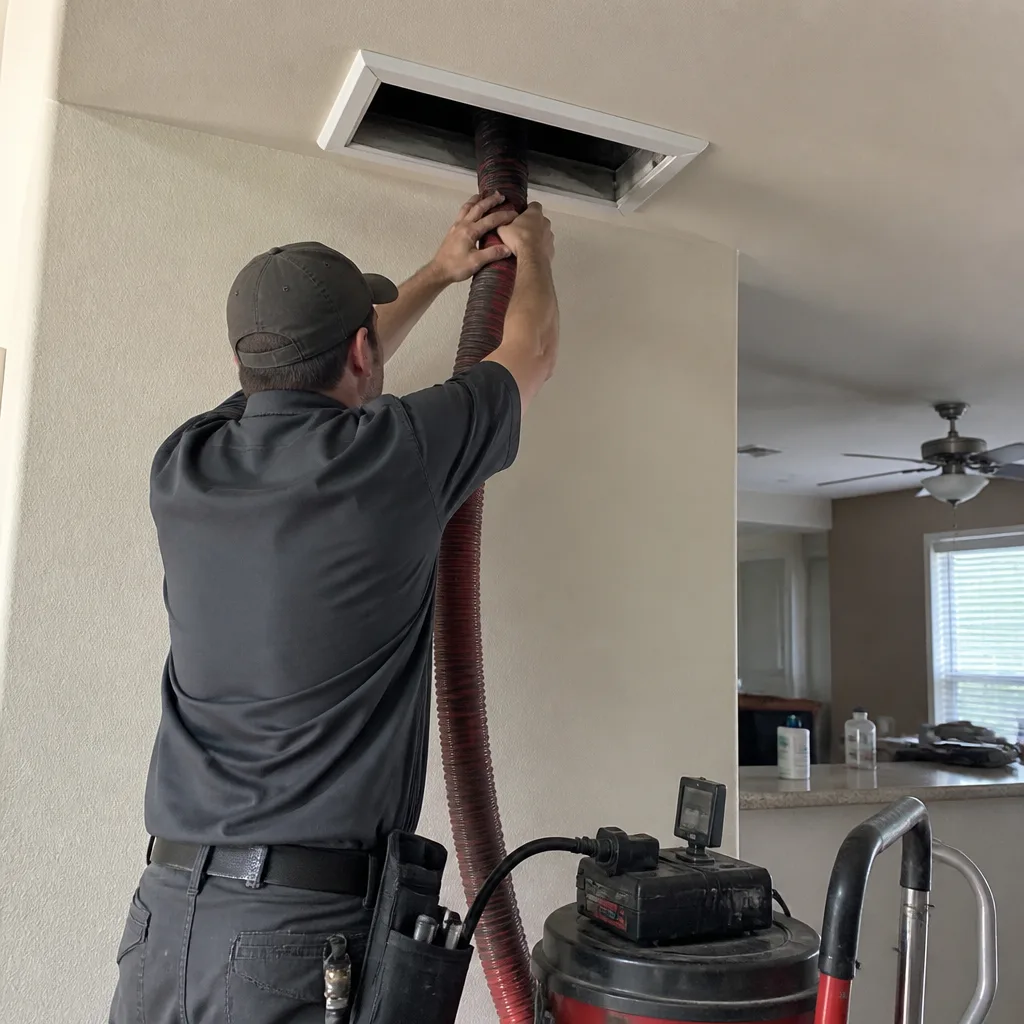 After
After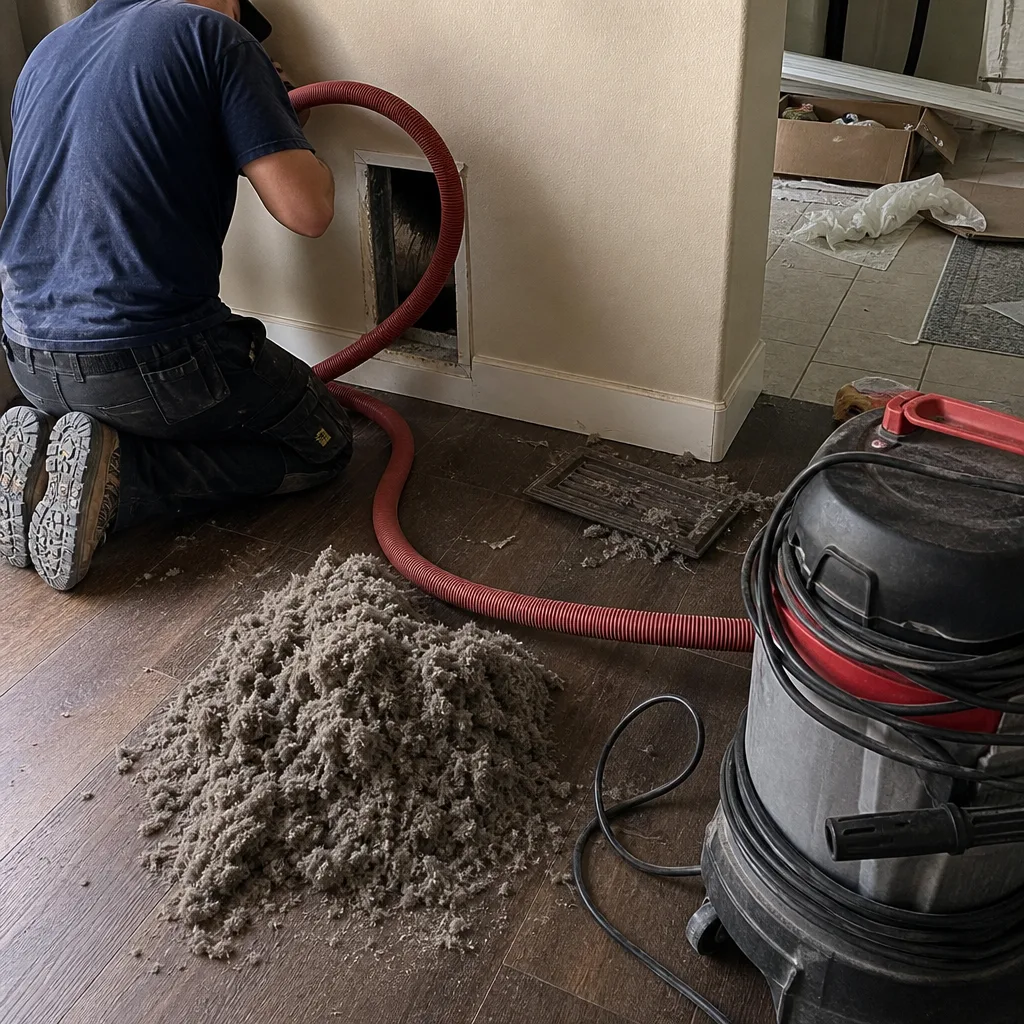 Before
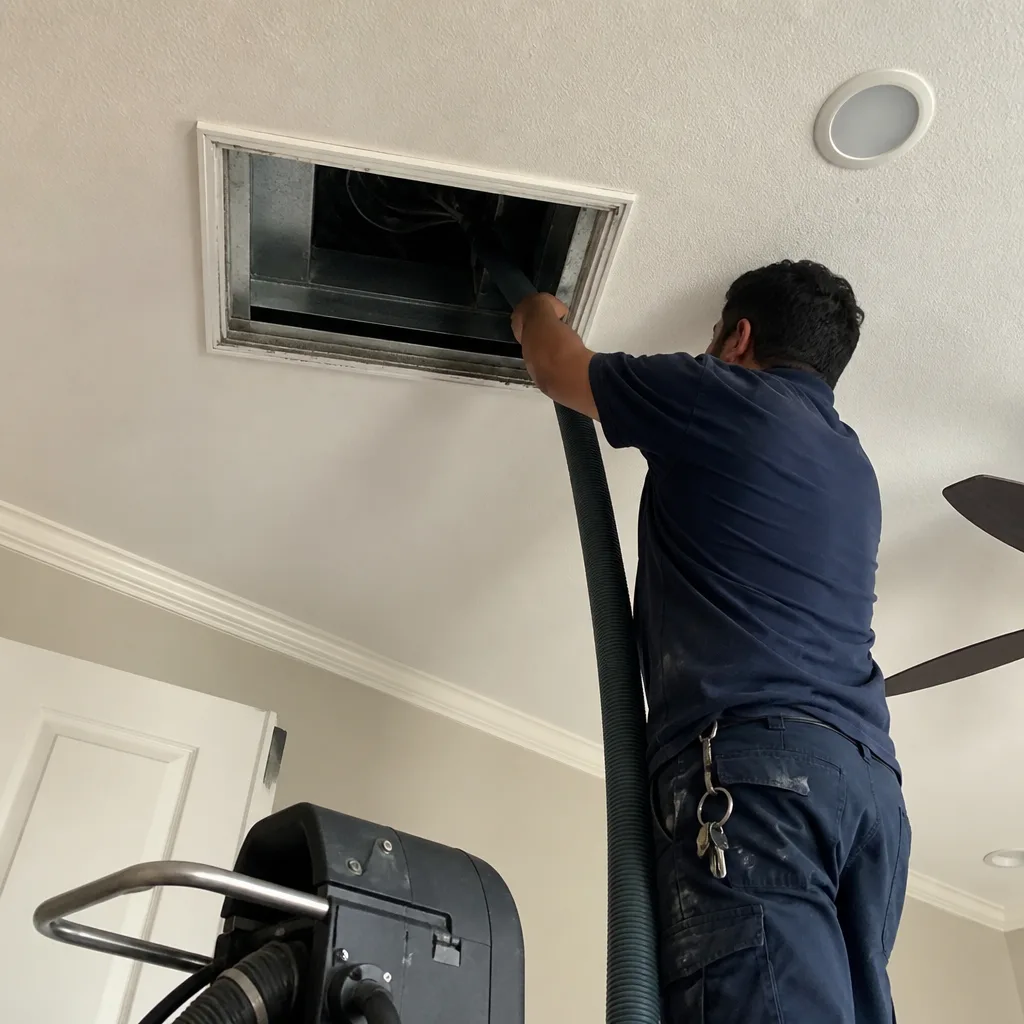 After
AfterHoneywell Register & Grille Cleaning: The Austin Owner’s Guide
Honeywell register and grille cleaning in Austin typically runs $180-$340 for a full system service, and we stock compatible tools for same-day scheduling. Most homeowners notice the problem when a single room won’t hold temperature or when the grille louvers rattle against degraded mounting clips. We see this often in Austin’s newer build neighborhoods like Mueller and East Riverside, where builders spec’d Honeywell ARU and FR-series grilles through 2018-2022 construction.
Which Honeywell Models This Applies To
Honeywell residential registers and grilles fall into several product families, and the cleaning approach differs by construction type. The ARU (Adjustable Register Unit) series uses polymer louvers with steel damper boxes - common in tract homes from 2015-2020. The FR (Fixed Register) and BAR (Baseboard Air Register) lines appear in older Tarrytown and Clarksville renovations, often with metal faceplates that corrode where condensation collects. The HVR (High-Velocity Register) series is rarer, found mainly in custom builds above the Colorado River basin with high-static duct designs.
To identify your unit: remove the grille face and photograph the stamp on the damper frame. Honeywell marks the series code and nominal size - typically 4×10, 6×12, or 8×14 inches - plus a two-digit year code. The ARU2 and ARU3 look identical from the room side but use different louver pivot geometries; swapping cleaning heads between them cracks the vane joints. We carry Rotobrush and Nikro attachments sized for each series, plus Guardsman soft-bristle kits for painted finishes that scratch under standard nylon.
CleanRun Air Duct Cleaning Austin is an independent service provider with no affiliation to Honeywell. We source OEM-compatible cleaning equipment from Abatement Technologies and Guardsman, and we’ll tell you when a genuine Honeywell replacement part outperforms the aftermarket equivalent - usually on HVR-series dampers where the OEM spring rate is matched to the blade geometry.
Signs Your Honeywell Register & Grille Cleaning Is Failing
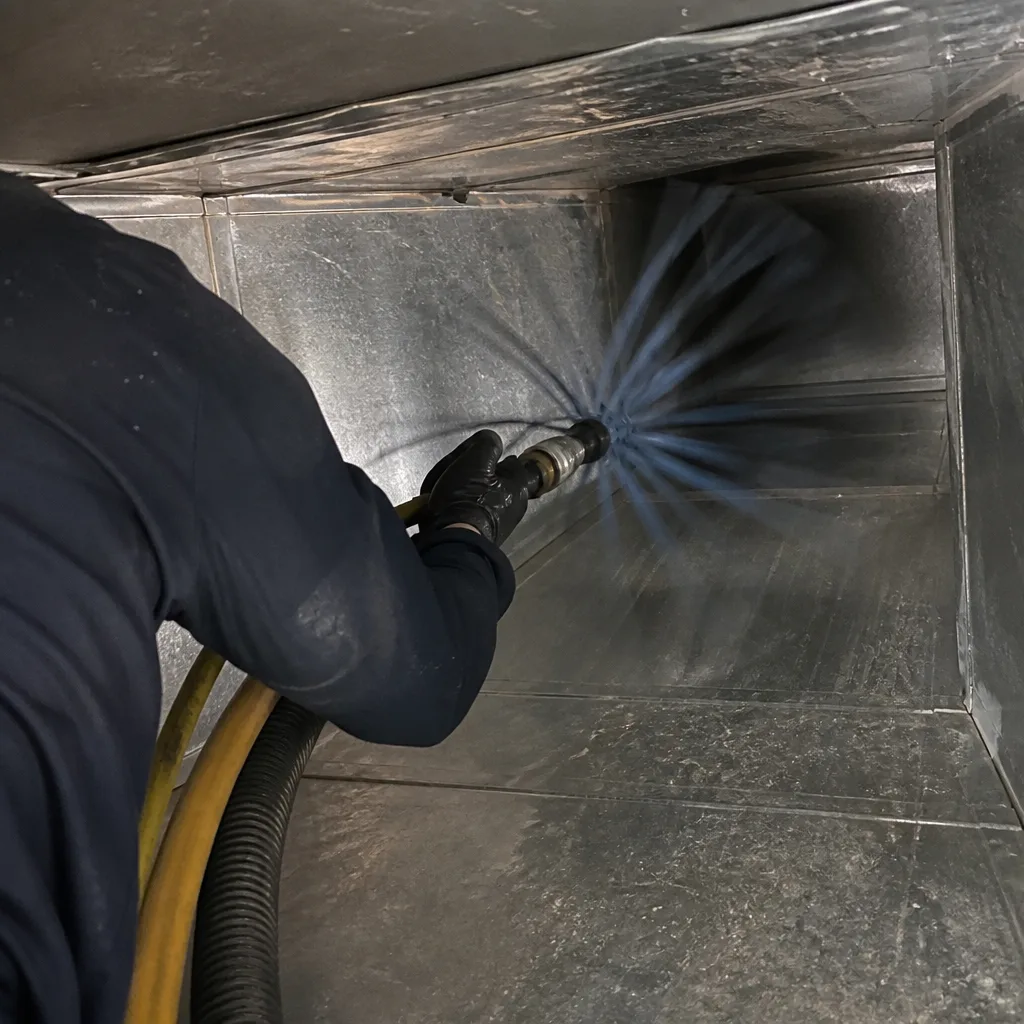
- Uneven airflow between rooms. The damper blades inside Honeywell ARU units accumulate construction dust and drywall compound at the pivot pins. In Austin’s hard-water zones like Wells Branch and Steiner Ranch, mineral dust from evaporative cooler bleed-through cements the debris, and the blades stick partially open. The room over-cools or under-heats depending on duct pressure.
- Visible black staining on the grille face. This is not surface dirt. It’s microbial growth feeding on organic dust trapped behind the grille, common in Austin’s 70%+ summer humidity. The FR-series metal faceplates with baked enamel finishes hide it longer than ARU polymer, so staining on metal means the problem is advanced.
- Rattling or whistling at the register. Honeywell grilles use snap-fit mounting ears that fatigue after repeated removal. When the frame loosens in the drywall opening, airflow excites the resonance. We’ve found this in Circle C Ranch homes where homeowners removed grilles annually for filter changes and cracked the ears without noticing.
- Musty odor when the system cycles on. The gap between grille face and duct boot collects skin cells, pet hair, and pollen - Austin’s cedar fever season loads this space heavily. Negative-pressure extraction during normal operation pulls odor compounds into the room before the filter catches them.
- Louver vanes that won’t hold position. ARU-series polymer vanes use a friction detent that wears smooth. Owners wedge matchbooks or tape the blades, which blocks proper airflow and strains the duct static. The fix is cleaning and inspection, not continued forcing.
BeforeAfterReplacement Cost & What’s Included
For Austin homeowners, Honeywell register and grille cleaning runs $180-$240 for a single-system home with 8-12 registers, and $260-$340 for larger homes with 15+ points or multiple zones. The range reflects access difficulty - cathedral ceilings in Westlake, attic duct drops in Allandale, and crawl-space boots in Bouldin Creek add labor time.
| Component | Price Range |
|---|---|
| Standard register/grille cleaning (per system, 8-12 points) | $180-$240 |
| Extended system (15+ registers or multi-zone) | $260-$340 |
| Grille replacement with cleaning (OEM Honeywell ARU/FR) | $45-$85 per unit, installed |
| Damper box repair or replacement | $120-$190 per location |
| Documented Photo Record delivery | Included |
Every job under Haven Standard Clause 1 receives a written price before work starts - no per-vent add-ons, no equipment fees disclosed after arrival. The price covers full register removal, negative-pressure extraction of the boot and first 24 inches of duct run, mechanical brushing of louver assemblies, and reinstallation with new mounting hardware where needed. The 365-Day Done Right Promise applies in writing: if airflow imbalance persists or odors return, we return at no charge.
DIY or Call Us?
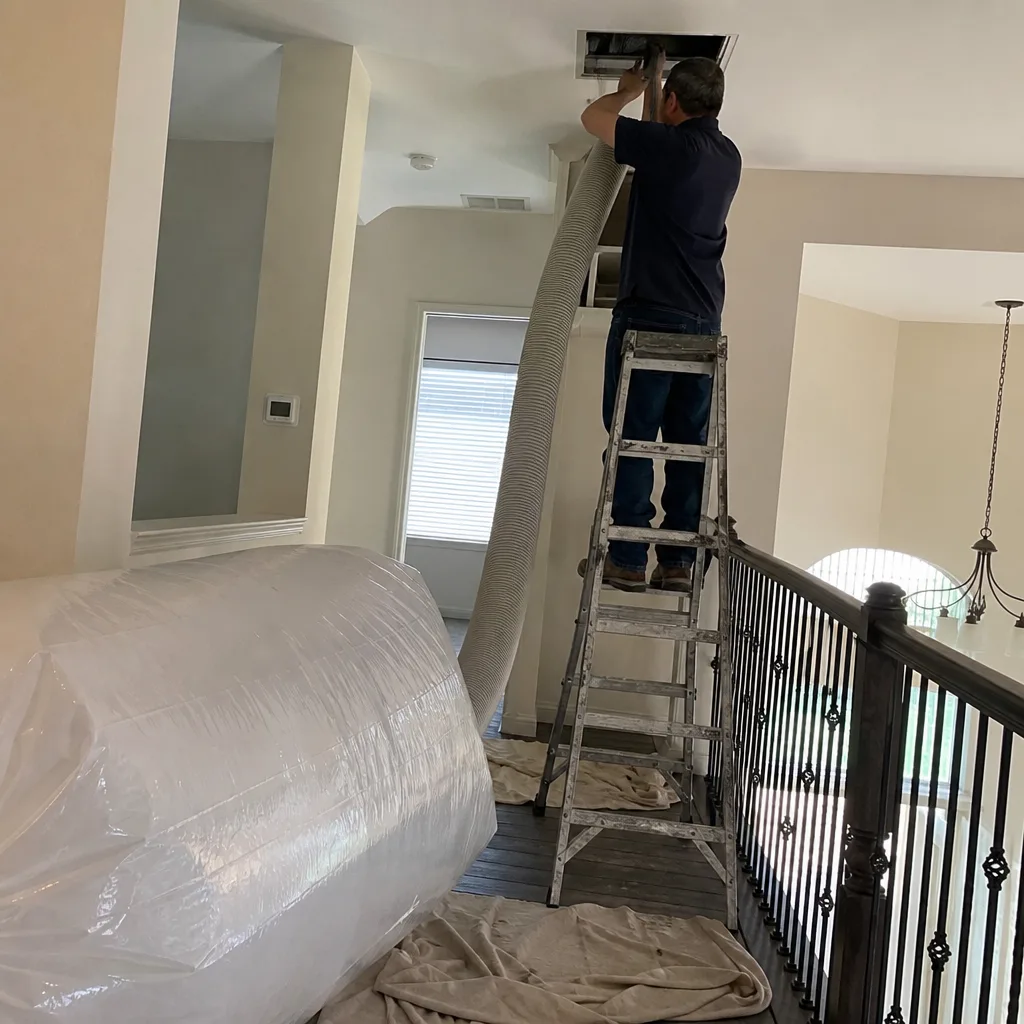
An owner can safely vacuum the visible grille face and wipe polymer surfaces with mild detergent. Do not remove the grille if the mounting ears show white stress lines - they will snap, and the frame will drop into the duct boot. Do not insert household vacuum attachments past the faceplate; without negative-pressure containment, you will dislodge debris into the duct run where the next cycle blows it into the room.
The deeper failure is almost always behind the grille: the boot, the damper, and the duct transition. We scope this before quoting. Tomas Reyes pulls the camera first - “show the photo first, then talk about what needs to happen next” - and the image goes into your job record whether you proceed or not. There’s no charge for the inspection if you schedule service; if you decline, the photo still belongs to you.
Call (737) 243-9544 for a written estimate. We answer live, and we’ll name a price range on the phone based on your register count and home layout.
FAQs
Polymer ARU units last 12-18 years in Austin’s climate; metal FR-series units last 20+ years but corrode where condensation collects against the boot. The determining factor is not time but removal frequency - every time a grille comes off for painting or filter access, the mounting ears fatigue. In Austin’s 105°F summer attic temperatures, polymer becomes brittle and cracks faster. Call (737) 243-9544 and we’ll inspect without charge if you’re unsure.
Damper boxes can often be cleaned and re-lubricated; louver vanes with cracked pivots cannot. We stock replacement vane kits for ARU2 and ARU3 series, but if the frame is cracked or the mounting ears are broken, the entire unit needs replacement. We document the damage with photos before recommending either path. Call (737) 243-9544 for a second opinion on any written estimate.
A typical Austin home with 10-12 registers takes 2.5 to 4 hours, depending on access and contamination level. Multi-story homes with attic duct drops add time for ladder moves and boot inspection. We schedule morning or afternoon blocks and arrive within the stated window - our crew is background-checked under Haven Standard Clause 3: Verified Crews, and you’ll receive the technician’s name before arrival.
Yes. We carry Rotobrush and Nikro cleaning heads sized for Honeywell ARU, FR, and BAR series, plus Guardsman soft-bristle kits for painted finishes. For replacement grilles, we stock common Austin sizes - 4×10, 6×12, and 8×14 - in white polymer and brushed metal. HVR-series and custom sizes are available next-day. Every part is named on your written scope before installation begins.
Written by Tomas Reyes, Owner & Lead Technician, CleanRun Air Duct Cleaning Austin at CleanRun Air Duct Cleaning Austin, serving Austin and nearby areas.