
Whole-system duct and dryer vent check with before-and-after photos - you see exactly what came out of your vents
That "$99 whole-house special" is a bait ad - the real number appears once they are in your hallway, or the "clean" is a shop-vac at the register. We photograph the inside of your ducts before and after instead.
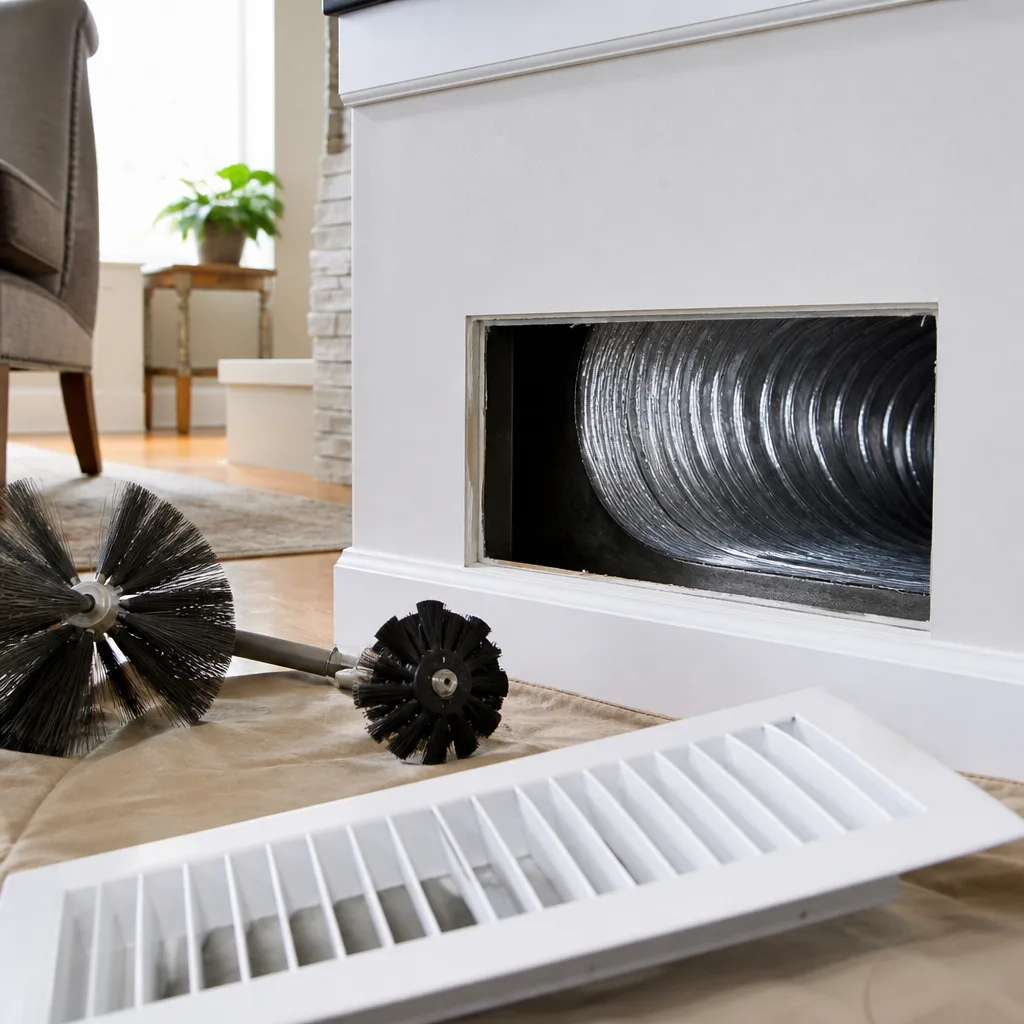
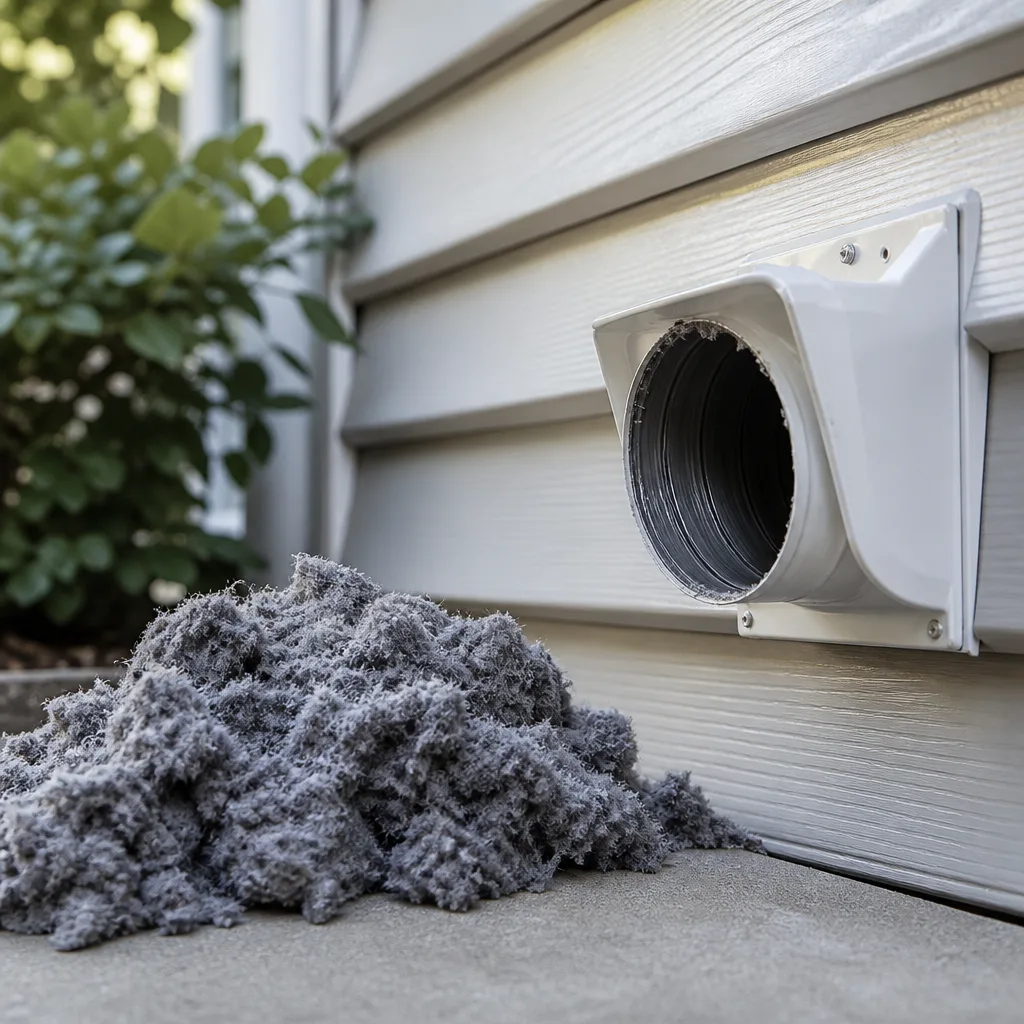
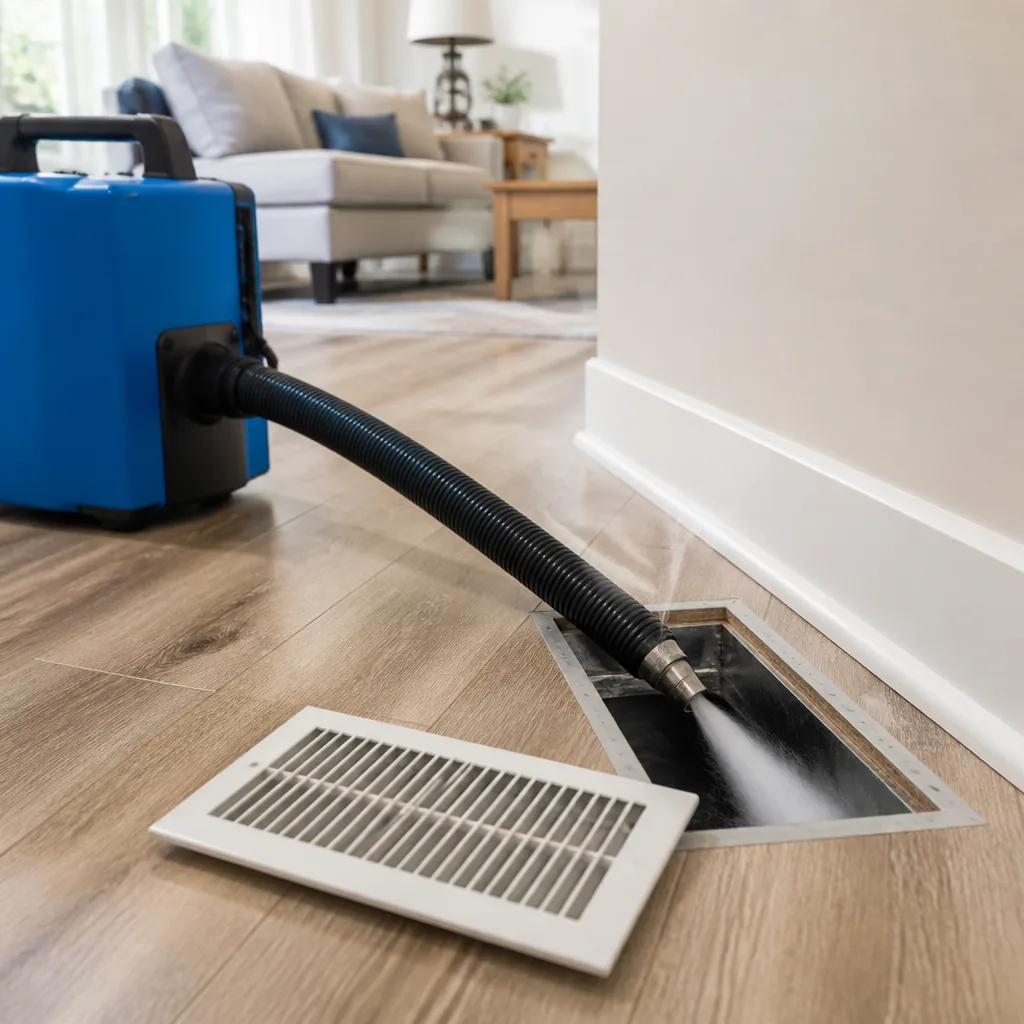
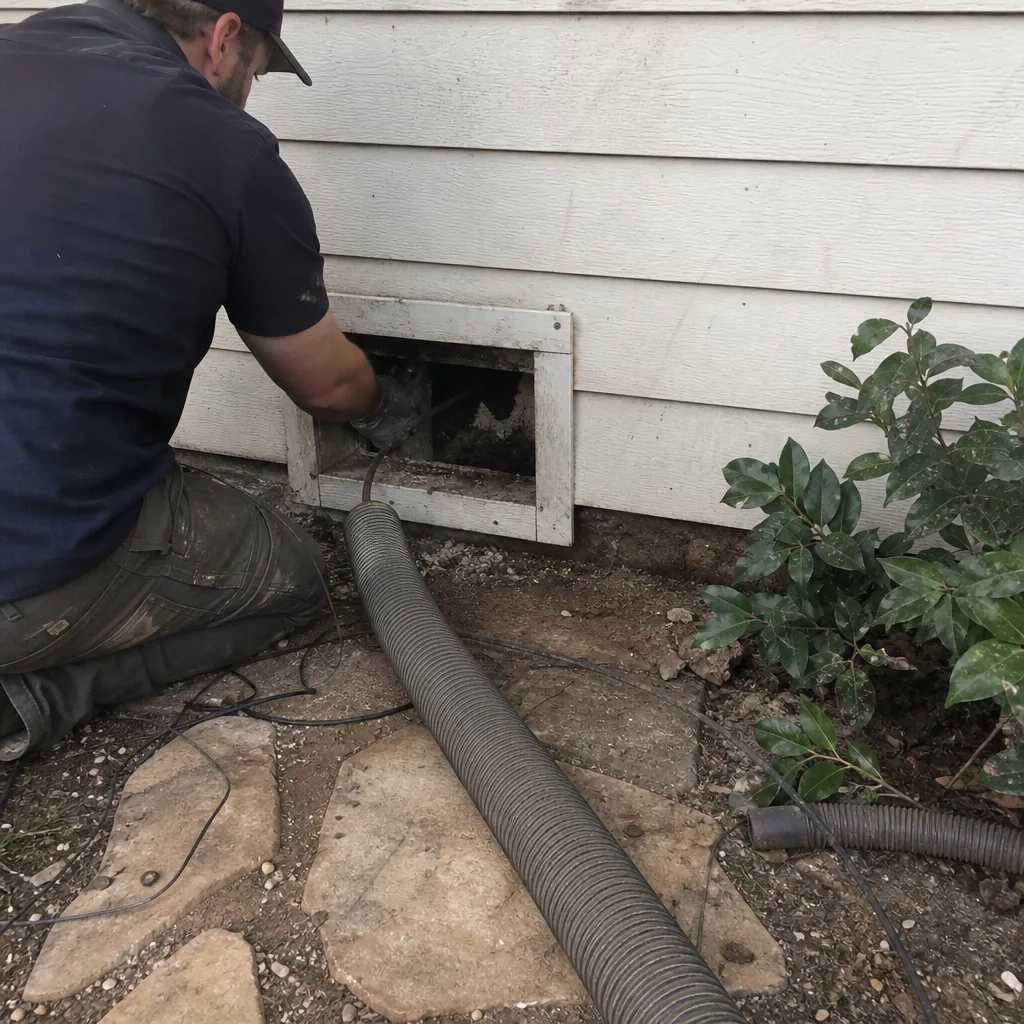 Before
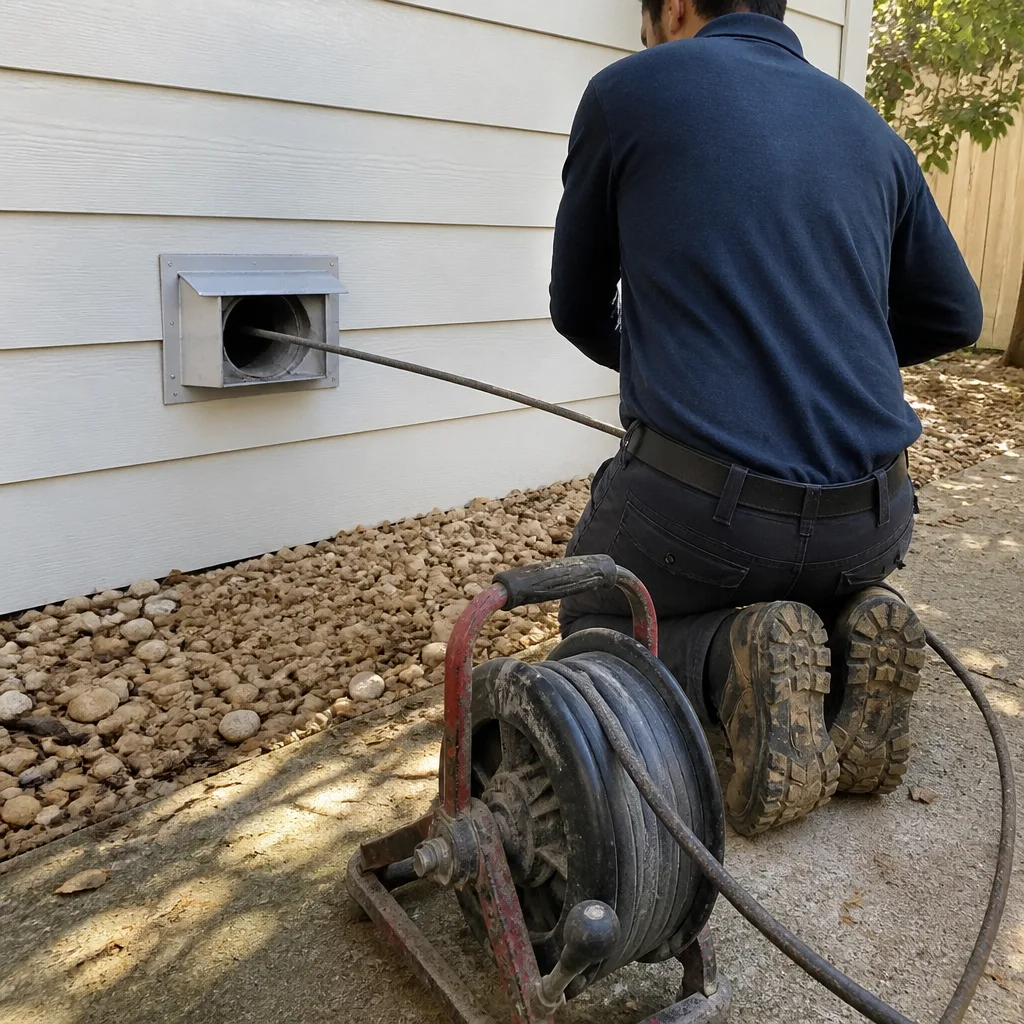 After
After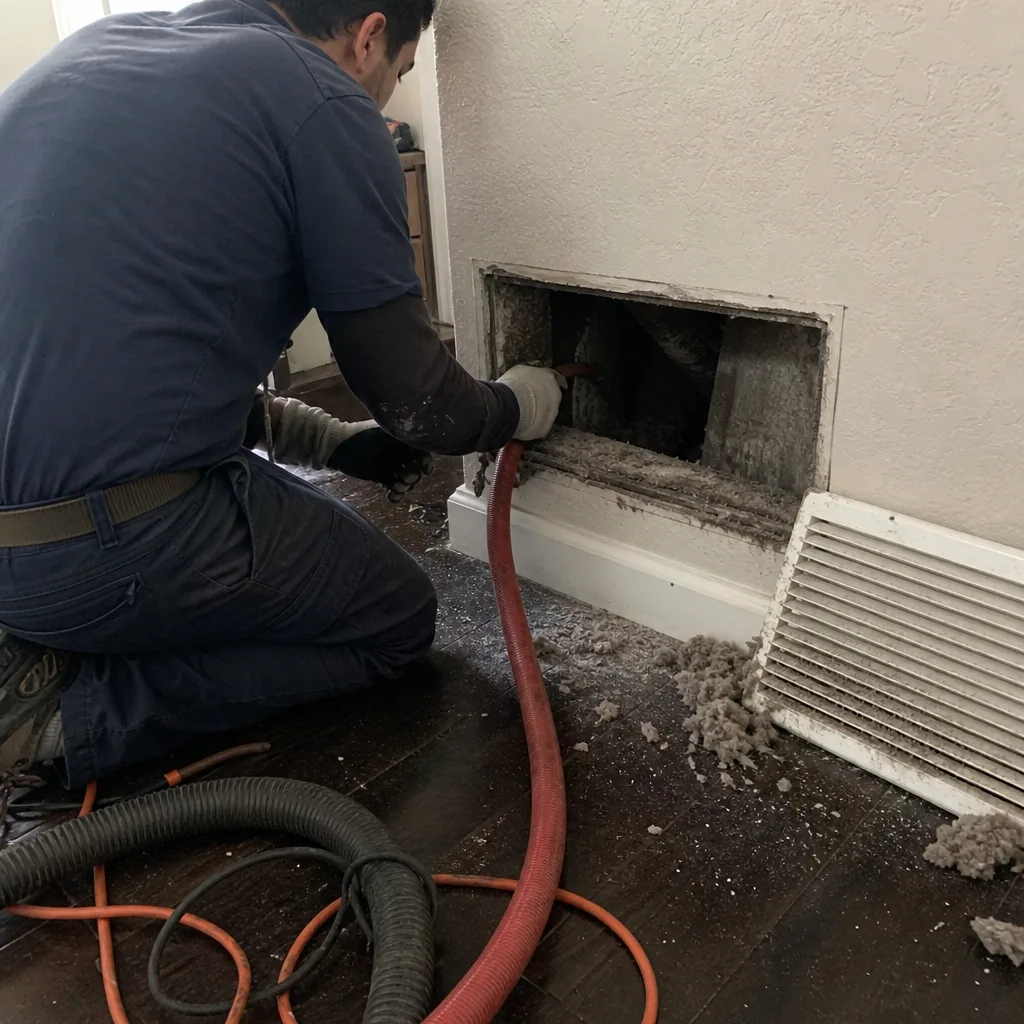 Before
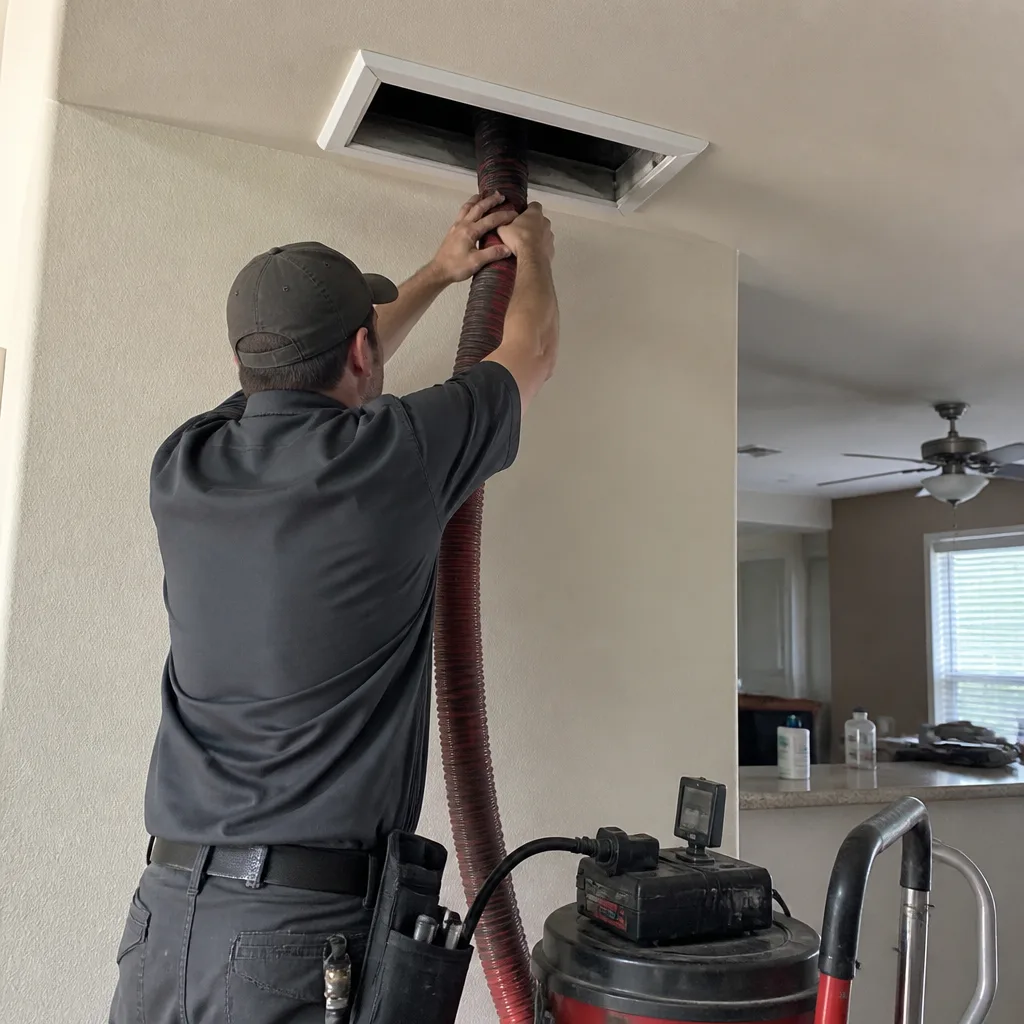 After
After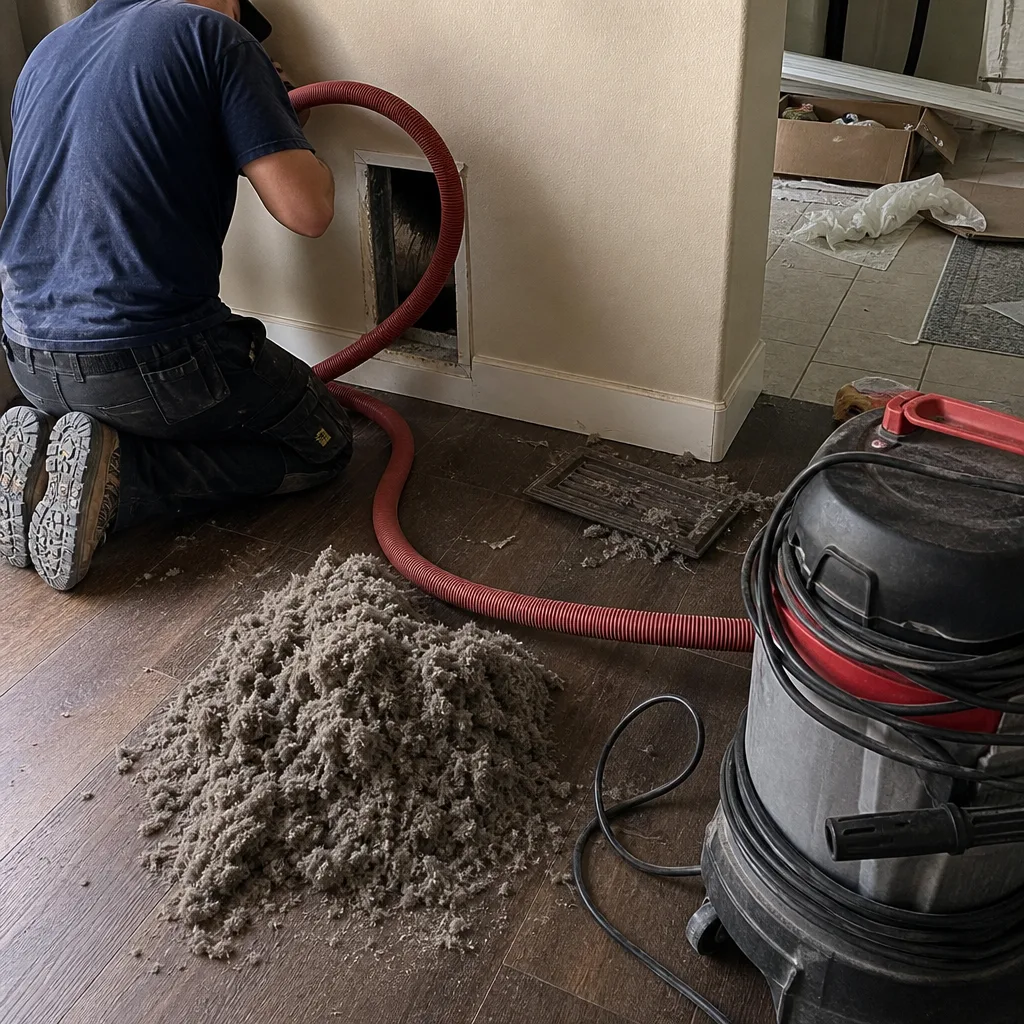 Before
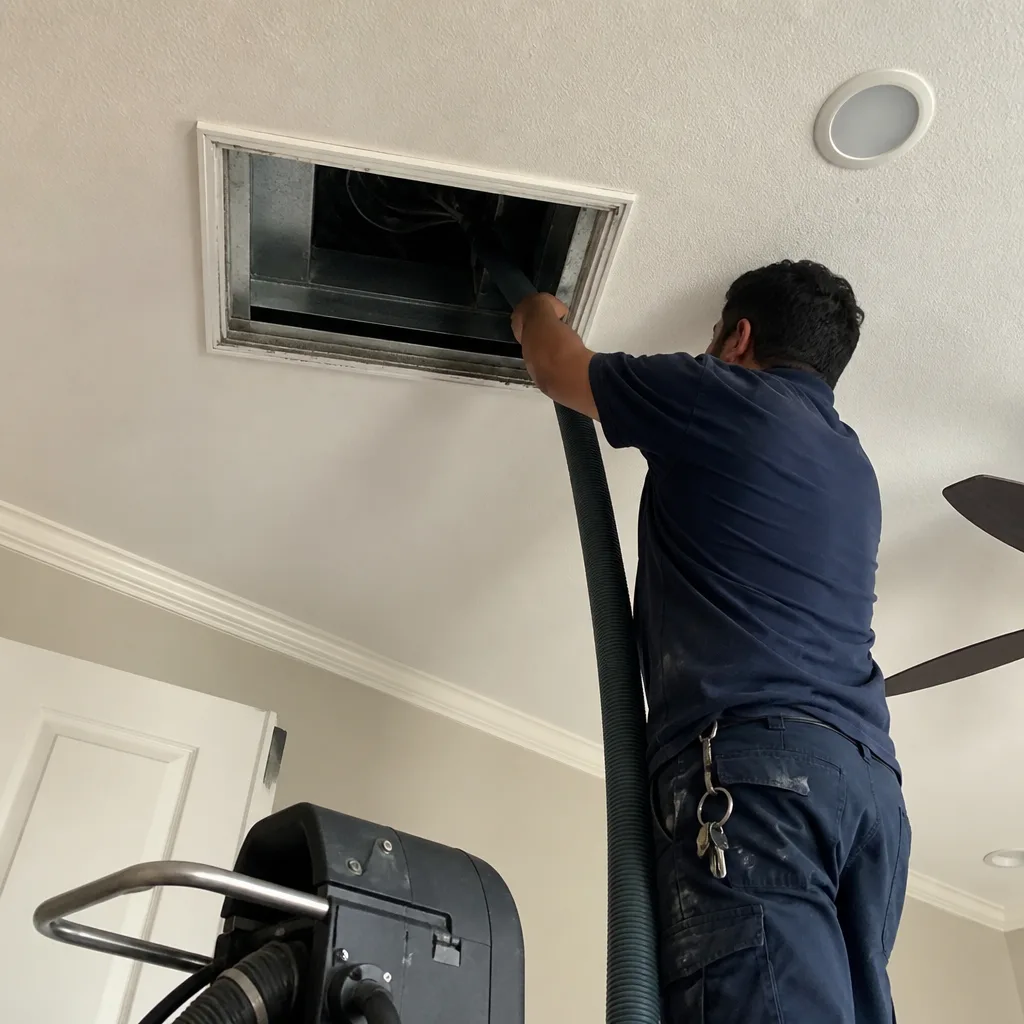 After
AfterDryer Vent Inspection in Austin, TX
A dryer vent inspection in Austin typically runs $79-$149 as a standalone service, takes 45-75 minutes, and produces a written scope with photos of every accessible section of the vent run before a single cleaning recommendation is made. If you already know something is wrong – clothes taking two cycles to dry, a duct that gets hot to the touch near the wall, or a dryer that shuts itself off mid-load – an inspection is the right first step. It tells you exactly what you’re dealing with, in writing, before any money changes hands for repair or cleaning work.
At CleanRun Air Duct Cleaning Austin, every inspection follows the same process Tomas Reyes has used on every job since 2013: camera through the vent run, written findings, written price for any work recommended. Nothing is quoted verbally. Nothing is fixed without your sign-off on the scope. If you want an independent look at a competitor’s written estimate, we’ll put our own number next to it at no charge. Call us at (737) 243-9544 to schedule – a live person answers every call.
This page covers the inspection specifically. For the full cleaning service, visit our Dryer Vent Cleaning in Austin page.
When You Need a Dryer Vent Inspection
Most Austin homeowners contact us after noticing one of the following. If any of these match what you’re seeing, an inspection – not a cleaning quote, not a parts order – is the right call first.
- Clothes are still damp after a full cycle. A 45-minute drying cycle that leaves jeans or towels damp almost always points to restricted airflow, not a failing heating element. In Austin’s humidity-heavy summers, restricted vents trap moisture and slow drying times noticeably – and the symptom gets worse between May and September.
- The laundry area feels warm or smells like something is burning. Heat that backs up into the room instead of exhausting outside means the duct is partially or fully blocked. A burning smell during a cycle – especially a faint, dusty odor – warrants stopping the dryer and scheduling an inspection before the next load.
- The exterior vent hood flap doesn’t open during operation. Walk outside while the dryer runs. The damper flap on your exterior wall cap should be visibly open. If it stays closed or barely moves, airflow is restricted somewhere along the run – often at an elbow, a sag in flexible duct, or at the cap itself where lint can cake over the screen.
- Your home was built before 2005 or you’ve never had the vent inspected. A significant portion of the homes we inspect in South Austin, Travis Heights, and Crestview were built with foil accordion duct – the ribbed, flexible type that NFPA 96 and most current codes no longer permit for dryer exhaust because lint catches in every ridge. If you don’t know what’s inside your wall, an inspection shows you.
- You’ve just bought a home or moved in. A duct run that looked clean on a listing photo can have a full lint plug at the first interior elbow. We inspect new-to-you homes in Hyde Park, Cherrywood, and Mueller regularly – and what the camera finds is often very different from what a visual look at the wall cap suggested.
- The dryer vent run is longer than 15 feet, or goes up before it goes out. Homes in central Austin and the 78704 corridor often have laundry rooms positioned so the vent has to travel through multiple floors or jog around framing. Every foot of run and every additional elbow reduces airflow capacity. An inspection measures actual static pressure and documents the path – both things a guessed cleaning quote can’t account for.
Our Dryer Vent Inspection Process
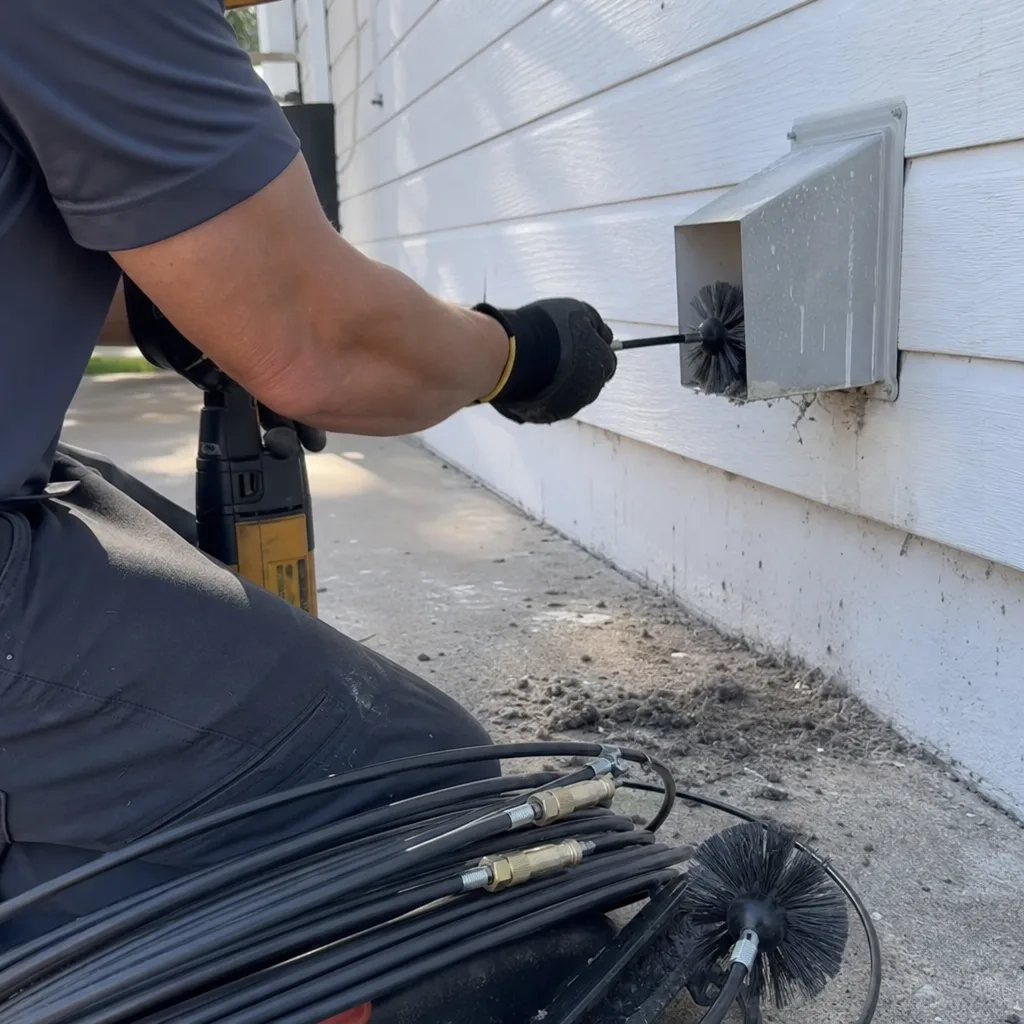
Here is exactly what happens when a CleanRun technician arrives for a dryer vent inspection in Austin. No step is skipped to save time, and nothing is added without your knowledge.
- Pre-inspection walkthrough and vent-path mapping. The technician starts at the dryer connection and traces the vent path to the exterior termination point – through the wall, into the attic if applicable, and out to the cap. This mapping step matters because a significant percentage of vent runs in Austin’s older Craftsman bungalows and 1970s ranch homes include undocumented elbows or transitions that previous owners added without updating the duct. The map becomes part of your written record.
- Exterior cap inspection and airflow measurement. At the exterior wall or roof termination, the technician documents the cap type, checks damper operation, and notes any visible obstruction – bird nesting material, lint accumulation at the screen, or physical damage to the hood. Static pressure is measured at this point to establish a baseline airflow reading before the camera goes in.
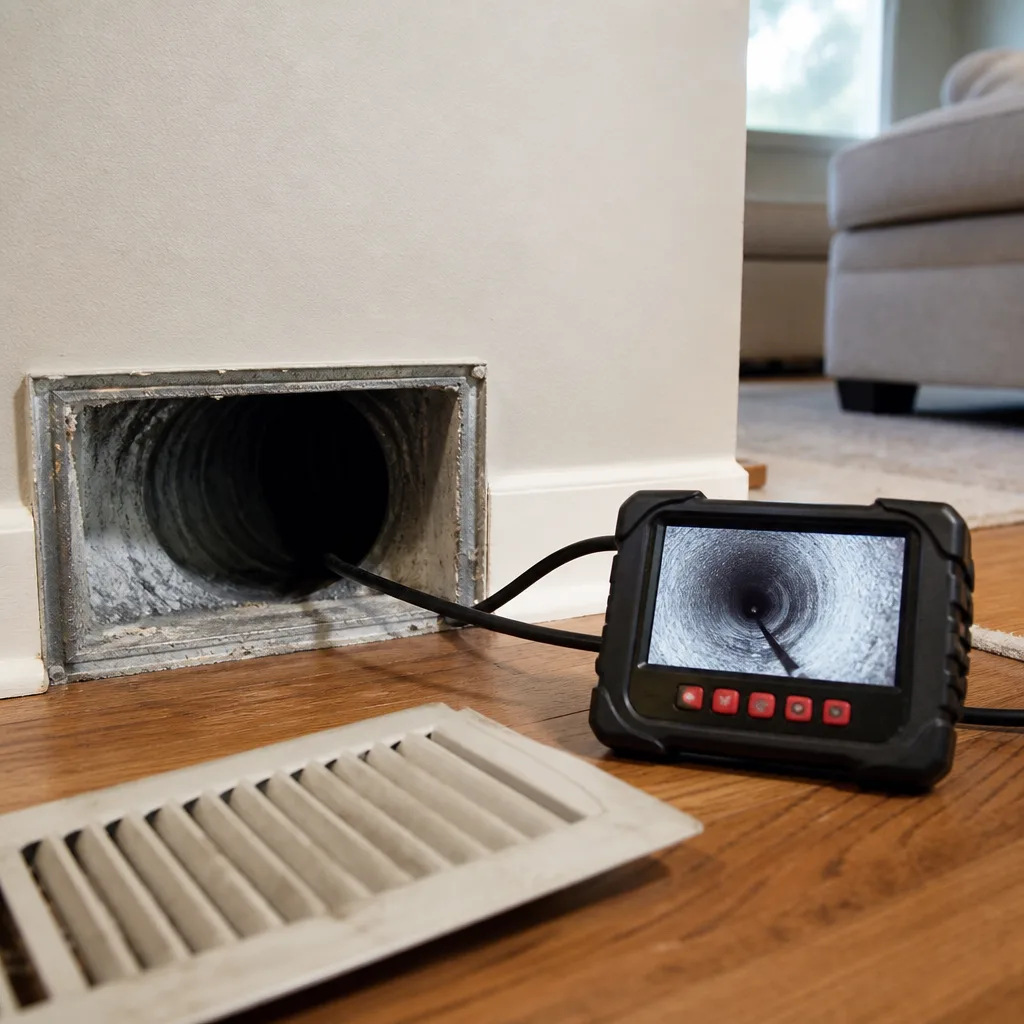
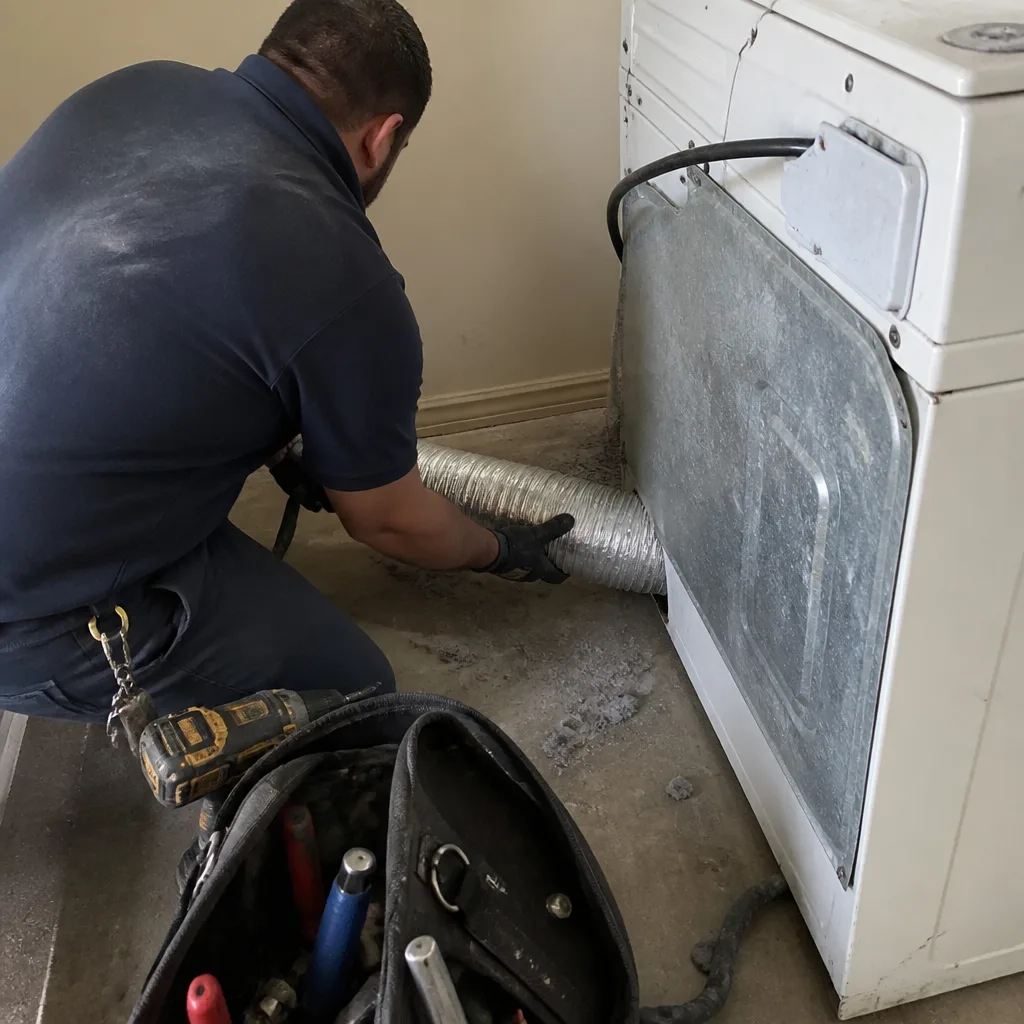
- Camera inspection of the full duct run. A video camera travels the length of the vent run from the dryer collar to the exterior cap. Every section is photographed. If the camera finds a debris accumulation, a collapsed section of flexible duct, a disconnected joint inside the wall, or the ribbed foil duct that code no longer permits, the image goes into your job record. You see what the technician sees. Nothing is described to you without a photo to accompany it.
- Written findings and scope delivery. Before any recommendation is made, the technician prepares a written summary of what the camera found – section by section, with photos labeled by location in the run. If cleaning is recommended, the written price for that cleaning is on the same document. Under Haven Standard Clause 1, no work proceeds without your signature on the written scope. “We’ll just clean it while we’re here” is not how we operate.
- Code and configuration review. If the inspection reveals duct material, vent length, or termination configuration that conflicts with current NFPA 96 guidelines or the 2021 International Mechanical Code as adopted in Travis County, those findings are noted in writing. We don’t conduct the code compliance review as a sales tool – we include it because a homeowner who knows their duct is out of spec can make an informed decision about repair priority.
- Inspection report delivered to you digitally. You receive the full photo record, the written findings, and any written price for follow-on work as a digital file the same day. This is the documented photo record that CleanRun has included as a standard job deliverable since 2013 – not an upsell, not a premium tier.
BeforeAfterDryer Vent Inspection Pricing in Austin
A standalone dryer vent inspection in Austin runs $79-$149. The written price is on the table before the technician opens a tool bag – Haven Standard Clause 1, every job, no exceptions. For details, see How Much Does Dryer Vent Cleaning Cost? (2026 Price Guide) - Austin, TX.
| Scenario | Typical Price Range |
|---|---|
| Standard single-family home, vent run under 20 ft, accessible path | $79-$99 |
| Vent run 20-35 ft, one or more elbows, partial attic routing | $99-$129 |
| Multi-story home, roof-terminated vent, or vent path requiring attic access | $119-$149 |
| Inspection bundled with dryer vent cleaning on the same visit | Inspection fee credited toward cleaning total |
If the inspection finds nothing that needs attention – clean duct, correct configuration, functioning cap – you pay the inspection fee and leave with the documented photo record. No pressure, no invented problems. We’ve run inspections across Austin that concluded with a clean bill of health and a photo record confirming it. That result is a legitimate outcome.
If the inspection finds lint accumulation, a code-prohibited duct material, a disconnected joint, or a blockage, the written cleaning or repair price is on the same document as the findings. You decide whether to proceed that day or schedule separately. The inspection fee applies toward any same-day Dryer Vent Cleaning services.
Bring a written estimate from another company and we’ll put our own number next to it in writing, at no charge. That’s the Free Second Opinion – available to any Austin homeowner, no strings attached.
For an exact written price on your home, call (737) 243-9544. Estimates are free and given before any work begins.
What Dryer Vent Inspections Typically Find in Austin Homes
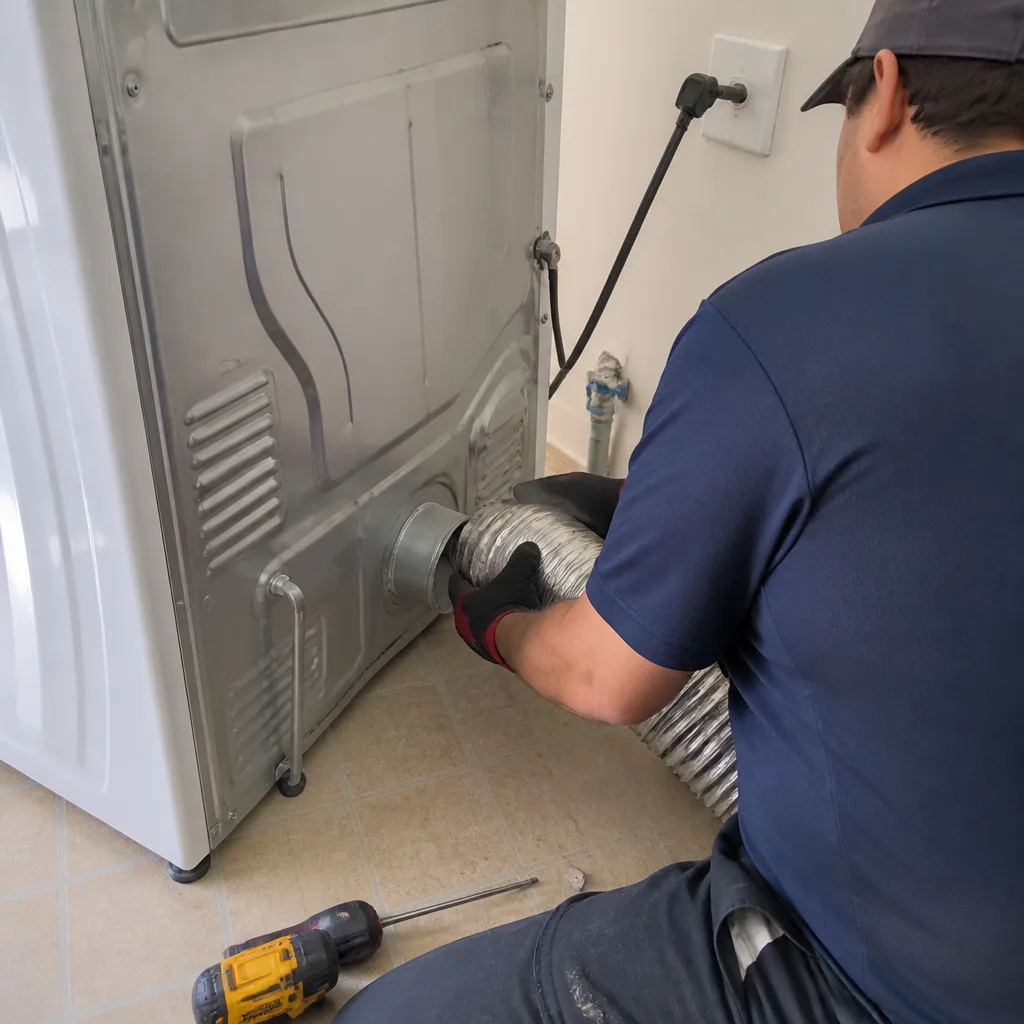
After inspecting dryer vents across Austin since 2013 – from the dense postwar bungalows in Bouldin Creek to the newer two-story builds in Wells Branch and Pflugerville – a few findings show up consistently enough to be worth describing here.
The most common finding in homes built before 2000 is foil accordion duct inside the wall cavity. It was standard installation for decades, and a lot of it is still in place. The problem is physical: the corrugated ridges catch lint at every groove, and the duct collapses over time in ways that rigid metal duct doesn’t. NFPA 96 now prohibits it for dryer exhaust, and so does the 2021 IMC. When the camera shows it, we say so in writing – because the homeowner needs that information whether they choose to replace it this week or next year.
The second most common finding is a disconnected or sagging joint somewhere in the vent run, usually at a transition point between flexible and rigid duct. In Austin’s attic spaces, where summer temperatures can exceed 140°F, the foil tape used to connect duct sections dries out and fails faster than it would in a cooler climate. The joint separates, lint deposits into the attic instead of exhausting outside, and the dryer behaves as if it’s blocked – because functionally, it is.
Bird nesting at the exterior cap is a seasonal finding, particularly in late spring. Austin’s population of house sparrows and Carolina wrens treat unscreened exterior vent caps as ready-made nesting sites. The nest material – dry grass, paper, feathers – is a lint-level fire fuel sitting at the exhaust point of a heated appliance.
None of these findings require us to editorialize. The camera shows them. The photo goes into the written record. The price to address each one is on the same page. What you do with that information is your decision.
Key Takeaways
- Dryer vent inspection in Austin is priced at $79-$149, written before work starts, no exceptions.
- Every inspection includes a camera pass through the full duct run and a documented photo record delivered to you the same day.
- Common Austin findings: foil accordion duct inside walls, disconnected attic joints, and blocked or bird-nested exterior caps.
- The inspection fee is credited toward any same-day cleaning or repair work.
- All findings are delivered in writing with photos – nothing is described to you without documentation to back it up.
- If the duct is clean and correctly configured, that’s the result. A clean inspection is a legitimate and documented outcome.
- The 365-Day Done Right Promise applies to any work that follows the inspection: if it’s not right, CleanRun makes it right – in writing.
FAQs – Dryer Vent Inspection
How much does a dryer vent inspection cost in Austin?
A dryer vent inspection in Austin costs $79-$149, depending on the length and complexity of the vent run. Standard runs under 20 feet in single-family homes land at the lower end. Attic-routed or multi-story runs land at the higher end. The written price is confirmed before the technician starts – Haven Standard Clause 1 means there is no price that appears after the work is done. The inspection fee applies toward any same-day Vent Cleaning or repair. Call (737) 243-9544 for a written quote specific to your home.
Is a dryer vent inspection different from dryer vent cleaning?
Yes – an inspection and a cleaning are two different scopes of work. An inspection uses a video camera to document the condition of the vent run, identify any code or configuration issues, and produce a written finding report with photos. Cleaning – which involves negative-pressure extraction and rotary brush equipment – is a separate service recommended only when the inspection finds lint accumulation or blockage that warrants it. Doing a cleaning without an inspection first means cleaning a duct you don’t fully understand; doing an inspection first means you know exactly what you’re paying to address. Learn more about the full cleaning process on our Dryer Vent Cleaning in Austin page.
How often should a dryer vent be inspected in Austin?
Once per year is the baseline recommendation from NFPA 96, and it’s what we stand behind. Austin-specific factors can shorten that interval: high-frequency dryer use in larger households, vent runs over 20 feet, older flexible duct that wasn’t replaced when the dryer was, and homes where the exterior cap is unscreened and exposed to nesting birds in spring. If you’ve never had the vent inspected on a home you’ve owned for more than three years, that’s the starting point regardless of what the dryer appears to be doing.
Can I inspect my dryer vent myself?
A homeowner can check two things without any equipment: whether the exterior cap damper opens during a dryer cycle, and whether the flexible duct section behind the dryer is kinked or crushed. Both are useful visual checks. What a homeowner cannot see without a camera is the interior of the duct run inside the wall – where lint accumulates at elbows, where joints separate, and where foil duct has collapsed. Those are the findings that matter most, and they require camera access. A dryer vent also involves a heated exhaust path; pulling sections apart without knowing the full duct configuration can leave joints disconnected inside a wall cavity. We’d rather you call for the inspection than troubleshoot a heated appliance exhaust by feel.
Find out more about what CleanRun does across all its services on our home page.
Schedule a Dryer Vent Inspection in Austin
If you’re in Austin and want to know exactly what’s inside your dryer vent run – not a guess, not a generic cleaning quote, but a camera-documented written finding – call CleanRun Air Duct Cleaning Austin at (737) 243-9544. A live person answers every call. Tomas Reyes and the CleanRun team have been documenting dryer vent conditions across Austin since 2013, across more than 52,000 homes, and the process is the same on every one: written price first, camera documentation throughout, written report in your hands before the truck leaves. The inspection fee is applied to any same-day work. If the duct is clean, you leave with the photo record that confirms it. Call (737) 243-9544 to get a written price for your home before committing to anything.
Written by Tomas Reyes, Owner at CleanRun Air Duct Cleaning Austin, serving Austin since 2013.