
Last updated September 23, 2026
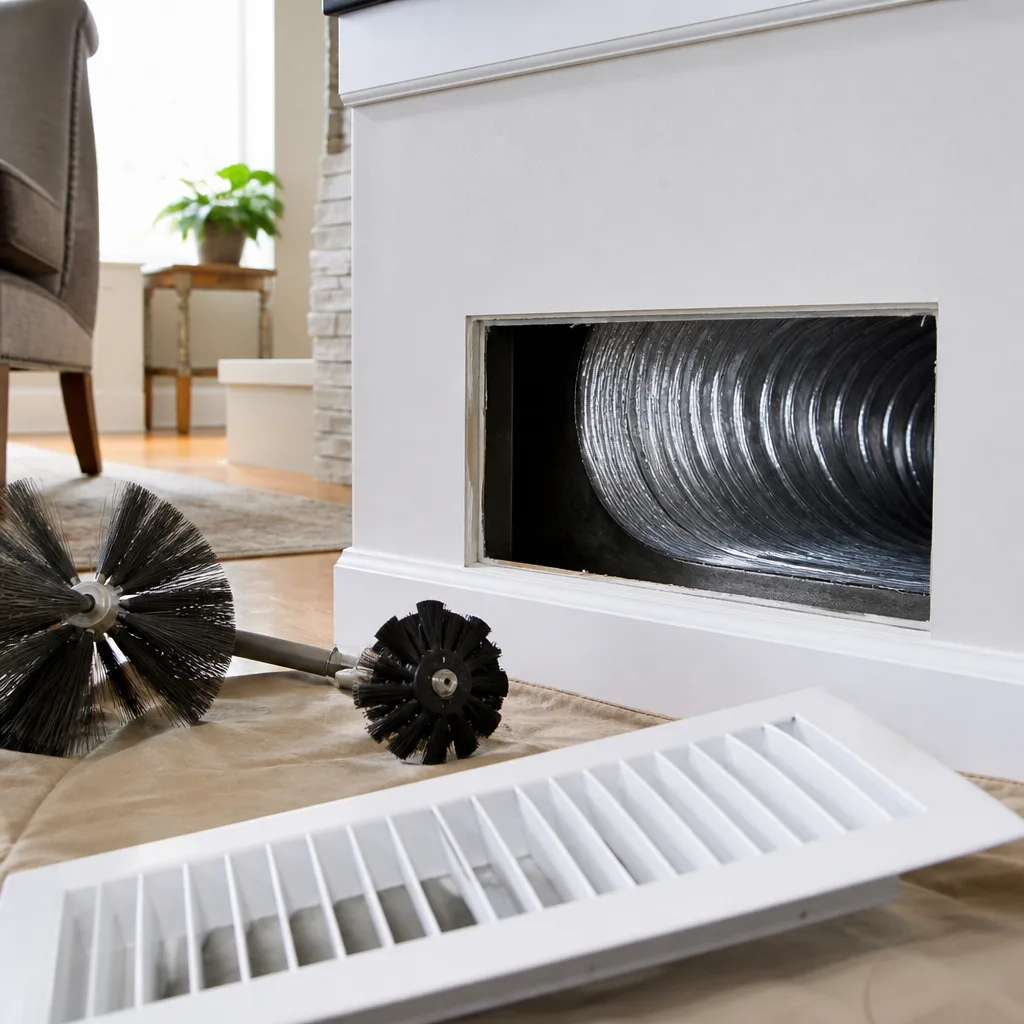
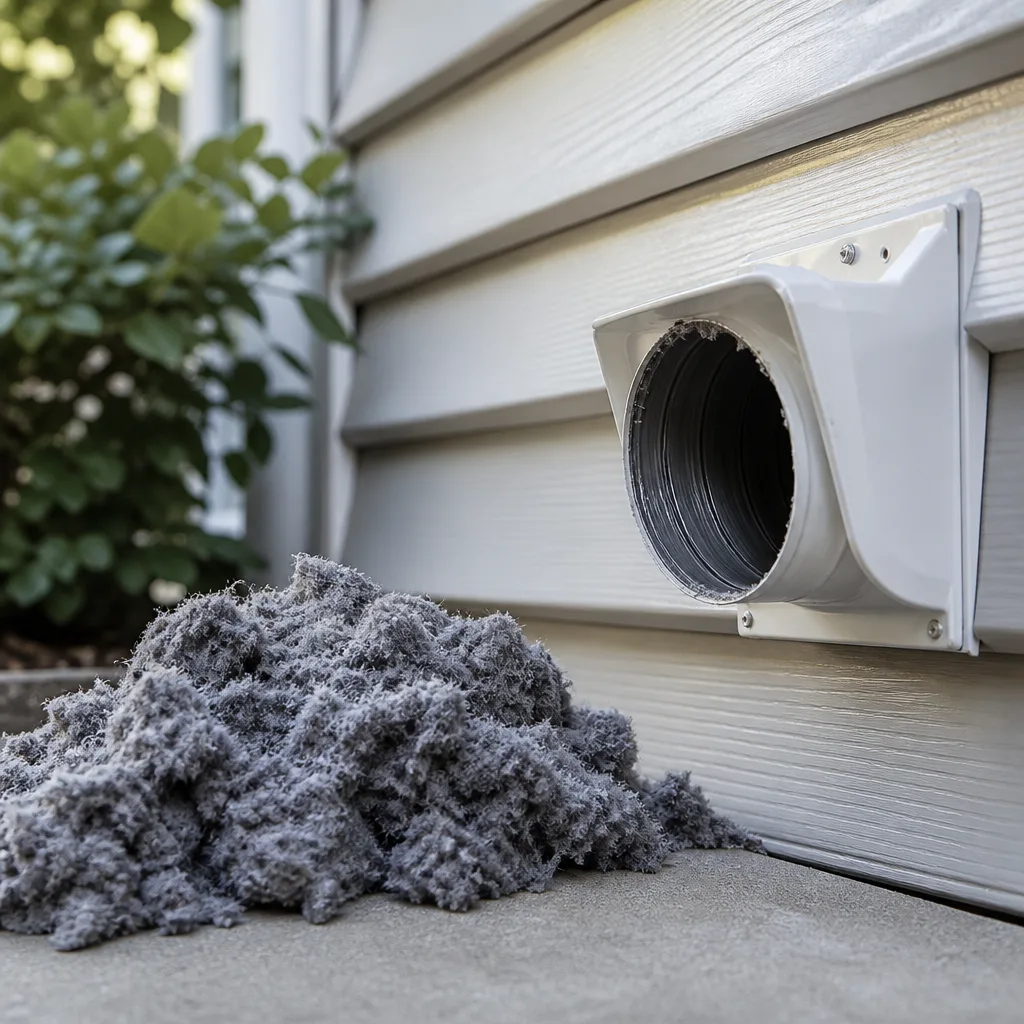
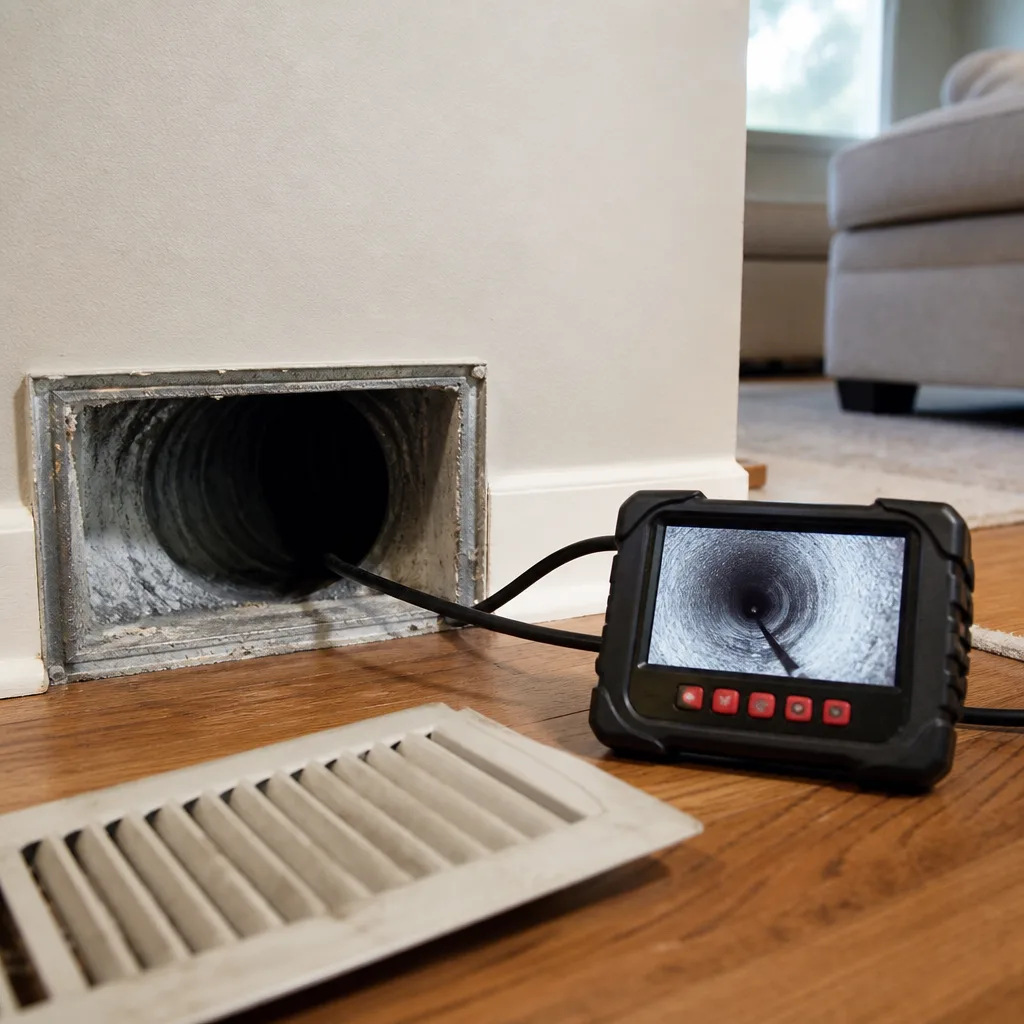
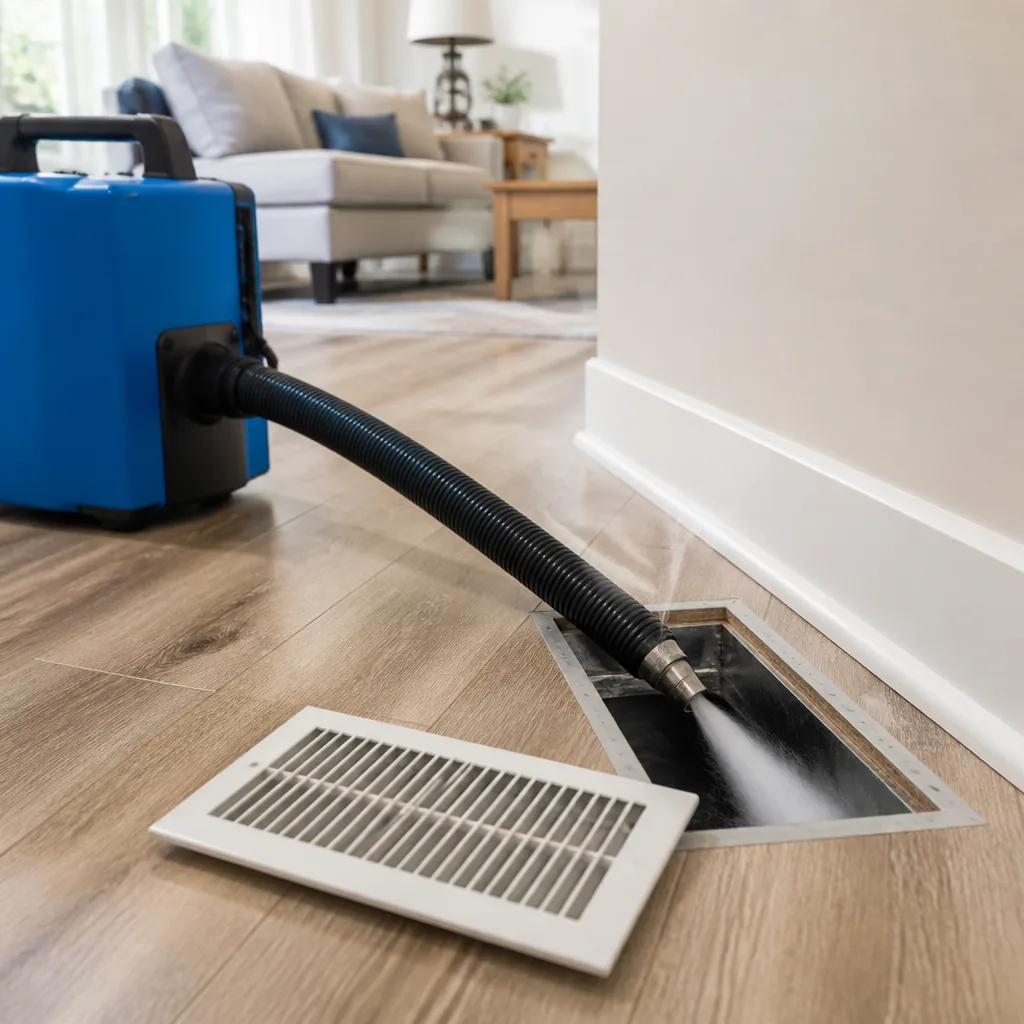
Whole-system duct and dryer vent check with before-and-after photos - you see exactly what came out of your vents
That "$99 whole-house special" is a bait ad - the real number appears once they are in your hallway, or the "clean" is a shop-vac at the register. We photograph the inside of your ducts before and after instead.
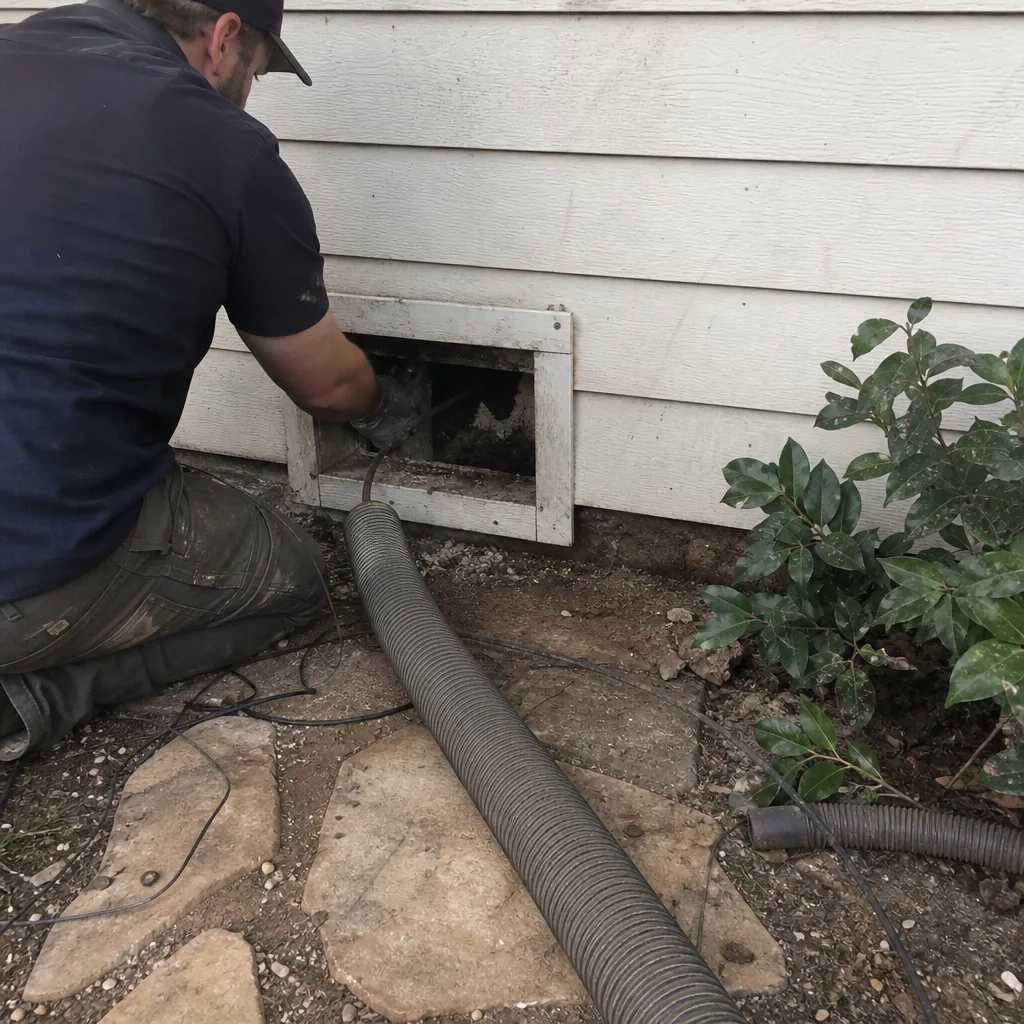 Before
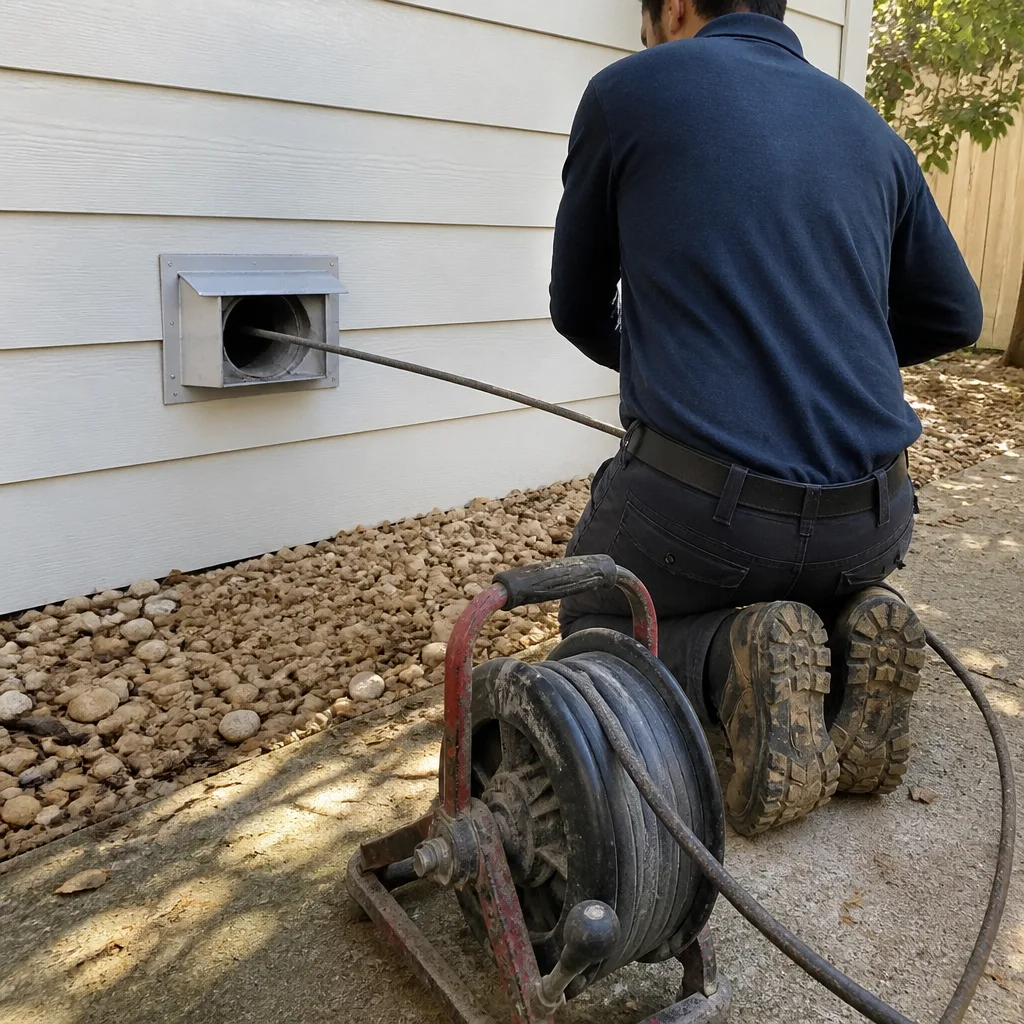 After
After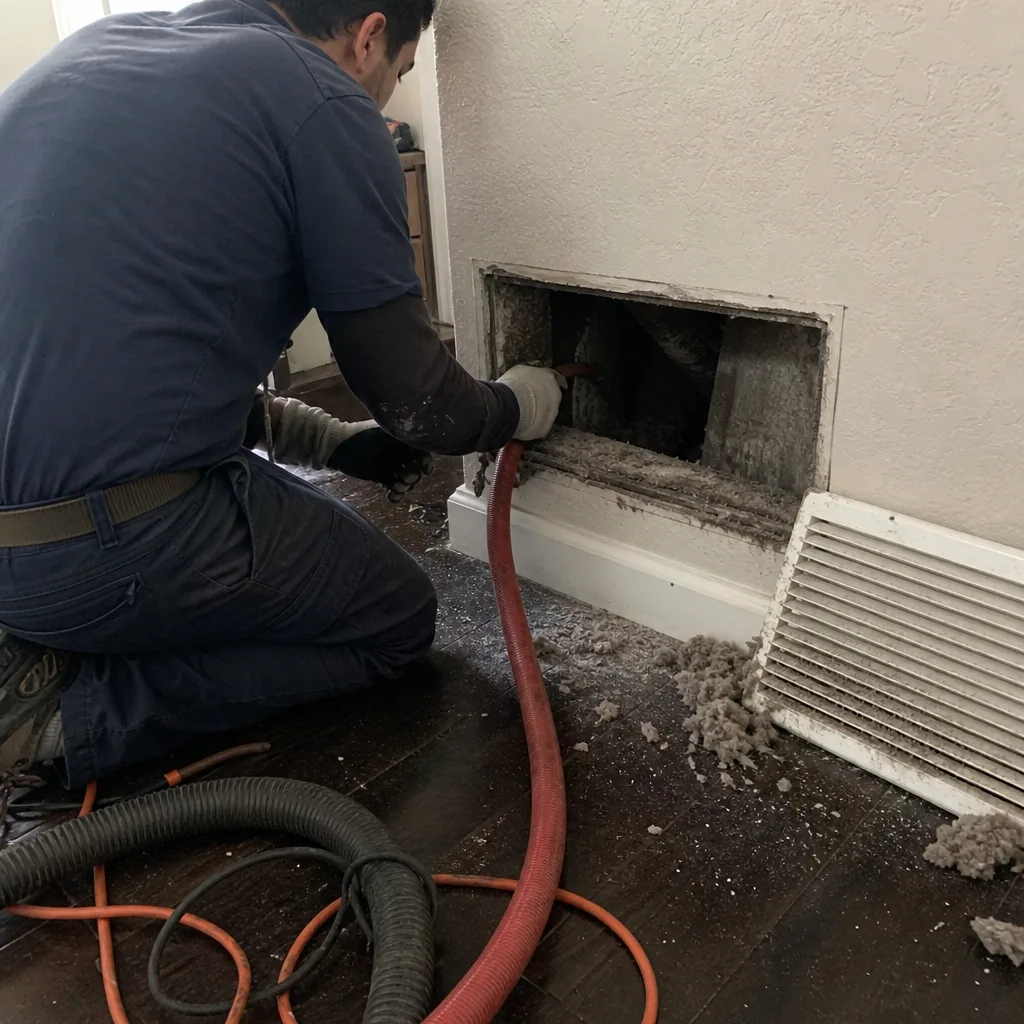 Before
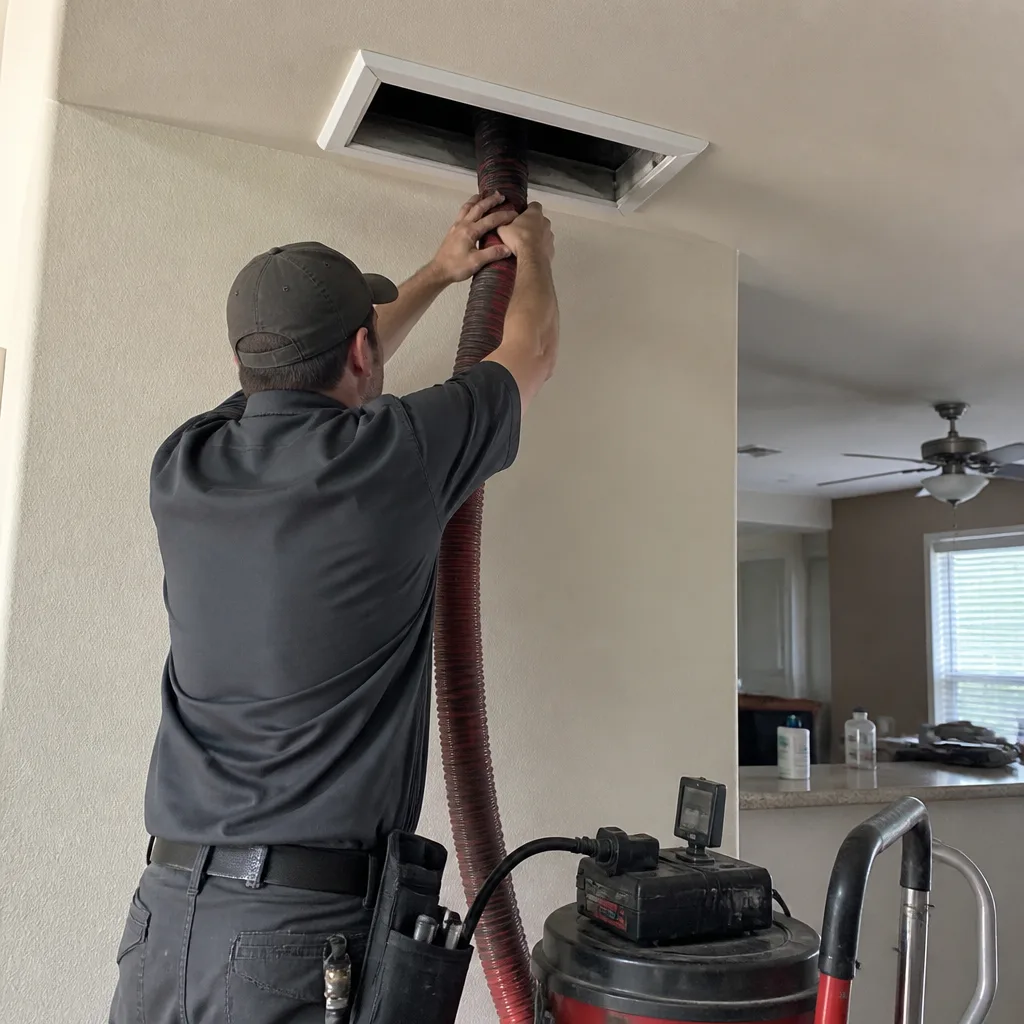 After
After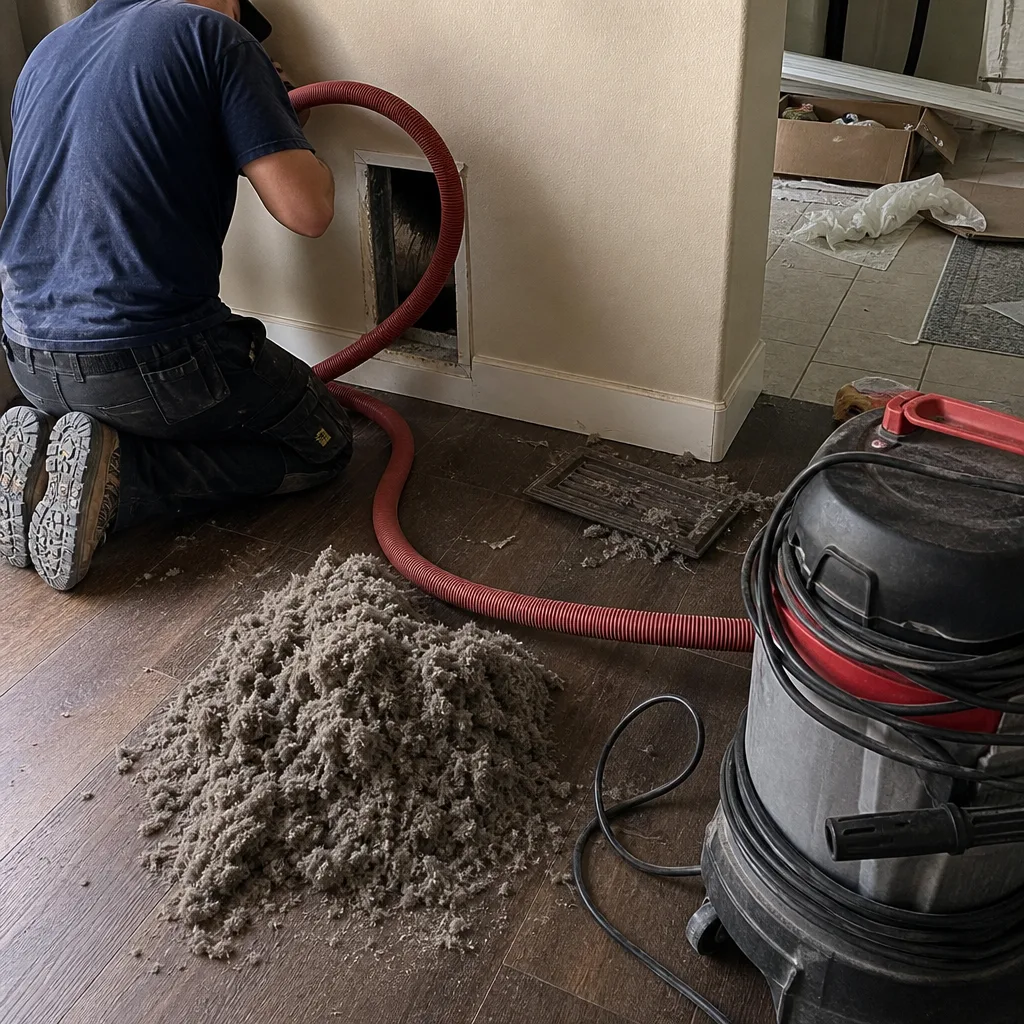 Before
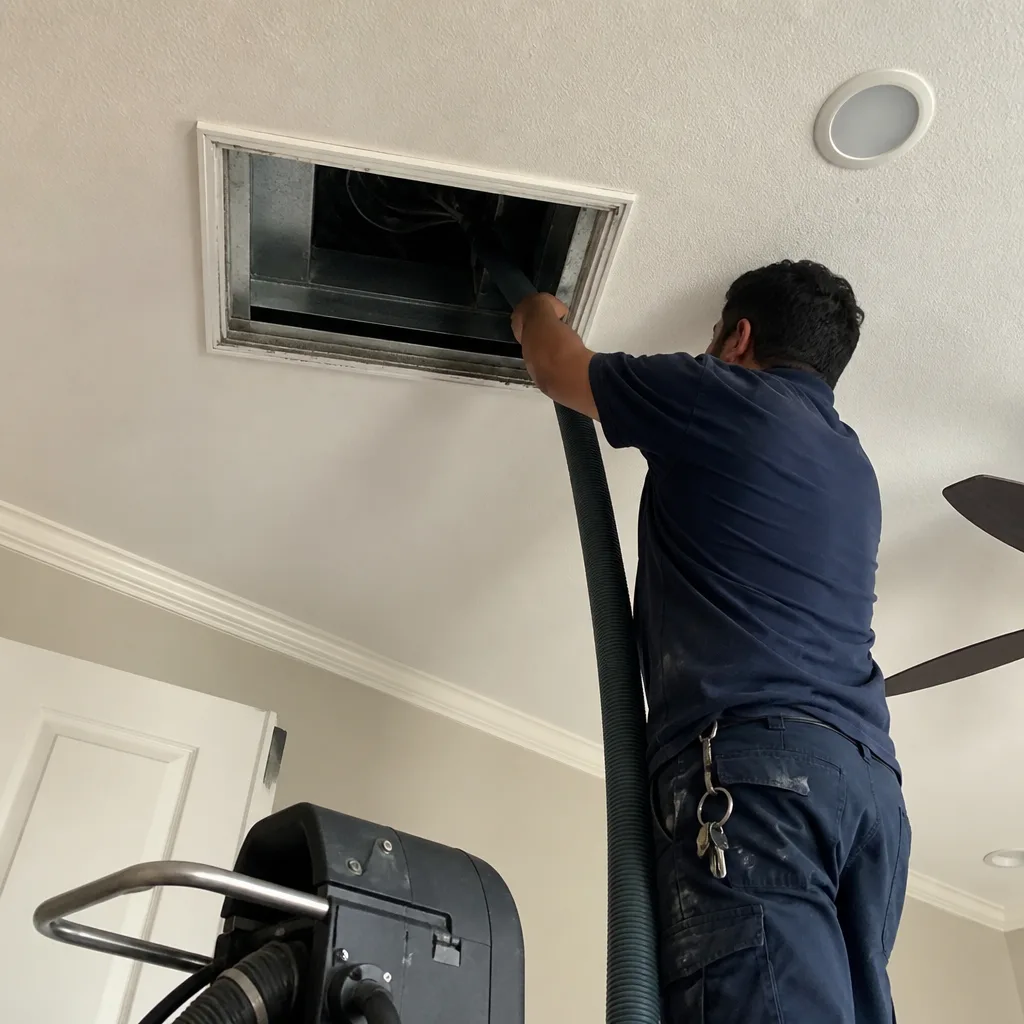 After
AfterDIY vs Professional Air Duct Cleaning: The Austin Homeowner’s Decision Guide
Most Austin homeowners who search “how to clean air ducts yourself” already suspect the $79 coupon companies are selling vacuum noise, not source removal. What fewer realize is that some duct cleaning tasks are genuinely worth doing yourself, with about $40 in supplies and an hour on a Saturday. The problem isn’t that DIY is useless; it’s that the internet rarely tells you where the useful boundary ends. In Austin’s market, where flex duct dominates post-2000 construction and summer AC loads push debris deep into the system, knowing that boundary can save you from a $400 mistake: redistributing particulate through your air handler and onto your evaporator coil.
This guide shows exactly what you can clean yourself, what requires negative-pressure extraction equipment, and how to document what you find so any professional you call later can quote accurately. We’ll cover tools, costs, risks specific to Austin’s climate and housing stock, and the honest decision matrix for when professional cleaning is justified.
Quick Answer
DIY air duct cleaning in Austin is effective for supply grilles, boot collars, and the first 12 inches of visible duct interior, costing roughly $30-$50 in tools and taking 1-2 hours. Professional cleaning becomes necessary when debris has adhered to duct lining beyond flashlight range, which requires negative-pressure source removal equipment (4,000+ CFM suction with rotary contact tools) that no consumer shop-vac can replicate. The dividing line is physical, not aspirational: if you cannot see it and reach it with a gloved hand, you cannot clean it effectively without professional equipment.
Table of Contents
- What You Can Clean Yourself: The Honest Boundary
- Tools, Costs, and Time for DIY Duct Cleaning
- How Professional Air Duct Cleaning Actually Works
- Austin-Specific Risks of DIY Duct Cleaning
- Documenting What You Find Before You Call a Professional
- The Honest Decision Matrix: DIY vs Professional
- What Professional Air Duct Cleaning Costs in Austin
- Common Mistakes to Avoid
- When to Call a Professional
- Frequently Asked Questions
- The Bottom Line
BeforeAfterWhat You Can Clean Yourself: The Honest Boundary
The effective DIY zone is smaller than most YouTube tutorials suggest, but it’s real. We’ve documented thousands of Austin homes since 2013, and the pattern is consistent: the visible, accessible components accumulate the most surface debris, respond well to basic cleaning, and present minimal risk of system contamination when handled correctly.
The three zones you can clean yourself:
- Supply and return grilles (registers) - the vent covers themselves, which trap hair, dust, and skin flakes in their louvers. Remove with a screwdriver, soak in warm water with dish soap, dry completely, and reinstall.
- Boot collars - the sheet metal or plastic transition piece connecting the grille to the duct run. Wipe with a microfiber cloth wrapped around a long-handled tool. A 24-inch flexible duster with a microfiber sleeve costs about $12 and reaches most residential boot depths.
- Visible duct interior within flashlight range - the first 6 to 12 inches inside the duct run, which you can inspect with a phone flashlight and clean with a vacuum hose attachment. Do not push debris deeper into the system; use suction to pull debris toward you.
What you cannot reach or see from the register opening is where the actual particulate load lives. In Austin’s flex duct systems, the ribbed interior surface creates turbulence zones 10 to 20 feet from the register where debris adheres to the duct lining. This adhered material requires mechanical agitation plus simultaneous capture, which is the definition of negative-pressure source removal.
The boot collar deserves particular attention in Austin because of our hard water and high summer humidity. Mineral deposits combine with dust at the grille-boot junction, creating a crust that restricts airflow. A homeowner can remove this crust with a damp cloth and a plastic scraper. What you cannot remove is the equivalent buildup 15 feet upstream, where the duct run passes through an unconditioned attic hitting 140°F in August.
Tools, Costs, and Time for DIY Duct Cleaning
Here’s what you actually need, with current retail pricing in Austin:
| Item | Purpose | Approximate Cost |
|---|---|---|
| HEPA vacuum with hose extension | Suction at register openings; capture dislodged debris | $0 (if owned) to $80 rental |
| 24-inch flexible microfiber duster | Boot collar and visible interior wiping | $10-$15 |
| Soft-bristle brush (paintbrush size) | Agitation of grille louvers and boot edges | $5-$8 |
| Phillips and flathead screwdrivers | Grille removal | $0 (if owned) |
| Flashlight or phone with bright LED | Interior inspection | $0 |
| N95 respirator mask | Personal protection from disturbed particulate | |
| Drop cloth or old sheet | Floor protection | $0 |
Total investment if you own a vacuum: $30-$45
Total time for a 2,000-square-foot home: 1.5 to 2.5 hours
The N95 is non-negotiable. Austin’s pollen load, combined with decade-old dust in ductwork, creates a respiratory hazard when disturbed. We’ve photographed boot collars in Allandale and Crestview homes that looked like felted wool from accumulated debris; disturbing that material without protection and without capture equipment is how homeowners end up with sinus infections they attribute to “allergies acting up.”
One tool we do not recommend: compressed air. The DIY videos showing homeowners blasting ducts with a leaf blower or air compressor are demonstrating exactly how to redistribute debris through the entire system. Compressed air without simultaneous negative-pressure capture violates the basic physics of source removal. The debris goes somewhere, and in a forced-air system, “somewhere” includes your evaporator coil, blower motor, and back into your living space.
How Professional Air Duct Cleaning Actually Works
Professional source removal operates on a different physical principle than consumer cleaning. The key metric is cubic feet per minute (CFM) of negative pressure, and the critical pairing is mechanical agitation with simultaneous capture.
Negative-pressure requirements:
- Consumer shop-vac: 100-150 CFM
- Portable HEPA extraction unit (professional): 2,000-3,500 CFM
- Truck-mounted negative-pressure system: 4,000-6,000 CFM
The CFM difference is not incremental; it’s categorical. At 100 CFM, a shop-vac moves air through a narrow hose. At 4,000+ CFM, a truck-mounted system creates sufficient negative pressure throughout the entire duct network to pull dislodged debris into the collection chamber before it can escape into the living space or migrate to other system components.
The professional process we use at CleanRun Air Duct Cleaning Austin home:
- System inspection and photo documentation - We photograph the interior of every duct run before touching equipment, establishing baseline condition under Haven Standard Clause 1 (written scope and price before work begins).
- Register removal and boot cleaning - The same zones a homeowner can clean, but with commercial-grade tools and as part of a complete system approach.
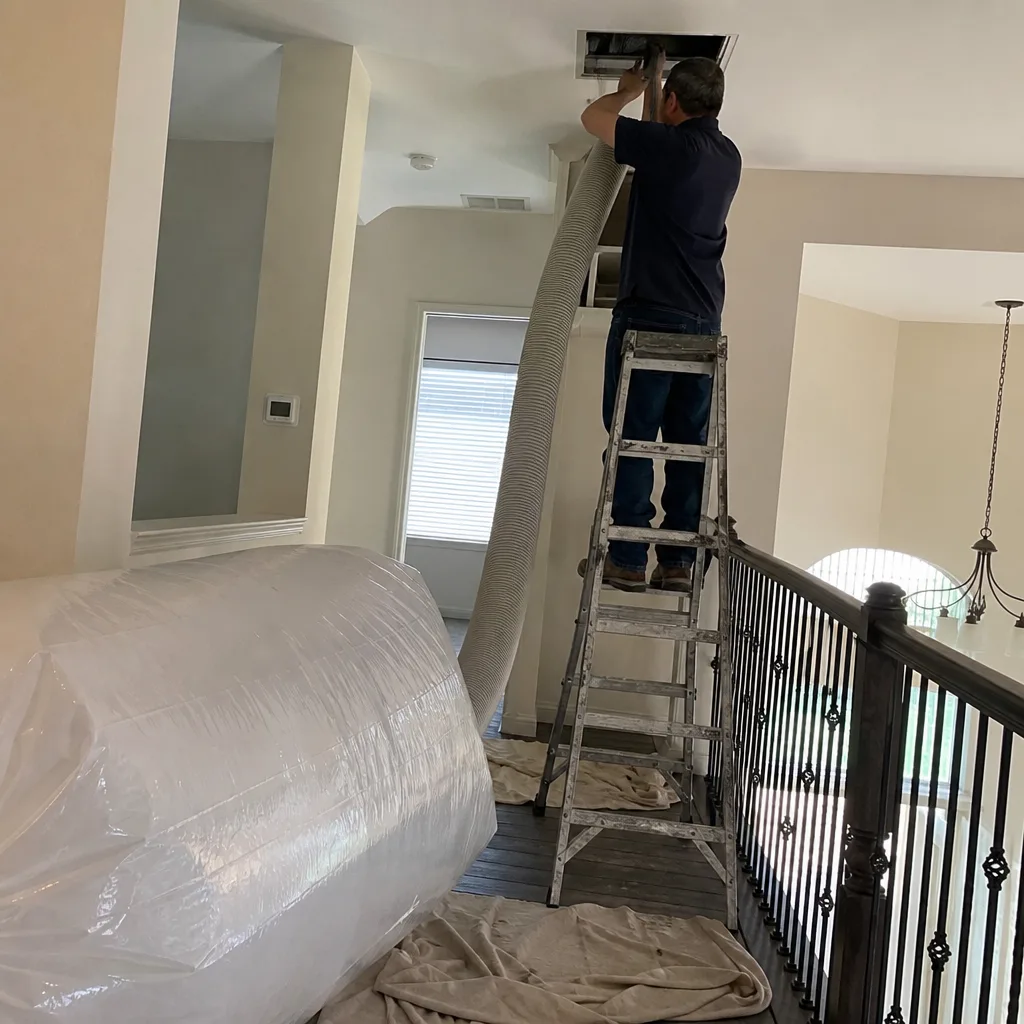
- Negative-pressure hookup - A large-diameter hose connects to the main trunk line, creating suction throughout the duct network. Our portable units, manufactured by Nikro and Abatement Technologies, generate sufficient CFM for residential systems up to 5 tons.
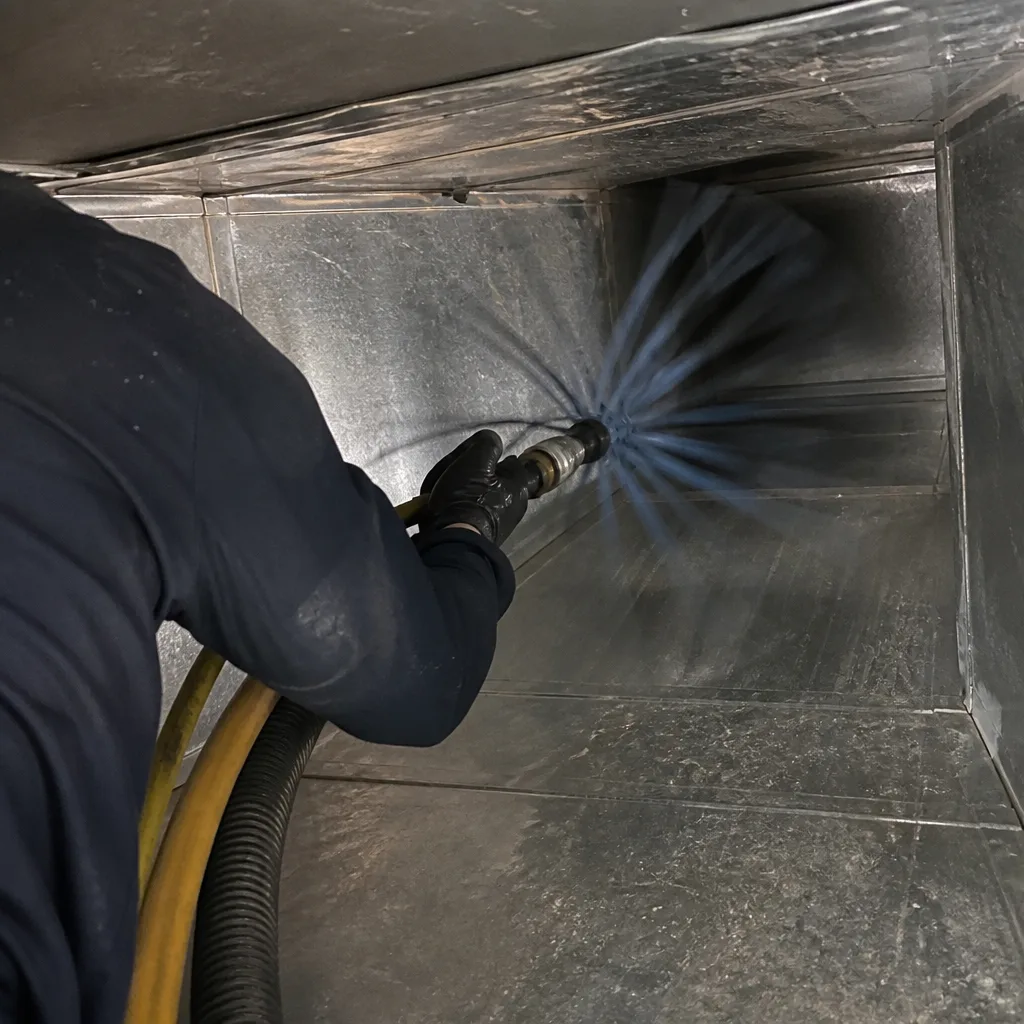
- Mechanical agitation per duct run - Rotary contact tools (we use Rotobrush systems with powered bristle heads) traverse each duct run, dislodging adhered debris from the duct lining while the negative-pressure system captures it at the point of disturbance.
- Plenum and air handler access cleaning - The plenum (the sheet metal distribution box attached to your air handler) is opened, inspected, and cleaned. This is where DIY attempts most commonly fail, as the plenum requires system shutdown and electrical safety protocols.
- Post-cleaning photo documentation - Every duct run is photographed after cleaning, and the before-and-after record is delivered to the customer as a standard job deliverable. We’ve held this practice since our first job in 2013.
The equipment matters because it determines what can be physically removed. A Rotobrush head with reverse-bristle design can contact and agitate the full interior surface of a flex duct run. A microfiber duster on a homeowner’s pole cannot. The negative-pressure system matters because without it, agitation equals redistribution. This is not marketing language; it’s the physics of particulate dynamics in a closed air system.
Austin-Specific Risks of DIY Duct Cleaning
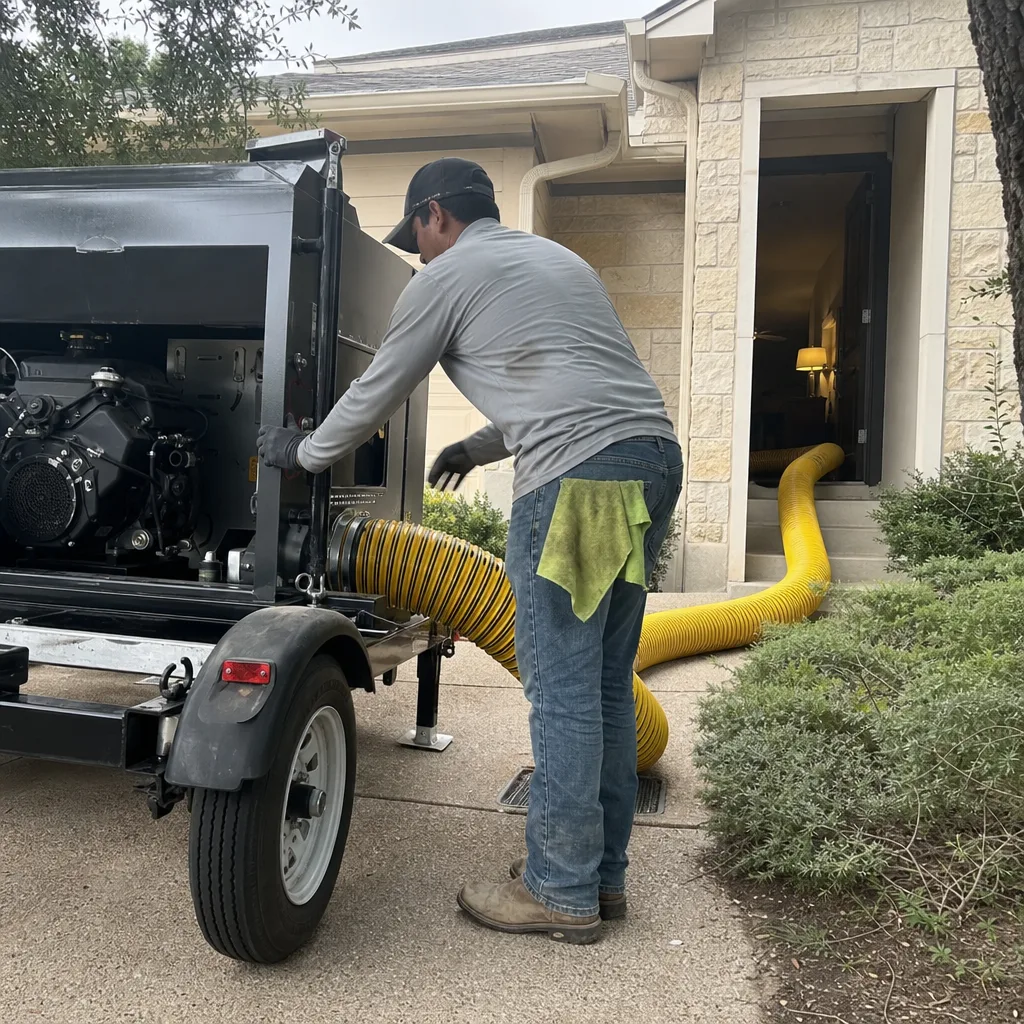
Austin’s housing stock and climate create specific hazards for DIY duct cleaning that don’t apply uniformly across all markets. Understanding these local factors is essential to making an informed decision.
Flex duct dominance in post-2000 construction:
Most homes built in Austin from 2000 onward use flexible duct (flex duct) rather than rigid sheet metal. The ribbed interior surface of flex duct traps debris more aggressively than smooth metal. It also tears more easily. We’ve repaired duct runs in Circle C Ranch and Steiner Ranch where a homeowner’s aggressive brushing created punctures that leaked conditioned air into attics, adding $200+ to the annual cooling bill until discovered. A torn flex duct run in a 140°F Austin attic is not a minor issue; it’s an efficiency and indoor air quality problem that compounds monthly.
High particulate load from limestone geology and construction activity:
Austin’s Edwards Plateau limestone produces fine calcareous dust that infiltrates homes and adheres to duct interiors with a tenacity that organic dust alone does not match. This mineral dust requires more aggressive agitation than typical household debris. In neighborhoods with active construction, such as East Austin and the Mueller development area, we’ve documented duct runs with visible construction dust accumulation within 18 months of home completion.
Evaporator coil vulnerability:
This is the most expensive DIY risk. Your evaporator coil sits downstream of the return ductwork. Disturbing debris in return ducts without capture equipment allows particulate to migrate through the air handler and deposit on the coil. A dirty coil reduces heat transfer efficiency, increases refrigerant pressure, and can eventually cause compressor failure. Coil cleaning or replacement costs $400-$1,200 in Austin, which exceeds the cost of professional duct cleaning. In our experience, this is the scenario that converts skeptical homeowners: the “I tried it myself and made it worse” call.
Humidity and microbial growth:
Austin’s summer humidity, combined with temperature differentials in attic duct runs, creates condensation conditions that support microbial growth on duct interiors. DIY cleaning with inadequate drying or with water-based cleaners can exacerbate this problem. Professional cleaning includes assessment for microbial contamination and, when indicated, application of EPA-registered sanitizers (we use products compatible with Honeywell and Aprilaire air quality systems) with proper dwell time and ventilation protocols.
Documenting What You Find Before You Call a Professional
The DIY inspection you perform today becomes valuable pre-job documentation if you later hire a professional. Most homeowners who call us have no information beyond “I think my ducts need cleaning.” A documented inspection changes the conversation entirely.
What to photograph and record:
- Every grille and boot collar - Remove the grille, photograph the boot interior with your phone flashlight illuminating the surface. Note debris type: dust accumulation, hair, visible mold or staining, construction debris, or pest evidence.
- The furthest point you can see into each duct run - Use your phone camera with flash; the image will reveal more than naked-eye inspection. Note how far visible debris extends.
- Your HVAC system’s age and model - Photograph the data plate on the air handler. This tells us duct sizing, system capacity, and whether the plenum configuration requires special access.
- Filter condition and filter slot configuration - A poorly fitting filter bypasses filtration entirely; this is diagnostic information, not just housekeeping.
- Any recent renovation or construction dates - Post-construction cleaning requires different scope and pricing than maintenance cleaning.
When you call Air Duct Cleaning in Austin with this documentation, we can provide a more precise written scope and price before arrival. Haven Standard Clause 1 requires written pricing before work begins; your documentation helps us fulfill that promise accurately rather than with a wide estimate range.
We’ve had homeowners in Tarrytown and Clarksville email us their inspection photos before scheduling. In every case, the final invoice matched the preliminary quote because the scope was established from evidence, not assumptions.
The Honest Decision Matrix: DIY vs Professional
This is where most guides default to “hire a professional for everything.” That’s not honest, and it’s not useful. Here’s our actual assessment framework based on 52,000+ homes served since 2013:
| Scenario | DIY Appropriate? | Professional Recommended? | Priority Level |
|---|---|---|---|
| Single-family home under 5 years old, documented filter changes every 3 months, no renovations, no visible debris at grilles | Yes - grille and boot cleaning annually | Not urgently; schedule inspection at year 7-8 | Low |
| Home 5-10 years old, filter records inconsistent, some visible dust at grilles, no respiratory symptoms | Yes - thorough DIY cleaning, then reassess in 6 months | Consider professional inspection to establish baseline | Moderate |
| Home over 10 years old, no maintenance records, visible debris beyond boot collar, recent renovation, or occupants with allergies/asthma | No - risk of redistribution exceeds benefit | Yes - full source removal with documented photo record | High |
| Any age home with pest evidence (droppings, nesting material, insect casings) in ductwork | No - health hazard requires professional protocols | Yes - with sanitization and potential duct repair | Urgent |
| Post-renovation or post-construction, any age | Limited - grille cleaning only; construction dust is abrasive and widely distributed | Yes - full system cleaning with HEPA filtration | High |
The filter history matters more than most homeowners realize. A home with consistent MERV 8+ filter changes and tight filter fit has dramatically lower duct debris accumulation than one with intermittent filter changes or bypass gaps. We’ve cleaned ducts in 20-year-old Austin homes that were relatively clean because of diligent filtration, and 5-year-old homes with severe accumulation because of construction dust and poor filter maintenance.
The respiratory health of occupants is the non-negotiable variable. If someone in the home has asthma, COPD, or immunocompromise, the redistribution risk of DIY cleaning outweighs any cost savings. Professional negative-pressure extraction with HEPA filtration is the appropriate standard.
What Professional Air Duct Cleaning Costs in Austin
Honest pricing is central to how CleanRun operates. We publish ranges because Haven Standard Clause 1 requires written price before work begins, and a customer deserves to know whether they’re in the market before scheduling.
Austin market pricing for professional air duct cleaning, 2024-2025:
- Small home (under 1,500 sq ft, 6-8 duct runs): $350-$500
- Typical home (1,500-2,500 sq ft, 10-14 duct runs): $450-$650
- Large home (2,500-4,000 sq ft, 16-24 duct runs): $600-$850
- Estate or custom home (4,000+ sq ft, multiple zones): $800-$1,200+
These are whole-system prices, not per-vent pricing. Per-vent pricing is a common bait-and-switch structure: a low base rate with add-ons that inflate the final invoice. We quote one flat price per system, agreed in writing before work starts, with no additional charges for “extra” duct runs discovered during service.
What affects pricing within these ranges:
- Accessibility of duct runs (crawl space vs. attic vs. conditioned space)
- Presence of flex duct vs. rigid metal (flex requires more careful handling)
- Post-construction or renovation cleaning (heavier debris load)
- Need for sanitization or sealant application
- Duct repair requirements (torn flex, disconnected boots, failed seals)
The $79-$99 coupon operators represent a different service category entirely. Their equipment is typically a shop-vac with a rotary brush attachment, operated without true negative-pressure containment. The result is often vacuum noise with minimal debris removal, sometimes with damage to flex duct. We’ve been called to repair or re-clean after these services in every Austin neighborhood from Windsor Park to Westlake.
Our Dryer Vent Cleaning in Austin and HVAC Cleaning in Austin services are priced and scoped separately, though package pricing is available when multiple services are performed on the same visit. The photo record and written price guarantee apply to every service.
Common Mistakes to Avoid
- Using compressed air without capture equipment - This redistributes debris through the entire system. In Austin’s tight, energy-efficient homes, that debris circulates for weeks before settling.
- Cleaning only the grilles and assuming the job is done - Grille cleaning improves appearance and removes surface debris, but it addresses perhaps 5% of total system particulate load. The remaining 95% is what affects air quality and system efficiency.
- Ignoring the return side - Return ducts pull air from your living space back to the air handler. They are typically dirtier than supply ducts and are the path to evaporator coil contamination. DIY efforts often focus exclusively on supply grilles.
- Using water or cleaning solutions inside ductwork - Moisture in duct interiors, especially in Austin’s humid summer conditions, promotes microbial growth. We’ve found mold blooms in Barton Hills and Zilker area homes where homeowners used “natural” cleaning sprays in ducts.
- Failing to turn off the HVAC system - Running the fan during DIY cleaning pulls dislodged debris through the air handler. The system must be fully off, not just thermostat-adjusted, as some systems have fan-only modes that activate unexpectedly.
- Neglecting to check for asbestos in pre-1985 homes - Austin has significant pre-1985 housing stock in neighborhoods like Hyde Park, Clarksville, and parts of East Austin. Duct insulation and register padding in these homes may contain asbestos. Disturbing it without testing is a serious health and legal liability.
- Assuming all duct cleaning companies are equivalent - The equipment, methodology, and documentation standards vary enormously. A company using Rotobrush or Nikro equipment with negative-pressure extraction and photo documentation is delivering a categorically different service than one with a shop-vac and a brush on an extension pole.
When to Call a Professional
Call a professional when the work exceeds your physical access, when the debris type suggests health hazard, when your home’s age or construction history indicates systemic contamination, or when you’ve performed DIY cleaning and the grilles re-soil within weeks. The last scenario indicates upstream accumulation that will continue to migrate until source removal is performed.
CleanRun Air Duct Cleaning Austin offers our Air Duct Cleaning services with free estimates in Austin - call (737) 243-9544. Every estimate includes a written scope and price before any work begins, under Haven Standard Clause 1. We also provide a Free Second Opinion on any written estimate from another company; bring their quote and we’ll put our number next to it in writing.
Frequently Asked Questions
Professional whole-system air duct cleaning in Austin typically costs $350-$650 for homes under 2,500 square feet, and $600-$850 for larger homes up to 4,000 square feet. These are flat prices per system, not per-vent rates that escalate during service. Call (737) 243-9544 for a written estimate specific to your home - estimates are free and include no obligation.
The $79-$129 quotes typically use consumer-grade equipment without true negative-pressure containment, which means they move some debris around without capturing it. True source removal requires truck-mounted or portable extraction units generating 4,000+ CFM, rotary contact agitation tools, and HEPA filtration. The equipment investment alone explains the pricing difference. We publish our equipment roster - Rotobrush, Nikro, Abatement Technologies - so customers can verify what they’re paying for.
You should receive before-and-after photographs of every duct run, delivered as a standard job record. At CleanRun, we’ve photographed every duct run on every job since 2013. If a company cannot or will not show you the interior condition before and after, you have no evidence that source removal occurred. The photo record is your proof of work performed, not a marketing extra.
For Austin’s climate and particulate load, every 5 to 7 years is appropriate for homes with consistent filter maintenance. Homes with pets, recent construction, or occupants with respiratory conditions may benefit from 3 to 5 year intervals. Homes over 15 years old with no prior cleaning history should establish a baseline with professional inspection and cleaning, then schedule on the longer interval if conditions warrant.
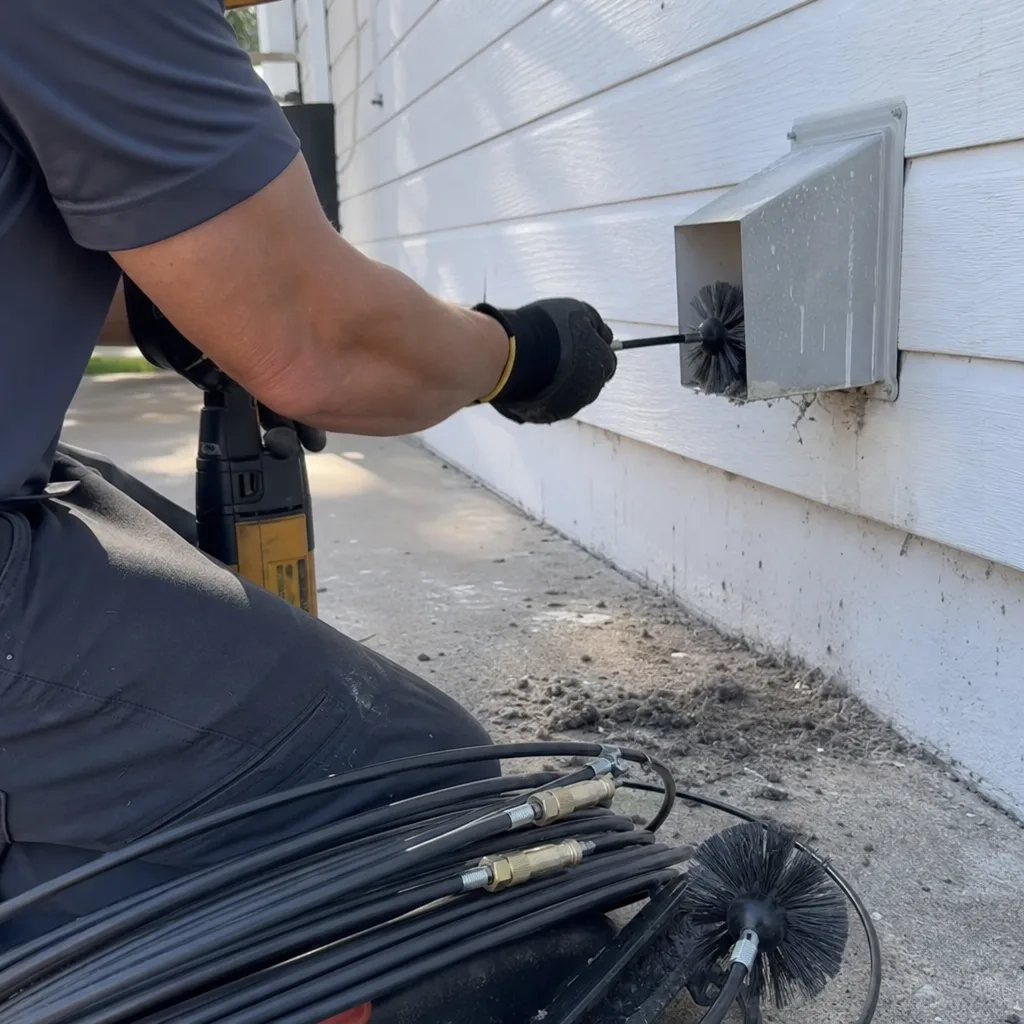
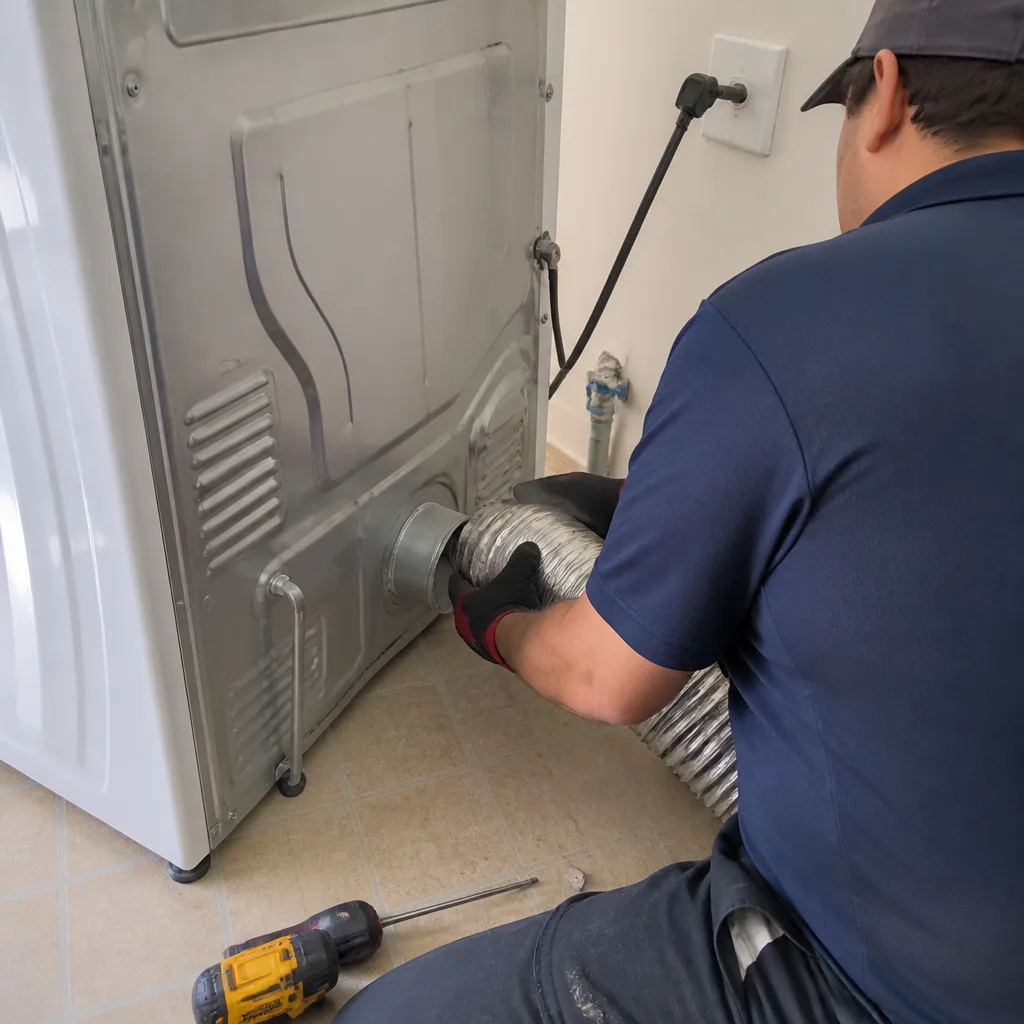
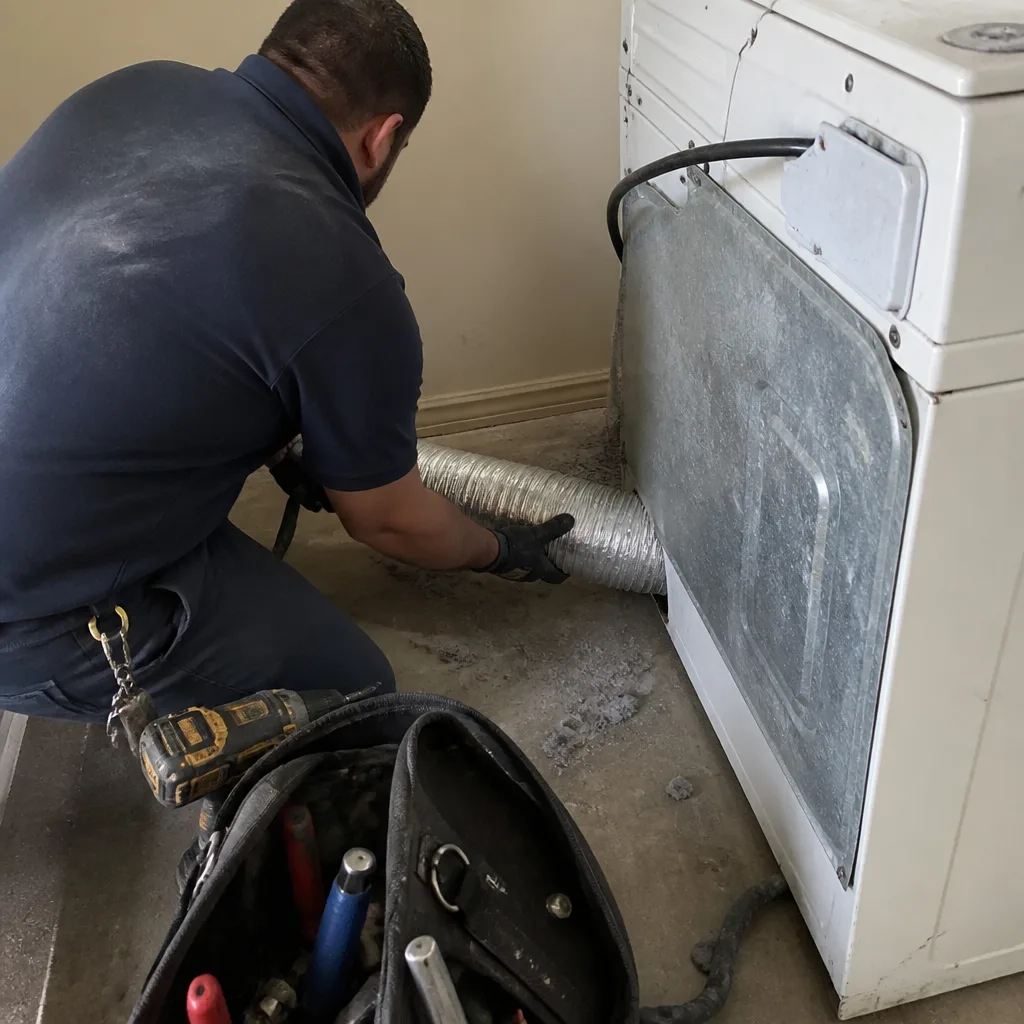
The accessible portion from the dryer to the exterior wall termination can be cleaned by a homeowner with a dryer vent brush kit ($15-$25). However, runs exceeding 15 feet, runs with multiple bends, or runs terminating on a roof require professional equipment for safe, complete cleaning. Dryer vent fires are a leading cause of residential fires in Austin; if you’re uncertain about your vent configuration, professional inspection is justified. Our Dryer Vent Cleaning in Austin service includes airflow measurement to verify restoration of proper exhaust velocity.
It can. Most HVAC manufacturer warranties require that ductwork and system components be serviced by qualified technicians using appropriate methods. Damage caused by homeowner cleaning, particularly to flex duct, electrical components, or the air handler, is typically excluded from warranty coverage. Check your warranty terms before proceeding with any internal system work.
Verify these specific items: published equipment brands you can research independently; written price before work begins, not estimates given over the phone that change on arrival; before-and-after photo documentation as a standard deliverable; background-checked, uniformed technicians identified by name before arrival; and a written guarantee backed by named standard (our 365-Day Done Right Promise is backed in writing on every job). License number should be published on the website, not buried in a footer or absent entirely.
The Bottom Line
DIY air duct cleaning has a valid, limited role: grilles, boot collars, and visible interior surfaces within flashlight range, performed with proper protection and without compressed air. For additional guidance, see more guides & resources on our blog. Beyond that boundary, the physics of particulate removal require professional negative-pressure extraction with mechanical agitation. In Austin’s flex-duct-dominant housing stock, with our specific risks of evaporator coil contamination and duct damage, attempting more than the limited DIY zone can convert a maintenance task into a repair expense.
The honest decision comes down to documentation: what you can see, reach, and photograph versus what requires specialized equipment to access and capture. When the latter category applies, professional service should include written pricing, equipment transparency, and photographic proof of work performed. Anything less leaves you paying for uncertainty.
Written by Tomas Reyes, Owner at CleanRun Air Duct Cleaning Austin, serving Austin since 2013.