
Whole-system duct and dryer vent check with before-and-after photos - you see exactly what came out of your vents
That "$99 whole-house special" is a bait ad - the real number appears once they are in your hallway, or the "clean" is a shop-vac at the register. We photograph the inside of your ducts before and after instead.
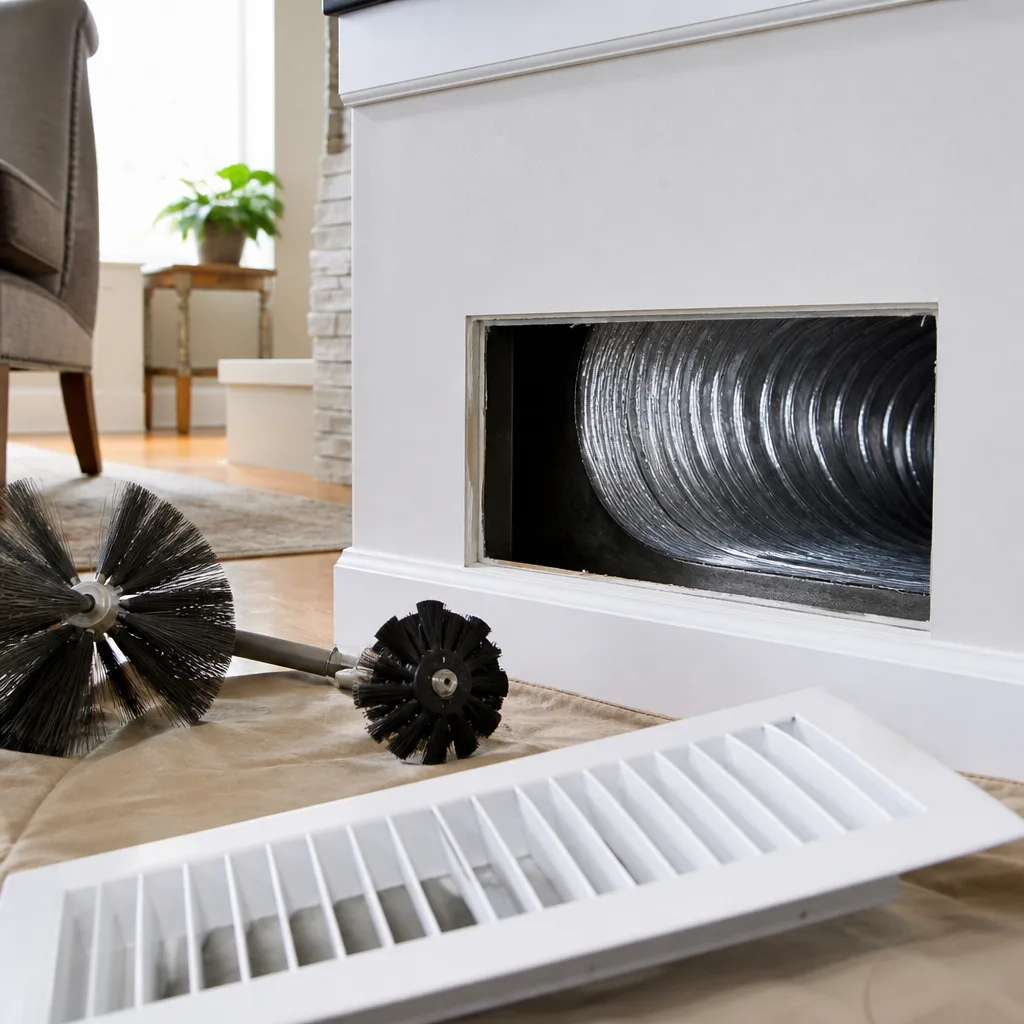
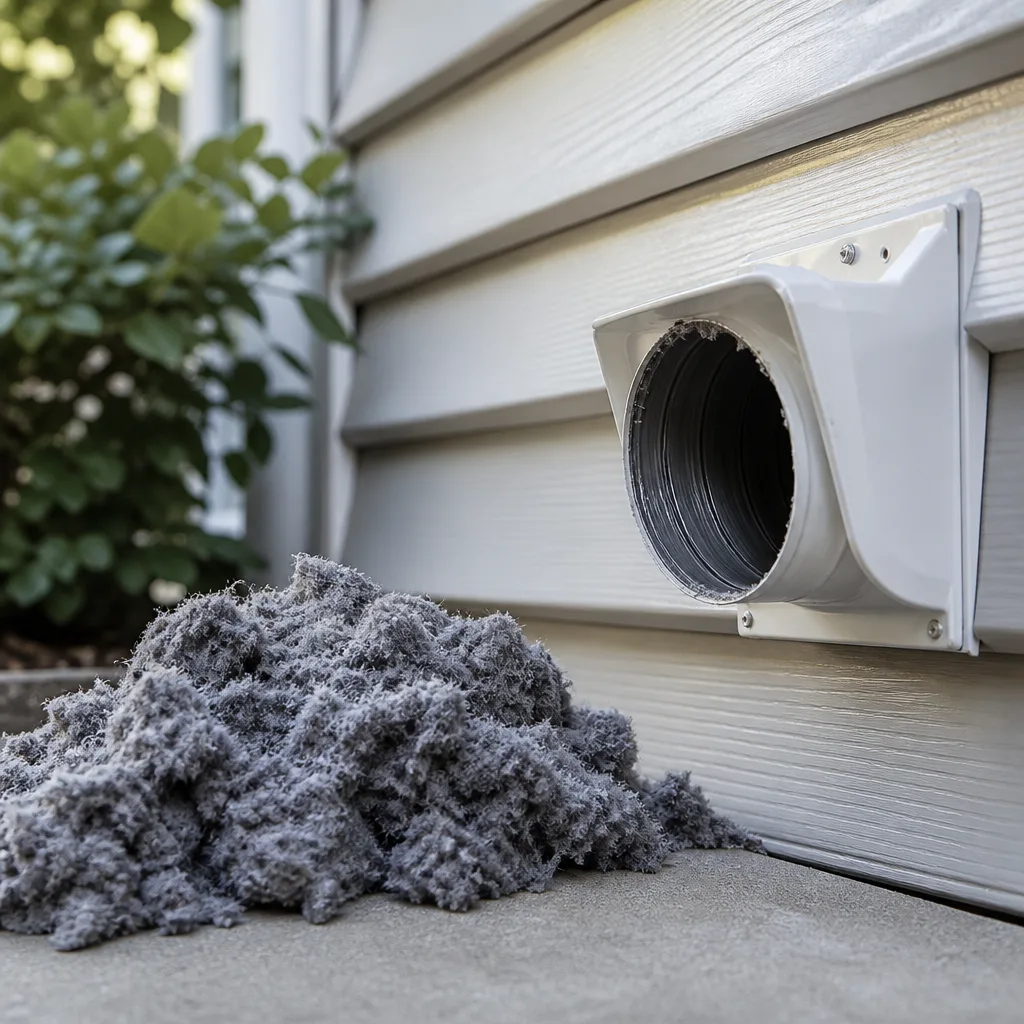
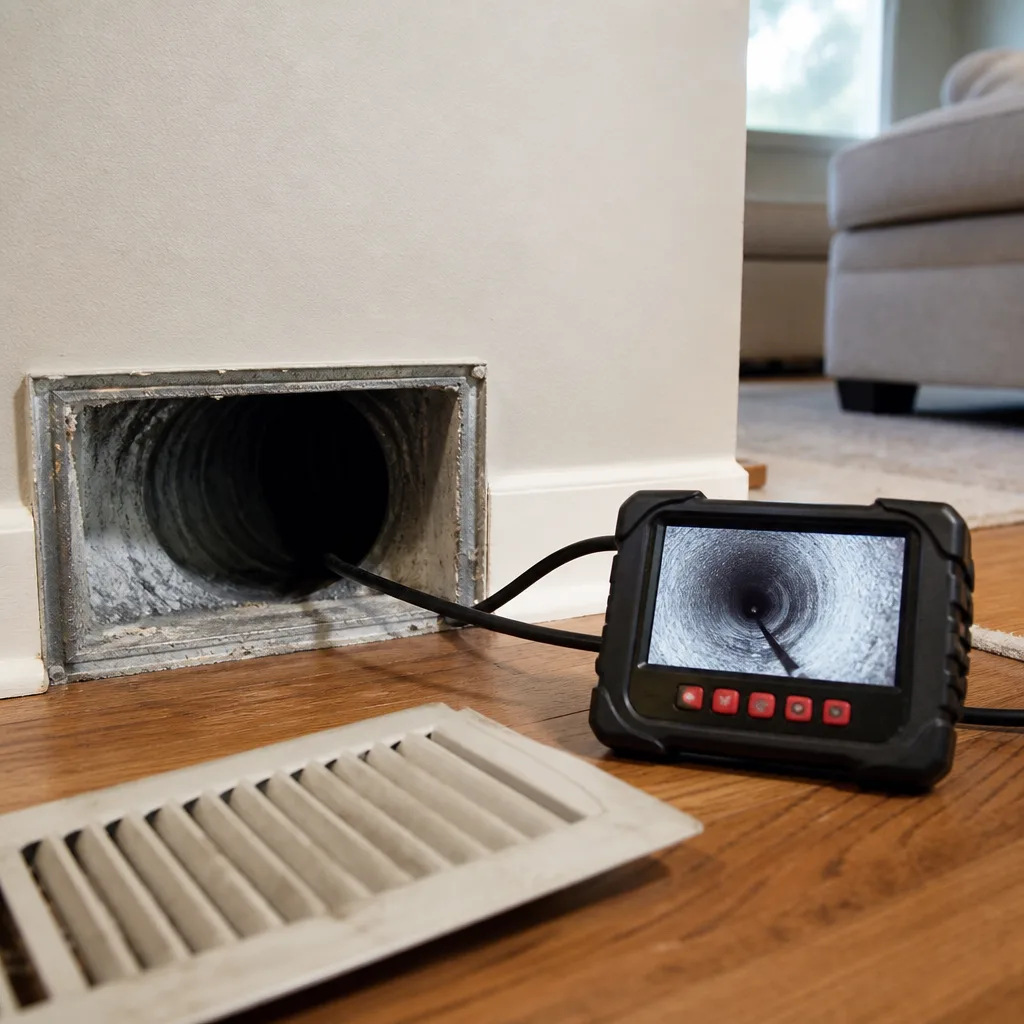
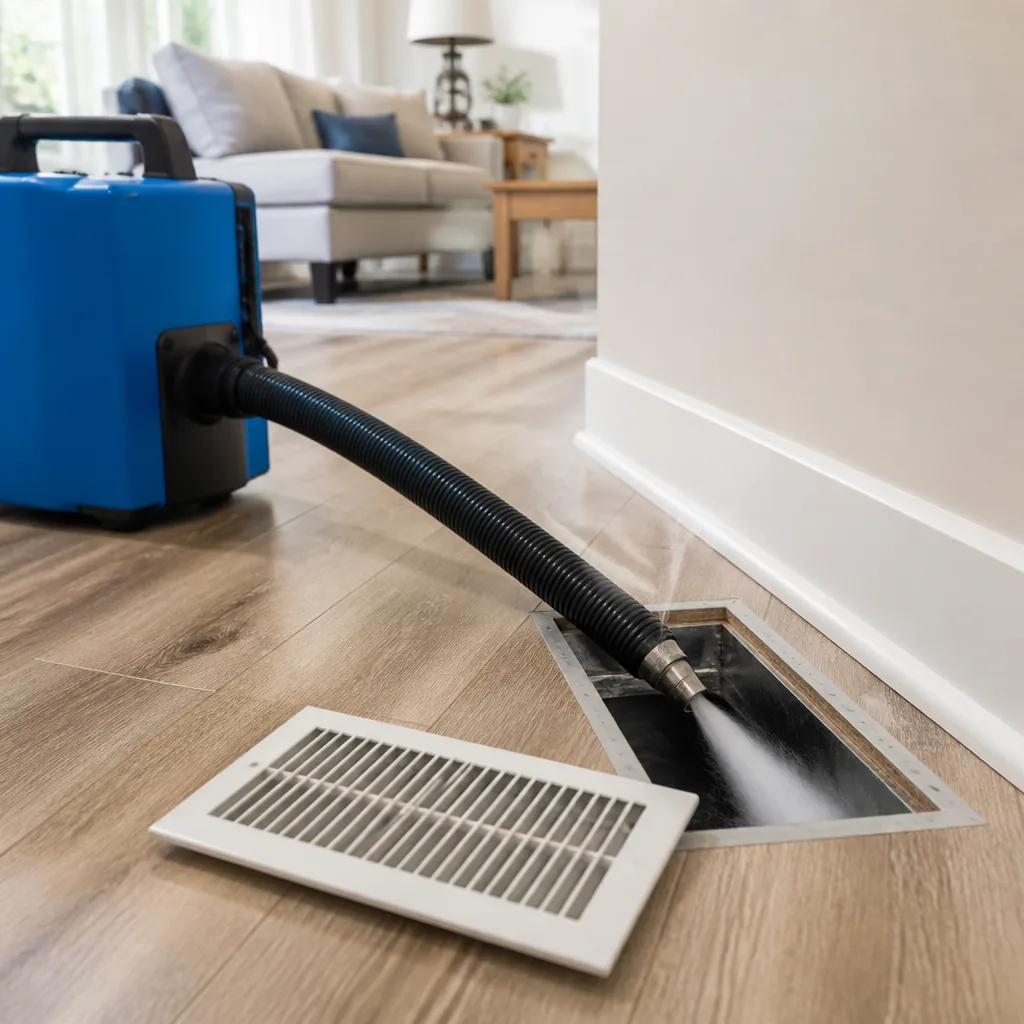
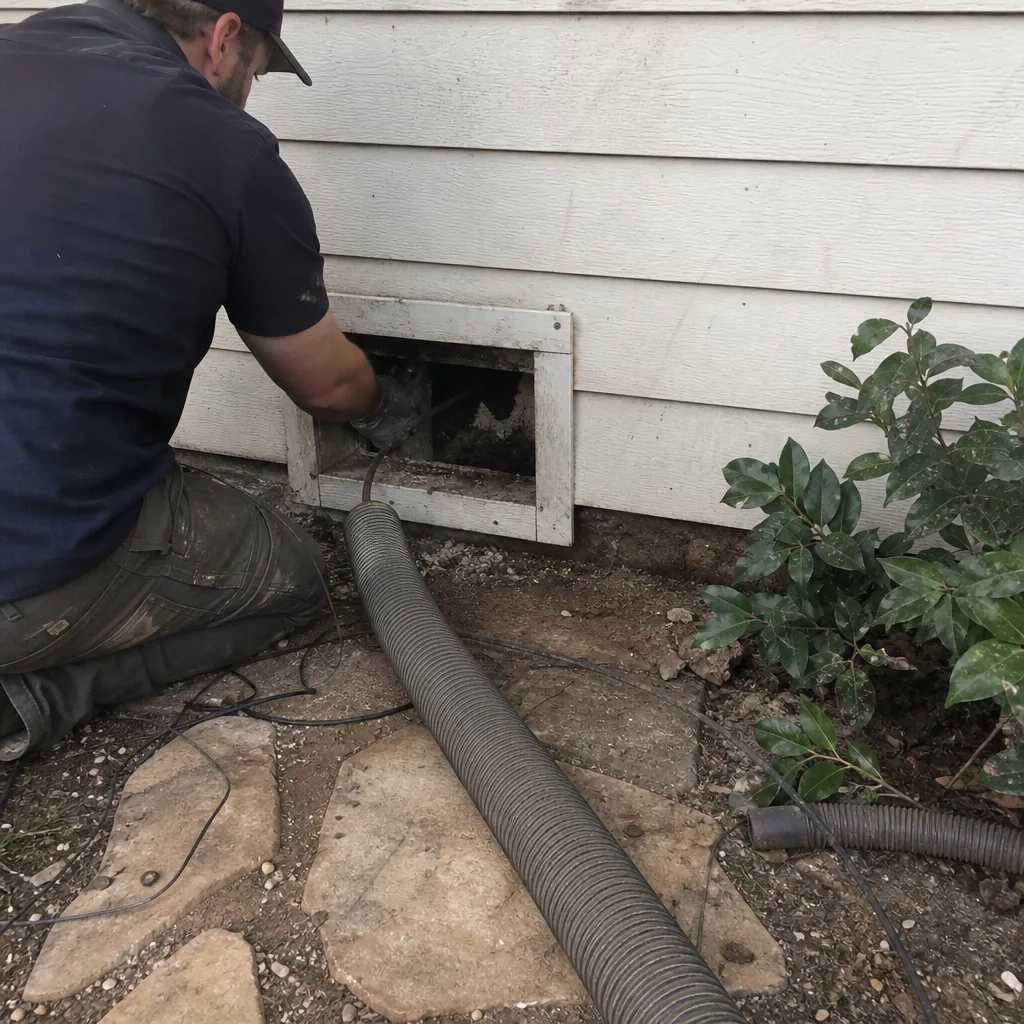 Before
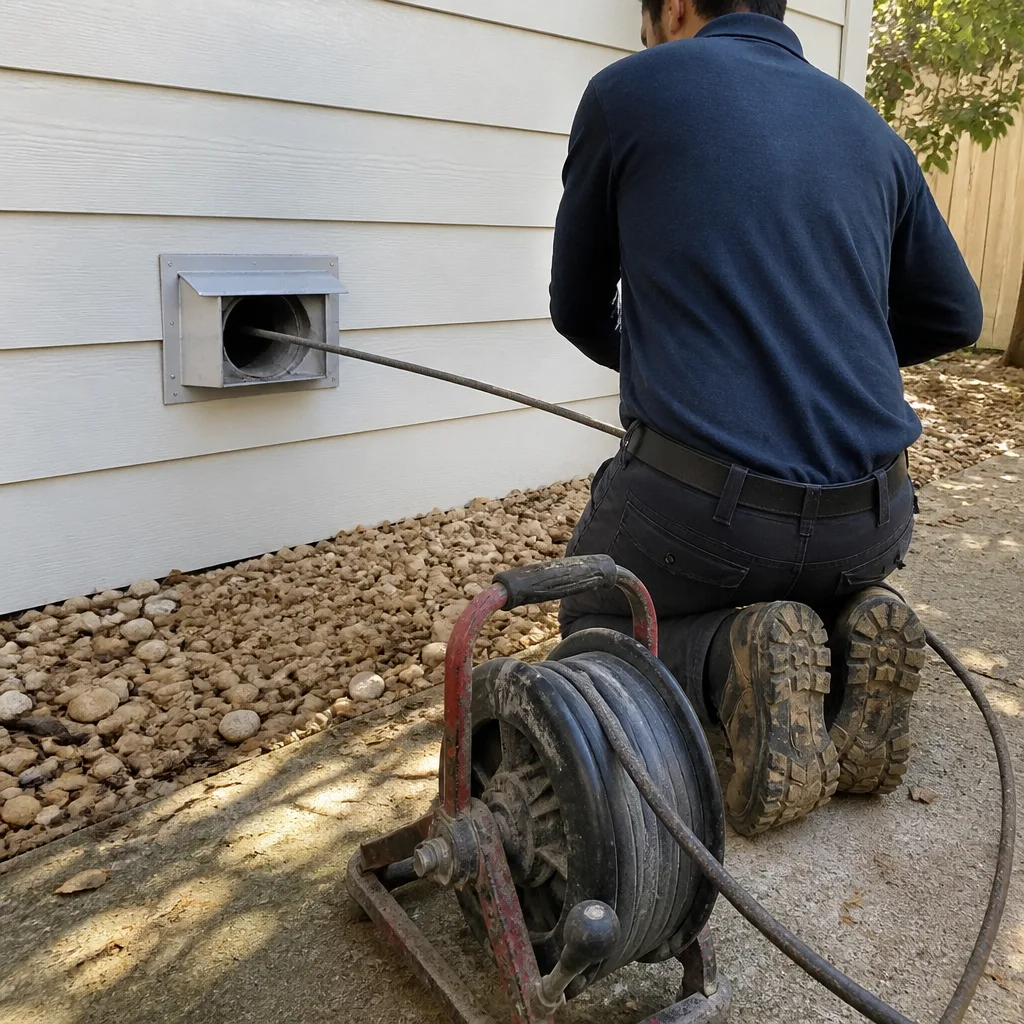 After
After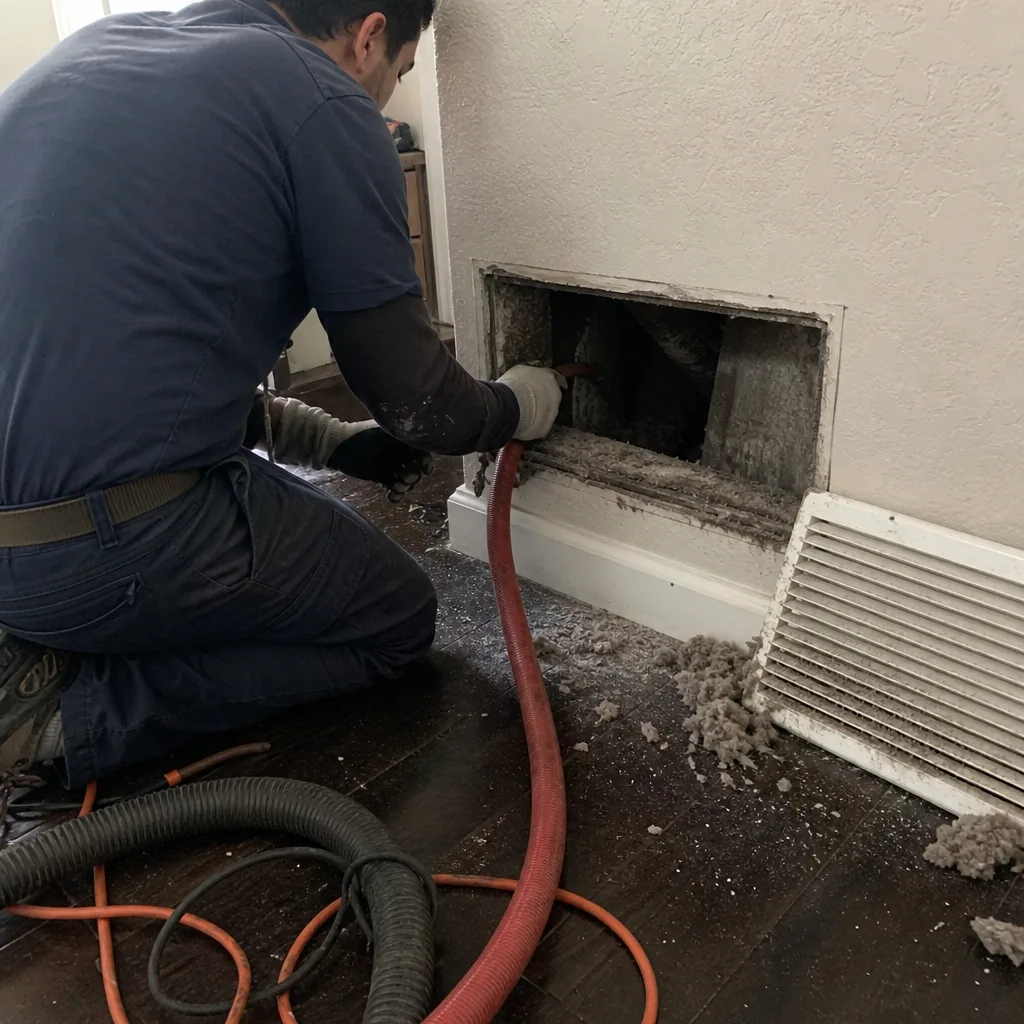 Before
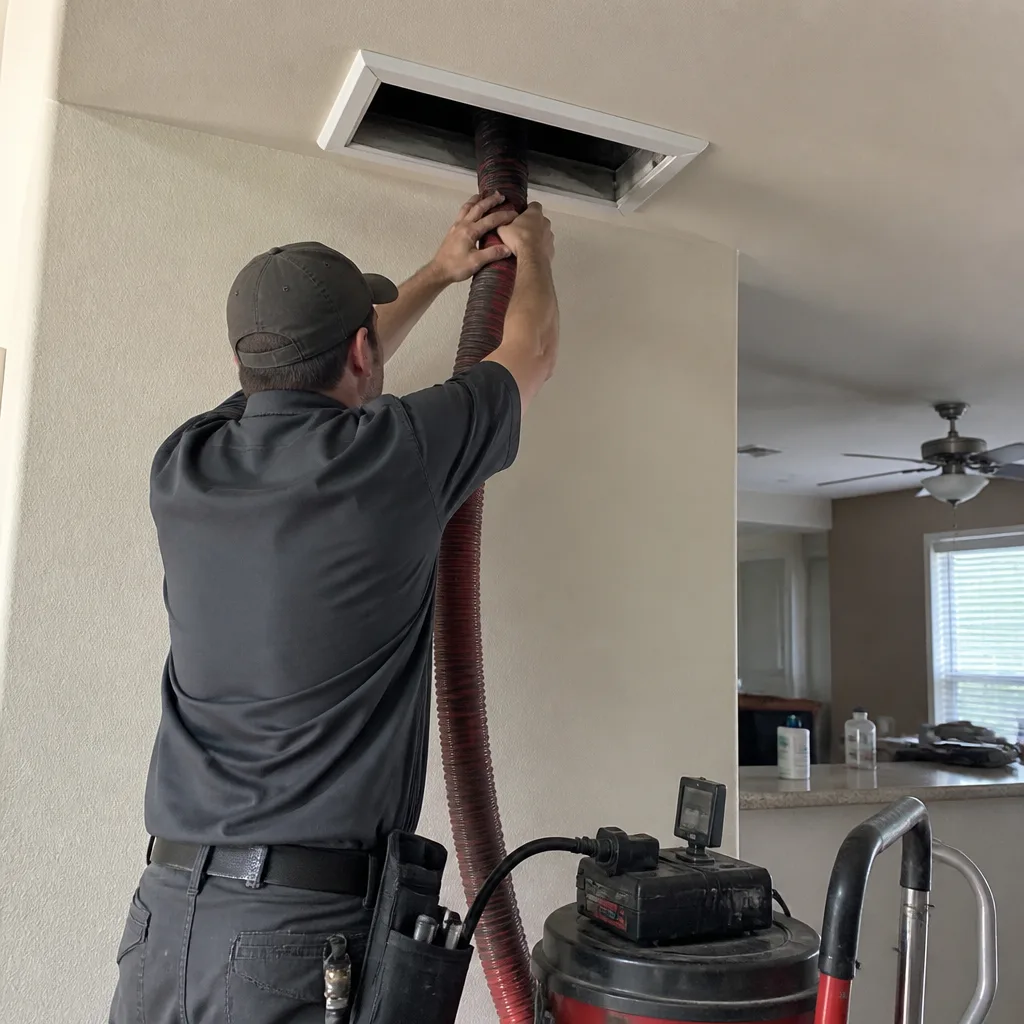 After
After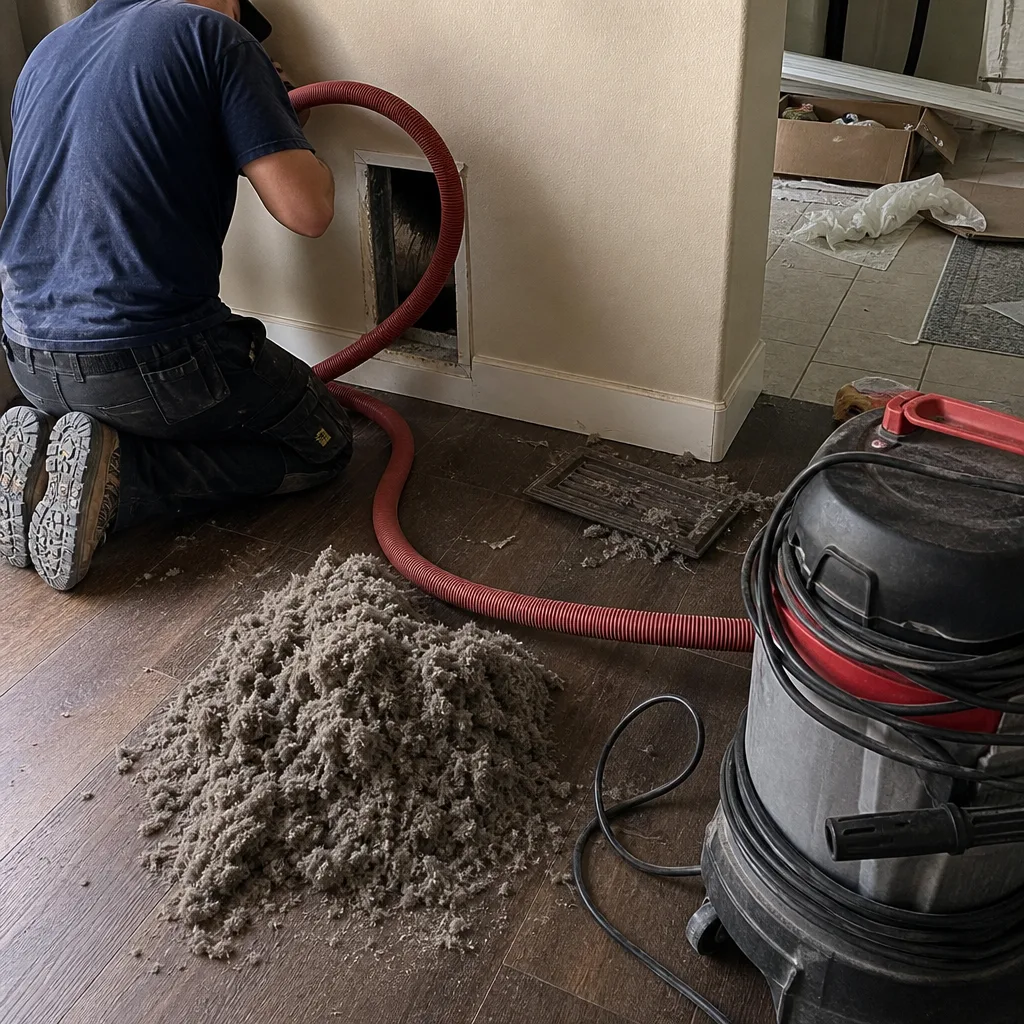 Before
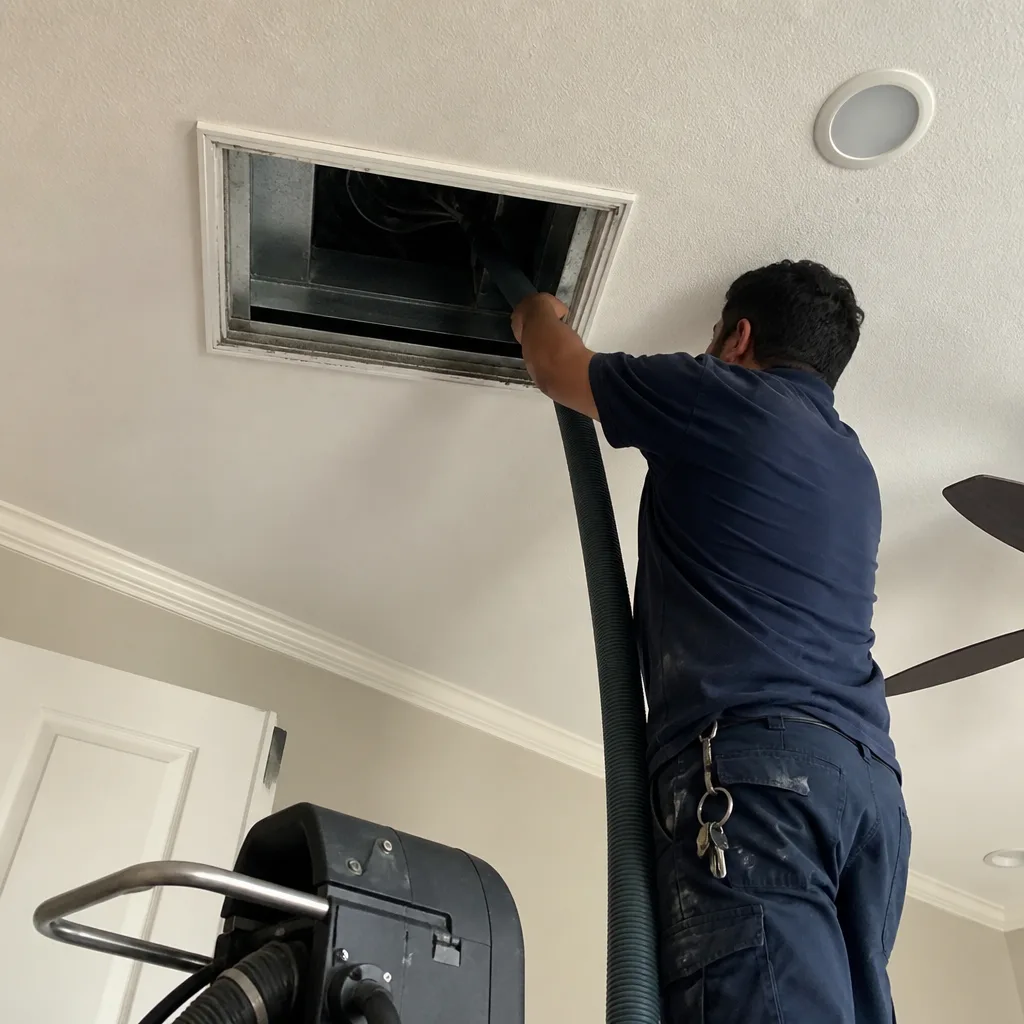 After
AfterCommercial Duct Cleaning in Austin, TX
Commercial duct cleaning in Austin typically runs between $450 and $3,200 depending on system size, access points, and contamination level – and every CleanRun job starts with a written price before a single panel comes off. We photograph the inside of every duct run before and after cleaning, so you walk away with a documented record of what was there and what we removed, not a verbal summary and a handshake.
Commercial buildings in Austin carry a specific set of challenges that residential work simply doesn’t prepare a crew for. High-volume supply and return plenums, longer duct runs serving multiple zones, rooftop air handling units baking under the Central Texas sun, and years of accumulated biofilm from Austin’s high-humidity summers – these aren’t abstract concerns. They show up on the camera the moment we put it in the duct. If you’re managing a restaurant off South Lamar, a medical office suite in the Domain, or a mid-size professional building in Round Rock, the ductwork conditions we find are predictable and the cleaning scope is documentable before we start.
Tomas Reyes has led CleanRun Duct Repair & Cleaning since we established in 2013. In that time we’ve completed work on 52,000-plus properties – a number that includes schools, dental practices, retail spaces, and multi-tenant office buildings across Austin and the surrounding metro. Every one of those jobs carried a written price under Haven Standard Clause 1 and ended with a Documented Photo Record delivered to the property owner or facilities manager. You can call us at (737) 243-9544 and get a written estimate before we schedule anything. Our Air Duct Cleaning in Austin overview explains the full service model if you want context before we talk specifics.
When You Need Commercial Duct Cleaning
- Occupant complaints about air quality or odors that persist after filter changes. If tenants or staff in your Austin building are reporting stuffiness, musty smells, or unexplained allergy-like symptoms after routine HVAC maintenance, the filter is rarely the whole problem. Debris build-up inside the duct runs – visible on a camera inspection as a grey-brown mat of particulate and biofilm – continues releasing contaminants regardless of what’s sitting in the filter slot.
- Post-construction or renovation dust contamination. Austin’s commercial construction market has been running at full pace for years. Drywall dust, insulation fibers, and silica particulate from demo work enter ductwork through unsealed returns during a build-out and pack into elbows and straight runs. We see this regularly in buildings along the 183 Tech Corridor and in the Domain area, where tenant improvements happen in occupied multi-suite buildings.
- Visible particulate discharge from supply registers. When you can see dust streaking the ceiling tiles around a supply diffuser, the duct behind it has passed the point where filter replacement alone will address it. A negative-pressure extraction pull (drawing air from the plenum through HEPA-filtered equipment toward a sealed collection point) is the correct next step.
- Mold-like growth confirmed or suspected near coils or in ductwork. Austin’s combination of hot summers and aggressive air conditioning creates condensation conditions inside air handlers. If a facilities inspection or prior HVAC technician has noted visible mold-like growth near the evaporator coil or in return duct sections, cleaning is not optional – it’s a liability question. We document the condition photographically before touching anything.
- HVAC efficiency has dropped without a clear mechanical cause. Restricted airflow from debris-packed duct runs forces fans to work harder to move the same volume of air. If your energy bills have climbed and your HVAC service tech hasn’t found a refrigerant or mechanical fault, internal duct restriction is worth a camera look before you approve equipment replacement.
- The system hasn’t been cleaned in more than five years. NADCA guidelines recommend commercial duct cleaning on a three-to-five-year cycle depending on occupancy type. Restaurants and food-service facilities in Austin – where grease-laden vapor enters the HVAC return – often need annual or biennial service. If the last cleaning date is unknown, a camera inspection is the only honest starting point.
Our Commercial Duct Cleaning Process
-
Written Scope and Price Before We Touch Anything
Haven Standard Clause 1 is non-negotiable: you get a written price before any work begins. For commercial jobs, that means we assess the number of supply and return registers, the linear footage of duct runs we can access, the location and condition of the air handling unit, and any known contamination issues. That information produces a written scope and a dollar figure. If the camera inspection reveals something unexpected inside the ductwork that changes the scope, we stop, document it, and put the revised number in writing before proceeding. There are no verbal approvals at CleanRun.
-
Pre-Cleaning Camera Inspection and Documentation
Before any extraction equipment is connected, a camera goes into the duct system. Every run gets photographed at the register face, inside the first elbow, and at intervals through the main trunk and return duct. What we find – whether it’s a 2-inch mat of construction dust at a first elbow off a rooftop unit, biofilm coating on flex duct in a humid return plenum, or relatively clean ductwork that confirms a recent cleaning – gets recorded. That pre-cleaning photo record is yours. It’s the “before” that makes the “after” mean something.
-
Negative-Pressure Source Removal
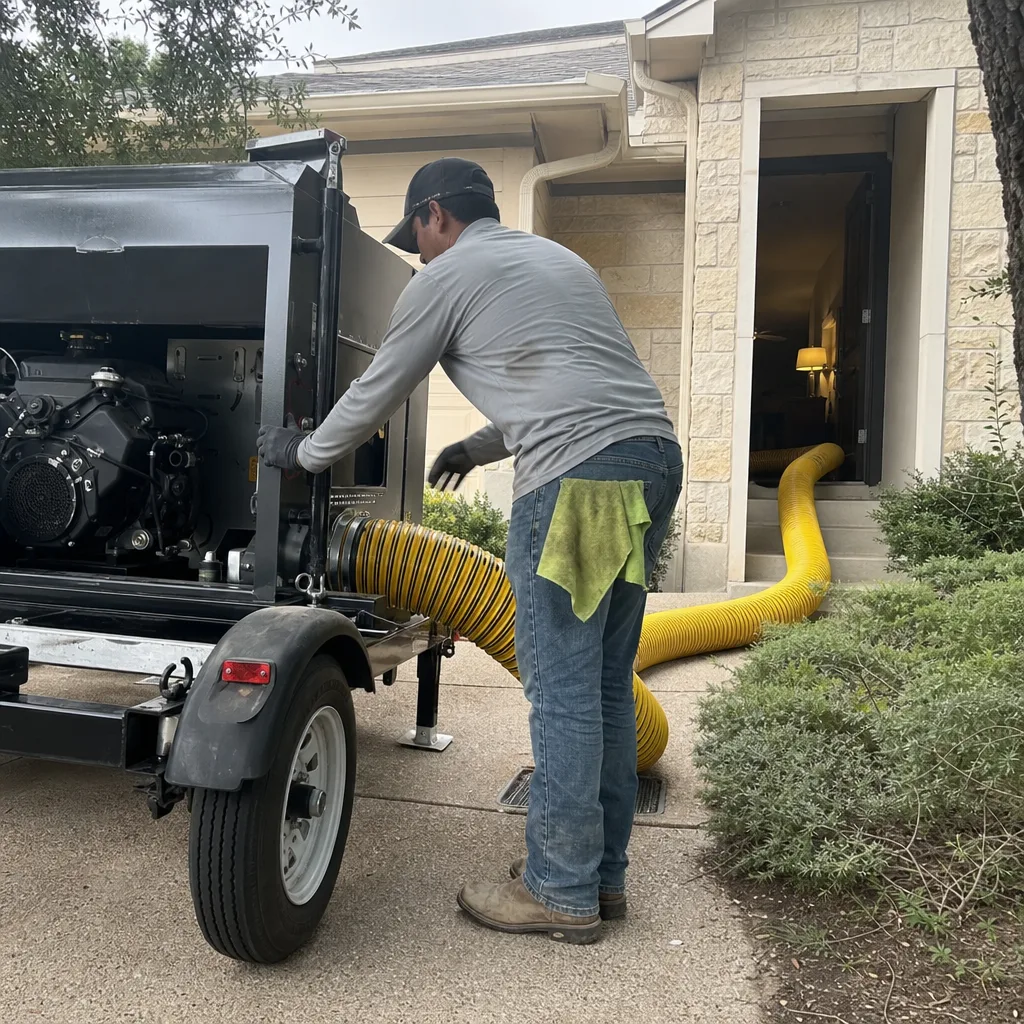
Negative-pressure extraction means we create a suction environment inside the duct system using HEPA-filtered collection equipment – Nikro and Abatement Technologies units are the workhorses on our full system cleaning jobs – so that when we agitate and dislodge debris, it travels toward the collection point rather than into the occupied space. The plenum (the central distribution box connecting the air handler to the main duct runs) is isolated, a collection attachment is sealed to it, and the system is put under negative pressure before any register covers come off. This is the step that separates documented cleaning from what the $79-coupon crews do with a shop vac and a leaf blower.
-
Mechanical Agitation of Every Duct Run
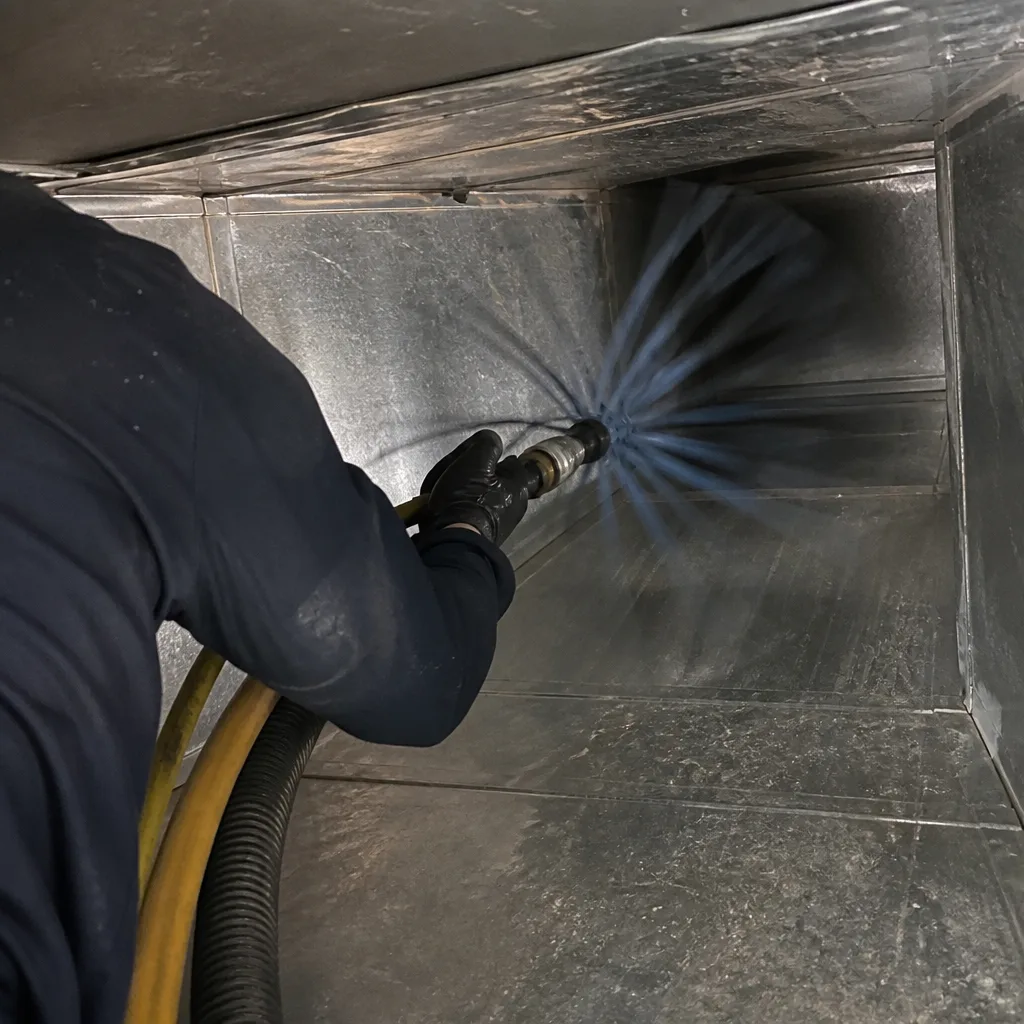
With the system under negative pressure, technicians work register by register using Rotobrush rotary brush equipment sized for the duct diameter – typically 6-inch to 20-inch in commercial applications. The rotating brush dislodges debris from duct walls while the negative-pressure system pulls it toward the collection unit. Each register is sealed after its run is cleaned so the pressure differential is maintained throughout the job. Flexible duct sections, which are common in Austin commercial builds from the 1990s and early 2000s, are cleaned with appropriately sized brush heads and inspected post-agitation to confirm the liner isn’t compromised.
-
Air Handler and Plenum Cleaning
The air handling unit itself – the blower wheel, evaporator coil housing, drain pan, and plenum interior – is cleaned as part of the commercial scope. The coil and drain pan are common accumulation points in Austin’s climate, where humidity means biological growth is a recurring issue rather than a rare one. We photograph the coil and pan before cleaning, document what’s present, and photograph again after. If the coil itself requires chemical treatment beyond what mechanical cleaning can address, we note that in writing as a separate line item.
-
Post-Cleaning Documentation and Deliverable
The job ends with a Documented Photo Record covering every duct run, the plenum, and the air handler – before and after, in sequence. That record is delivered to the property manager or owner as a standard part of the job, not an optional upgrade. The 365-Day Done Right Promise is attached to every commercial job in writing: if cleaning-related issues surface within a year of the service date, we address them. That promise is on paper, not subject to manager discretion.
BeforeAfterCommercial Duct Cleaning Pricing in Austin
Commercial duct cleaning in Austin is priced by scope – not by the hour, not by a flat rate applied to every building regardless of size or condition. Below are the ranges we see on actual jobs in the Austin metro. Your written estimate will reflect the specific system in your building.
| Building / System Type | Typical Austin Price Range | Primary Variables |
|---|---|---|
| Small commercial suite (up to 10 registers, single AHU) | $450 – $850 | Register count, access difficulty, contamination level |
| Mid-size office or medical space (10-30 registers) | $850 – $1,600 | Number of AHUs, flex vs. hard duct, coil condition |
| Restaurant or food-service facility | $900 – $1,800 | Grease accumulation level, separate grease-duct scope if applicable |
| Multi-tenant commercial building (30-60+ registers) | $1,600 – $3,200+ | Number of zones, rooftop unit access, duct material, contamination |
| Add: Antimicrobial treatment (Honeywell or Guardsman products) | $120 – $280 | System volume, product selected |
| Add: Post-cleaning camera re-inspection report | Included standard | Part of the Documented Photo Record on every job |
A few factors consistently push Austin commercial jobs toward the higher end of these ranges. Buildings in older East Austin or South Congress commercial districts often have original metal ductwork from the 1970s and 1980s – multiple access points, irregular sizing, and elbows that are only reachable through ceiling tiles rather than dedicated access panels. Rooftop AHUs, common on Austin strip retail and office buildings, add time and equipment to the job. And any facility where a prior cleaning crew used a shop-vac-only method (no negative pressure, no camera documentation) typically shows heavier downstream accumulation in the trunk runs because the debris was pushed back rather than extracted.
We offer a Free Second Opinion on any written estimate you’ve received from another provider. Bring the quote. Tomas Reyes or a CleanRun estimator will put our number next to theirs in writing. Call (737) 243-9544 to schedule the estimate – there’s no charge for it and no obligation attached.
What Austin’s Climate Does to Commercial Ductwork
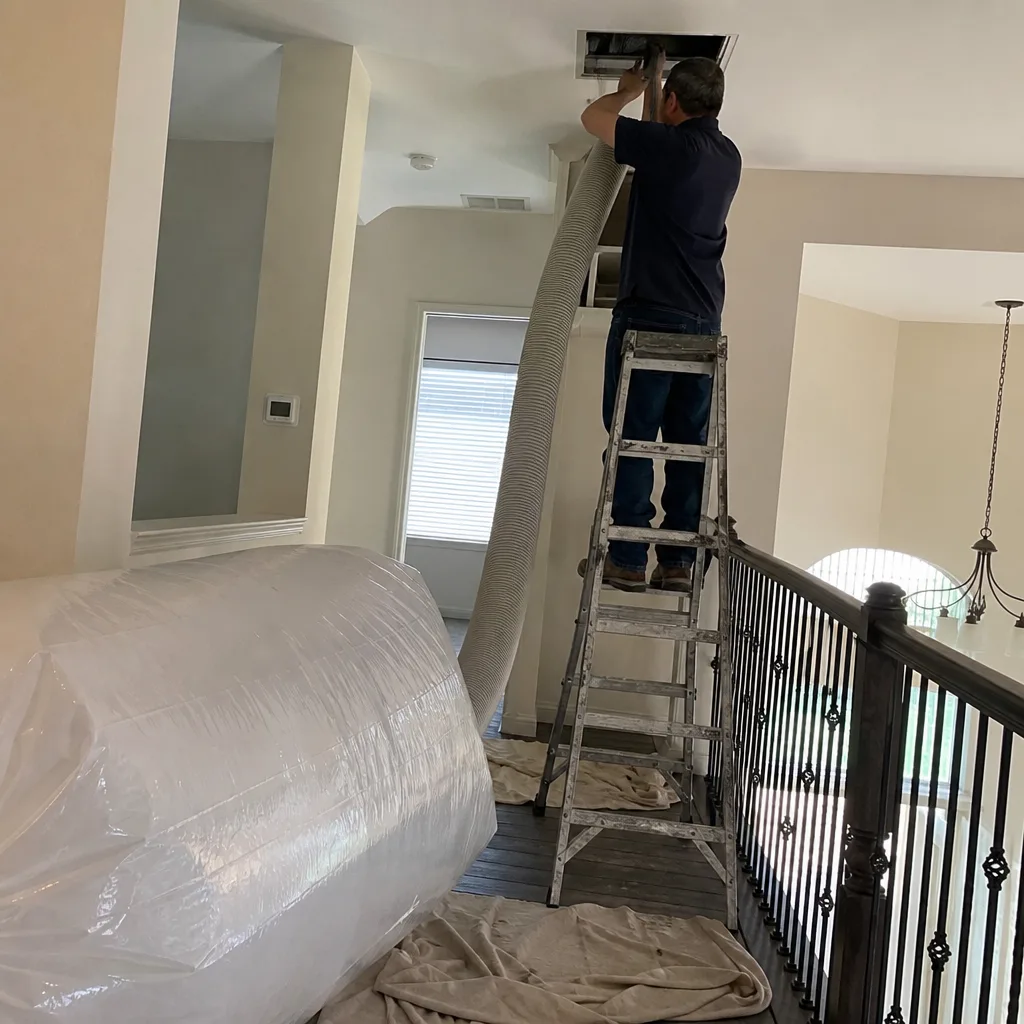
Austin sits in a climate zone where summer humidity and near-continuous air conditioning use create a specific pattern inside commercial ductwork. During the months when outdoor dew points climb above 70 degrees – which in Austin runs roughly May through September – rooftop AHUs and internal air handlers are pulling large volumes of humid outdoor air across cold evaporator coils. Any gap in duct sealing, any section of flex duct with a loose connection, and any drain pan that isn’t clearing properly creates a moisture introduction point inside the supply side of the system.
What grows in that moisture depends on what’s already in the ductwork. Construction particulate, paper fibers from ceiling tiles, and the normal biological load in any occupied building give organisms something to anchor to. Buildings in the Rundberg Lane corridor, the warehouse-conversion office spaces near East 6th, and the older professional buildings in North Loop all show this pattern – humid summers, high occupancy, and ductwork that hasn’t had a camera inside it since the last tenant build-out. It’s not a crisis on day one, but by year three or four it’s visible on the camera and it’s affecting the air moving through the building.
When antimicrobial treatment is appropriate, we use Honeywell and Guardsman products applied after mechanical cleaning, not instead of it. Treatment without prior extraction is a cosmetic measure. The photo record shows the difference.
Commercial vs. Residential Duct Cleaning: What’s Different
The mechanics of duct cleaning – negative-pressure extraction, rotary brush agitation, camera documentation – are the same in commercial and residential duct cleaning work. What changes is scale, access, and coordination.
Commercial jobs in Austin often require after-hours scheduling so occupied tenant spaces aren’t disrupted. The Domain, downtown, and South Lamar commercial corridors are all areas where we’ve coordinated evening or weekend work with building management to keep operations running. We confirm access requirements in the written scope before the job is scheduled – that’s part of Haven Standard Clause 1, not an afterthought.
Commercial systems also frequently involve multiple air handling units serving different zones. A two-story professional building in Cedar Park might have a rooftop unit handling the second-floor open office and a split system serving the ground-floor medical suite – two distinct systems that each need to be quoted, cleaned, and documented separately. The photo record for each unit is kept distinct so facilities management has a clean maintenance file.
The parent service page for Air Duct Cleaning in Austin covers the full process model and the H.A.V.E.N. Standard in detail if you want to understand how our residential and commercial work connect under the same documented approach.
FAQs – Commercial Duct Cleaning
How much does commercial duct cleaning cost in Austin?
Commercial duct cleaning in Austin runs between $450 and $3,200-plus depending on system size, number of air handling units, duct material, and contamination level. A small single-AHU commercial suite typically falls in the $450-$850 range. A multi-zone building with 30 or more registers and rooftop units can reach $1,600-$3,200 before any optional treatments. Every CleanRun job carries a written price before work starts – there’s no estimate-on-arrival, no verbal quote, and no “we’ll know more when we open it up” pricing. Call (737) 243-9544 to schedule a written estimate with no obligation.
How long does commercial duct cleaning take?
A small commercial suite with one air handling unit and up to 15 registers typically takes 3 to 5 hours. Mid-size jobs with 20-35 registers and multiple AHUs run 5 to 9 hours. Large multi-tenant buildings can require multiple days, which we coordinate with building management in advance and document in the written scope. The camera inspection, negative-pressure setup, and post-cleaning documentation are included in those time frames – they’re not billed separately as add-ons.
Is commercial duct cleaning disruptive to an occupied building?
Properly executed commercial duct cleaning should not require full building evacuation. Negative-pressure extraction means debris travels toward the collection equipment rather than into the occupied space. That said, sections of the building where active register work is happening will experience some noise from the brush and collection equipment, and those areas are typically cordoned off during that phase. For buildings where tenant disruption is a concern – medical offices, customer-facing retail, or continuously occupied spaces – we schedule after-hours work, which is reflected in the written scope and price upfront. Austin buildings in the Domain and downtown core specifically are areas where we regularly do evening and weekend scheduling.
What documentation do I receive after commercial duct cleaning?
Every CleanRun commercial job ends with a Documented Photo Record that covers each duct run photographed before and after cleaning, the air handler interior before and after, and the plenum condition. That record is delivered to the property owner or facilities manager as a standard job deliverable – not an upgrade. You also receive the written scope, the written price confirmation, and the 365-Day Done Right Promise in writing. If an issue related to the cleaning work surfaces within 365 days of the service date, we address it – that commitment is documented, not a verbal assurance. Call (737) 243-9544 to ask about what the photo record looks like for a job similar to yours.
Why Austin Facility Managers Work With CleanRun
The short version: the documentation holds up. When a facilities manager or property owner needs to show a tenant, an insurance carrier, or a health inspector that ductwork was cleaned and in what condition, a verbal summary from a technician and an invoice date aren’t sufficient. A before-and-after photo record of every duct run, a written scope signed before work began, and a 365-day written guarantee are a maintenance file – not just a receipt.
Tomas Reyes built CleanRun around that documentation standard from the first job in 2013. Background-checked, uniformed technicians operating under the H.A.V.E.N. Standard, equipment from Rotobrush, Nikro, and Abatement Technologies that customers can look up independently, and a guarantee that doesn’t require manager approval to invoke. That’s the model on every commercial job in Austin, from a single-suite dental office in Pflugerville to a multi-tenant office building in the Arboretum area.
If you have a competitor’s written estimate, bring it. We’ll put our number next to it in writing, free of charge, and you can compare scope line by line. Call (737) 243-9544 to get your written estimate scheduled – a live person answers every call.
Written by Tomas Reyes, Owner at CleanRun Air Duct Cleaning Austin, serving Austin.