
Last updated September 23, 2026
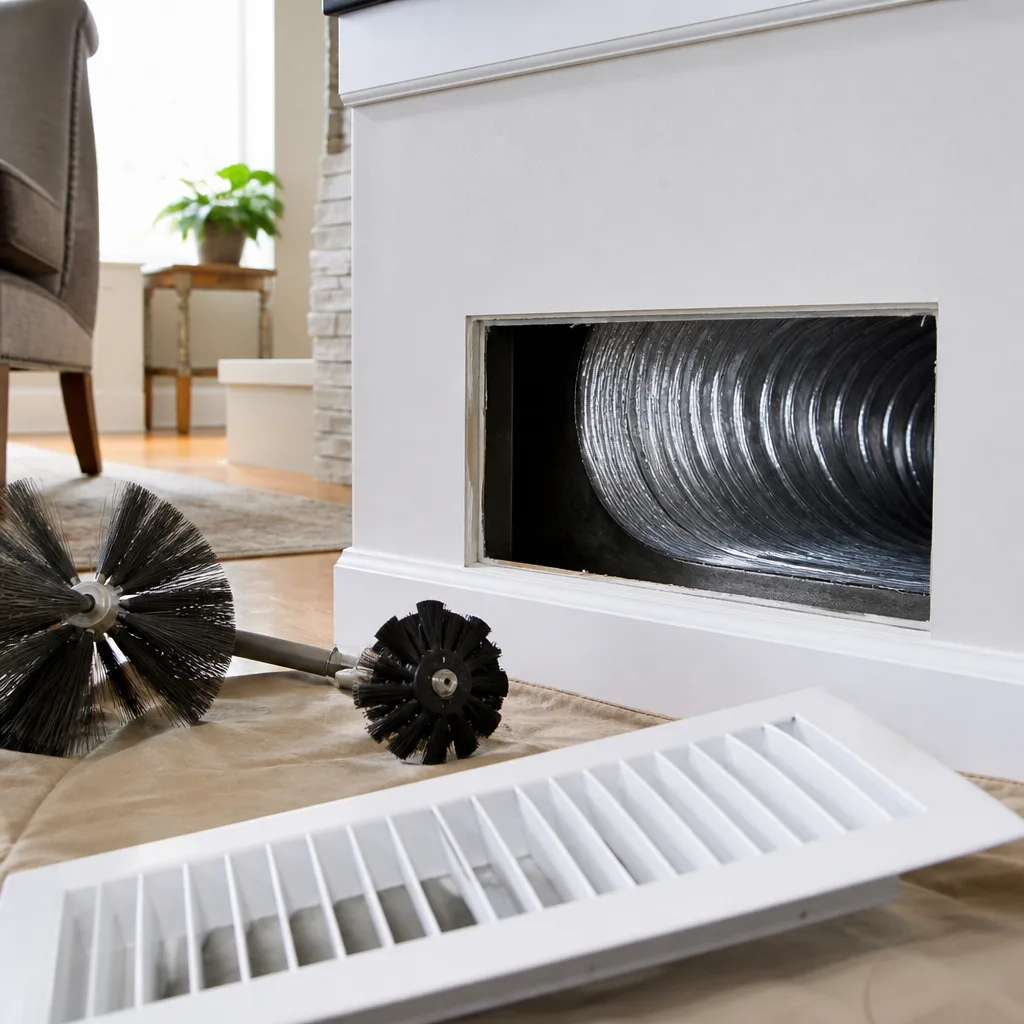
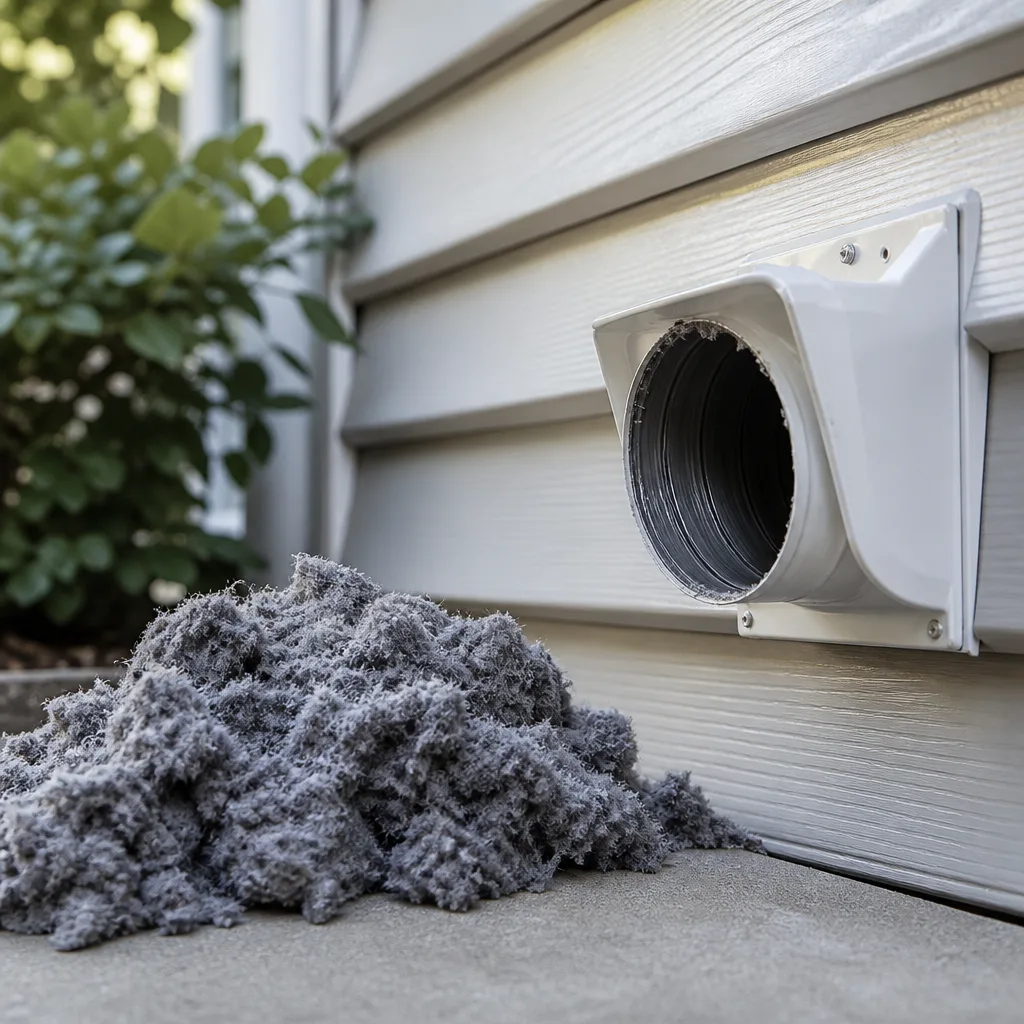
Whole-system duct and dryer vent check with before-and-after photos - you see exactly what came out of your vents
That "$99 whole-house special" is a bait ad - the real number appears once they are in your hallway, or the "clean" is a shop-vac at the register. We photograph the inside of your ducts before and after instead.
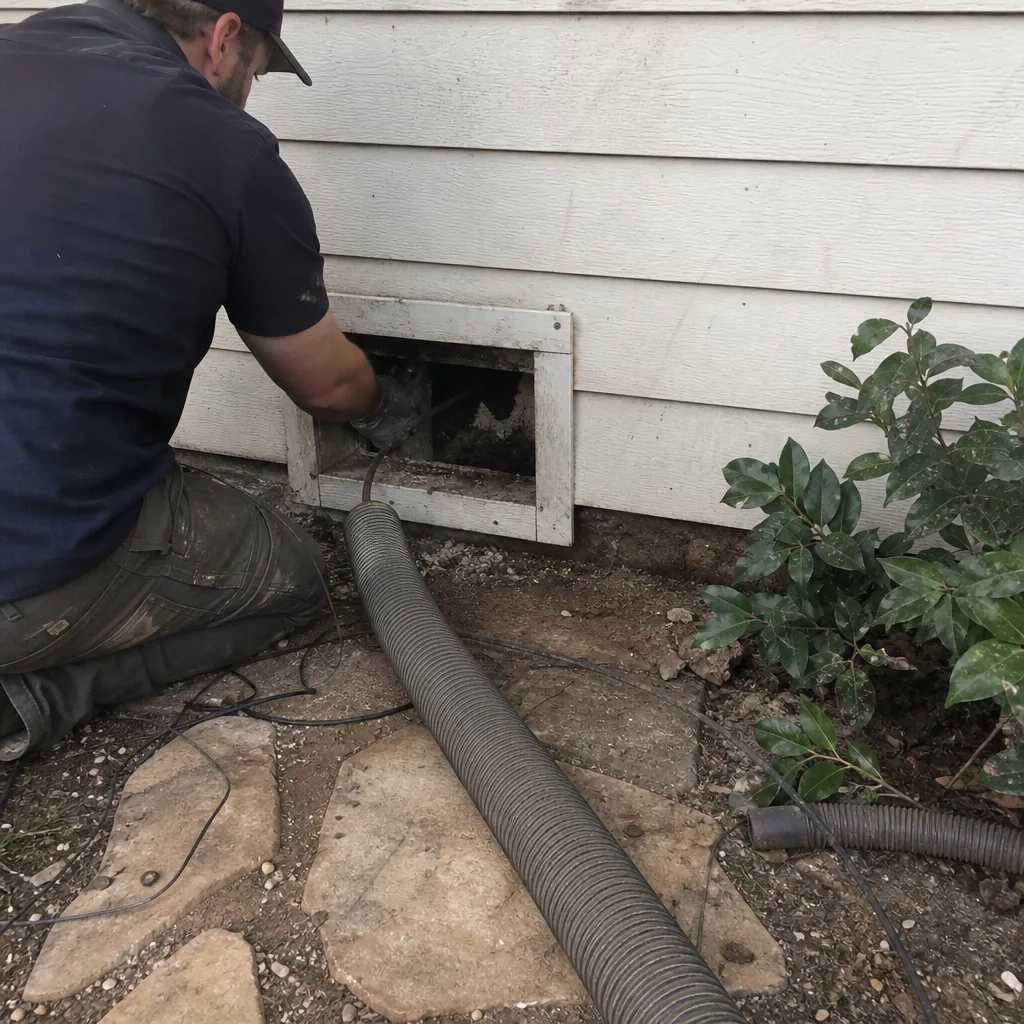 Before
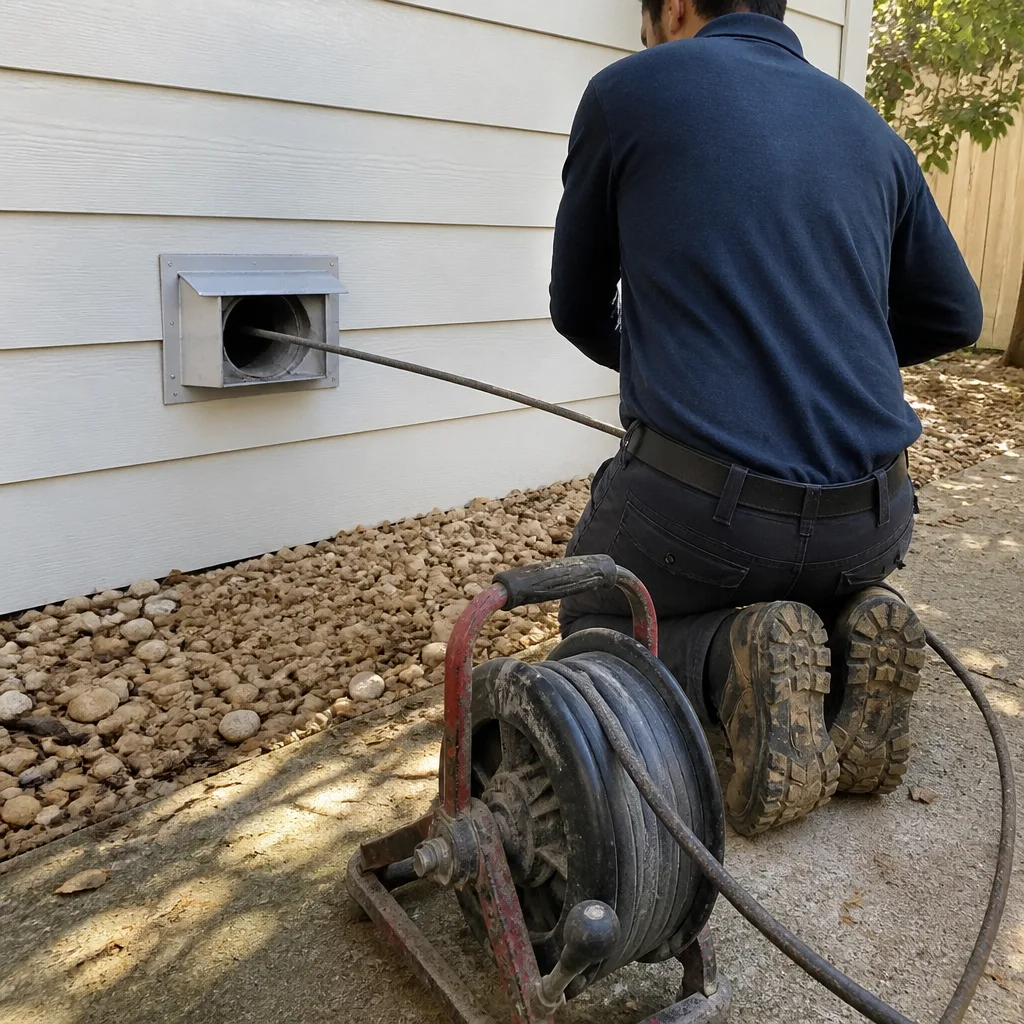 After
After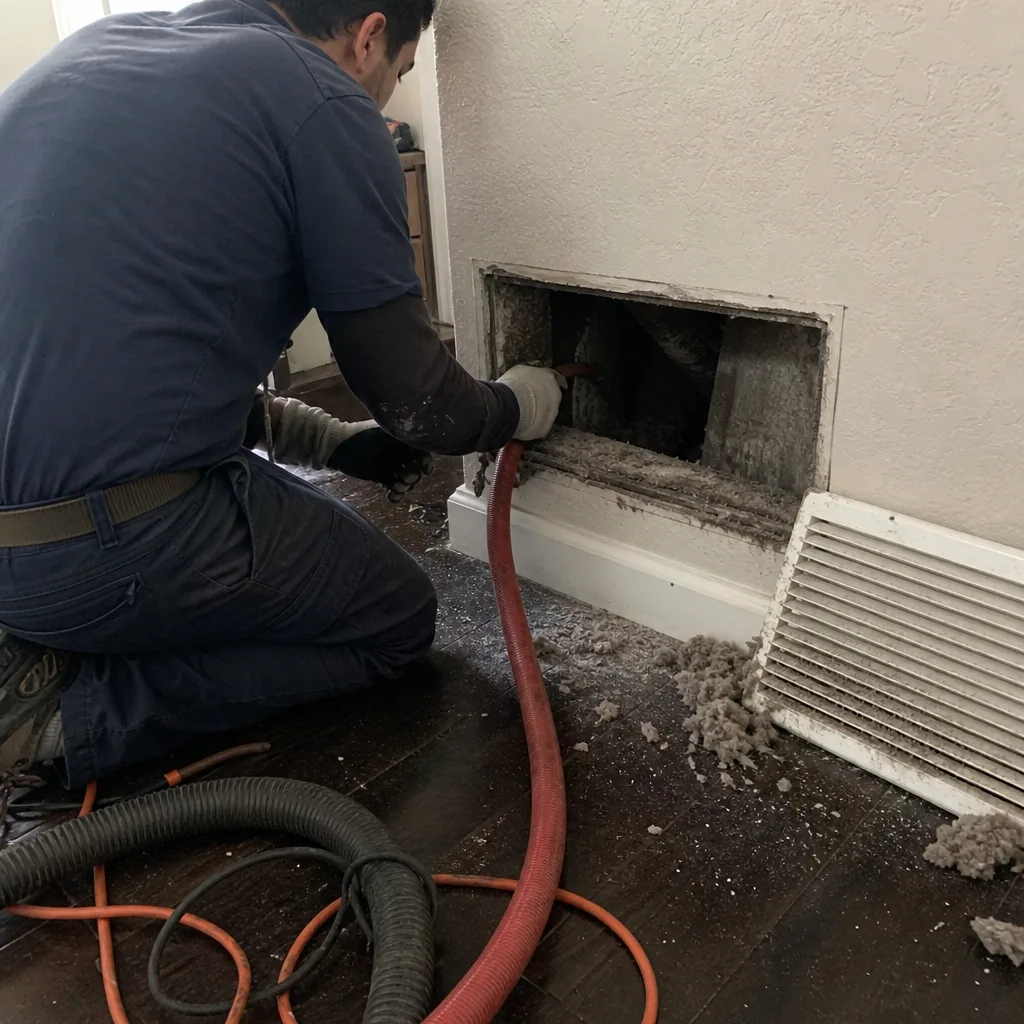 Before
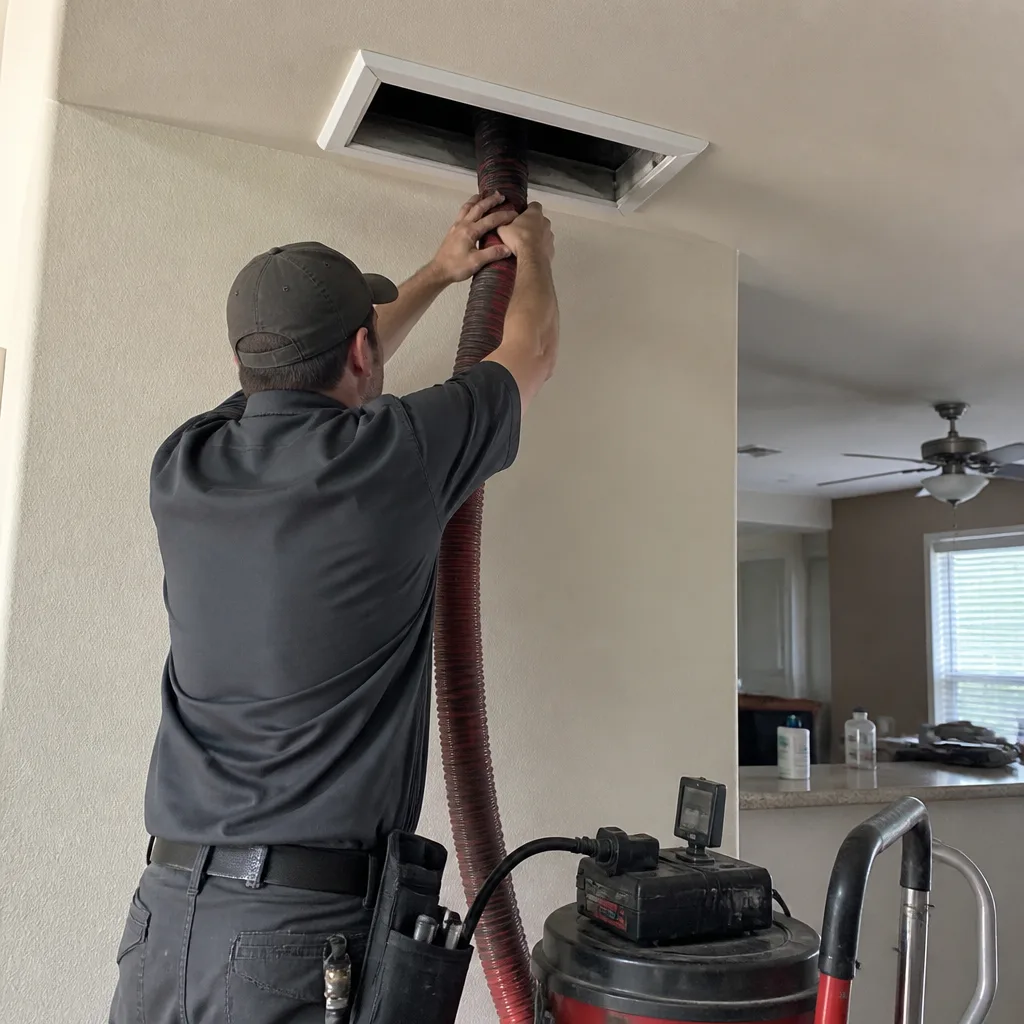 After
After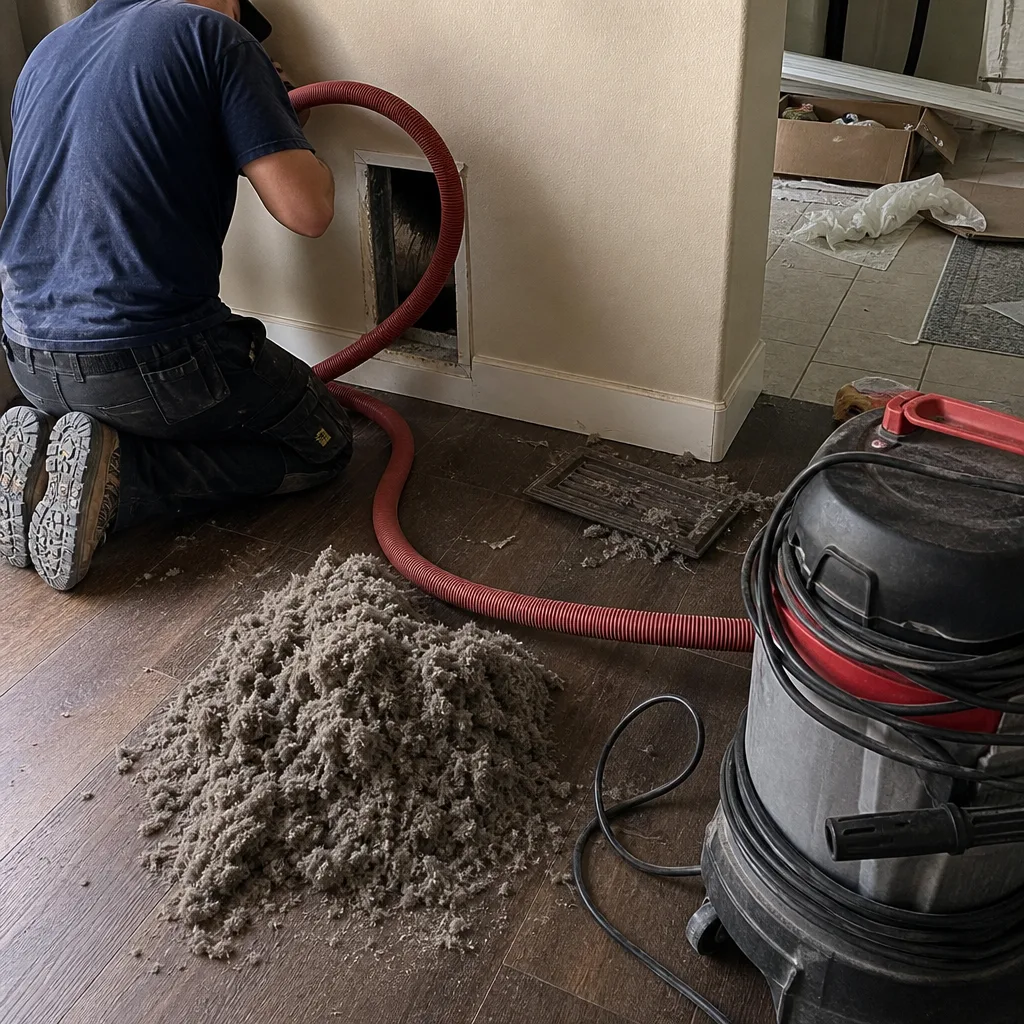 Before
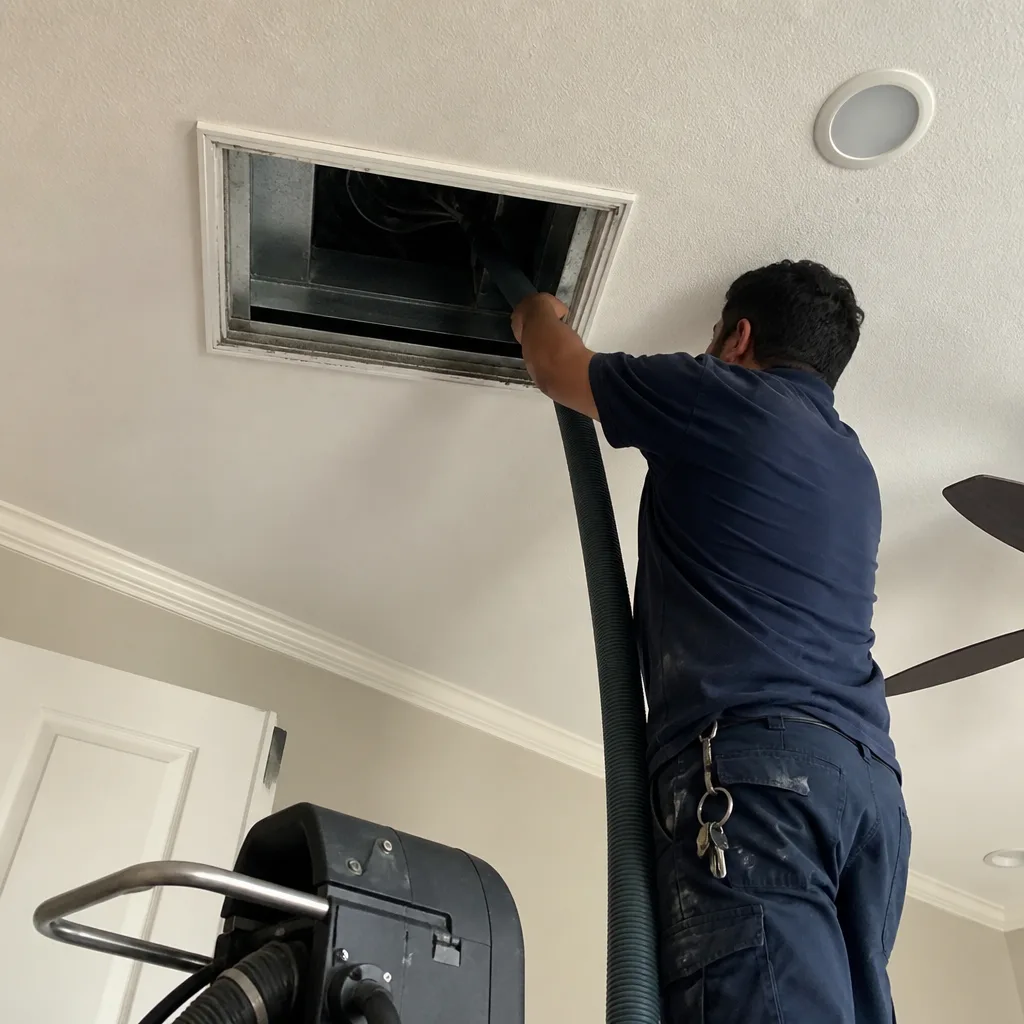 After
AfterThe Complete Guide to Air Duct Cleaning in Austin
Austin’s cedar pollen is so fine it passes straight through a standard 1-inch filter and coats the interior walls of flex duct within a single allergy season - yet most $79 coupon cleanings never photograph the interior to confirm whether it was removed. In this guide, we’ll map what actually accumulates inside Austin-area ductwork by season and construction type, explain why slab-foundation homes here develop different contamination patterns than homes with crawl spaces, and show you how to tell documented source-removal cleaning from vacuum noise. You’ll learn what a proper photo record should show, what Austin’s 100°F+ attic temperatures do to flex duct lining, and what whole-system pricing actually looks like in this market so you can spot lowball bids before you book.
Quick Answer
Professional air duct cleaning in Austin typically costs $450-$950 for a whole-home system and should include source-removal extraction with negative-pressure equipment, plus a documented photo record of every duct run before and after. In Austin’s market, this means addressing cedar pollen accumulation, construction dust in growth-corridor neighborhoods, and heat-degraded flex duct lining found in attic runs of 1980s-2000s slab-foundation homes. The work takes 3-5 hours for a standard 2,000-square-foot home and should follow NADCA standards, not contact vacuuming with a shop vac and rotary brush.
Table of Contents
- What Actually Accumulates Inside Austin Ducts
- Austin’s Slab-Foundation Homes: Why Duct Design Matters
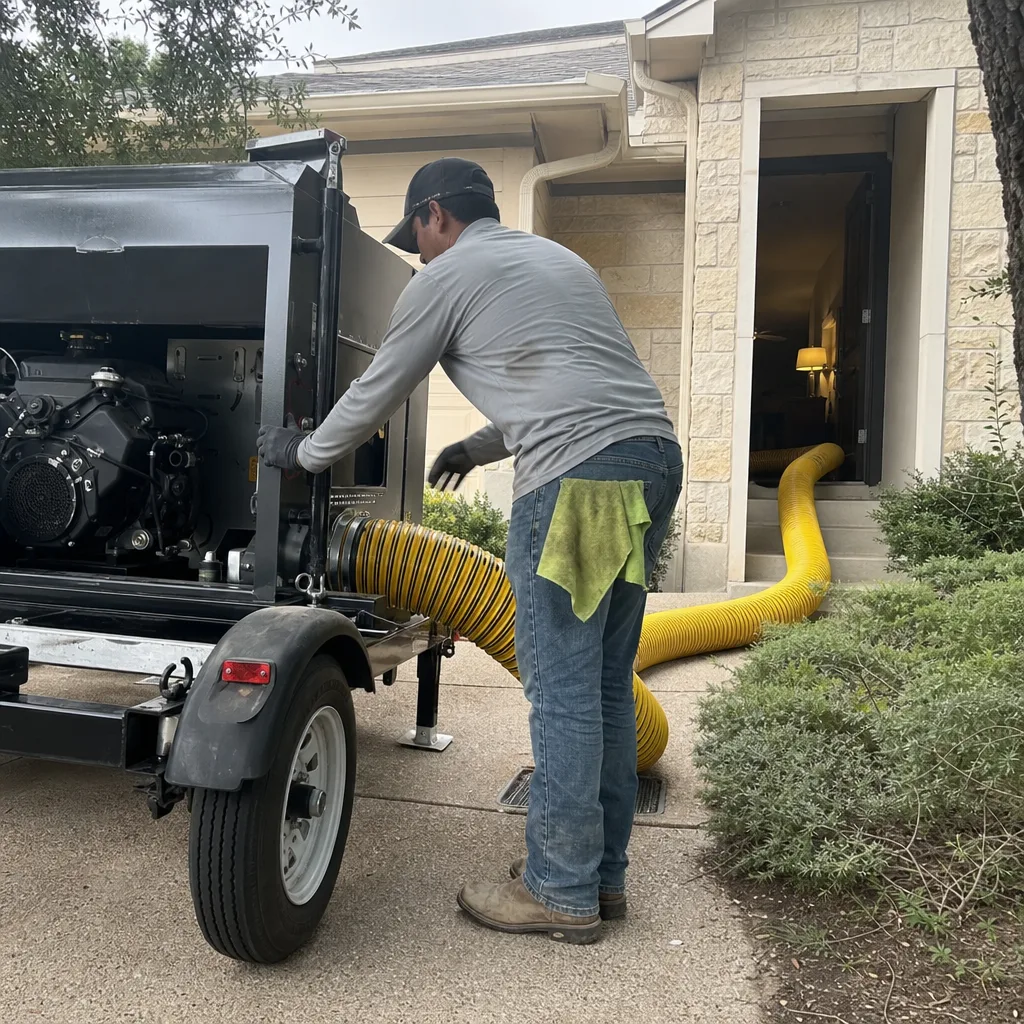
- Source-Removal vs. Contact Vacuuming: The Equipment Difference
- What a Before-and-After Photo Record Should Actually Show
- Seasonal Contamination Patterns in Austin
- What Air Duct Cleaning Costs in Austin (2025-2026)
- How to Choose a Duct Cleaning Company in Austin
- Common Mistakes to Avoid
- When to Call a Professional
- Frequently Asked Questions
BeforeAfterWhat Actually Accumulates Inside Austin Ducts
The debris inside Austin ductwork has a local fingerprint. After 52,000 homes across the metro, we’ve learned to read it like a map.
Cedar pollen (Juniperus ashei) arrives January through February in concentrations that make national news. The grains measure 20-30 microns, small enough to pass through standard fiberglass filters and electrostatically adhere to the interior walls of flex duct. Unlike larger particulates that settle, cedar pollen embeds in the porous lining of duct board and flex duct, where it becomes a recurring source of indoor allergen release every time the HVAC cycles on. In Tarrytown and Clarksville homes with original 1990s ductwork, we’ve photographed pollen layers up to 3 millimeters thick at register drops.
Construction dust defines growth-corridor neighborhoods: Mueller, East Austin, parts of South Austin where infill and teardown-rebuild activity surrounds established homes. This isn’t ordinary household dust. It’s silica-rich particulate from concrete cutting, drywall sanding, and foundation work that enters attic vents and degrades HVAC filters in weeks rather than months. The particles are angular and abrasive, accelerating wear on blower motors and coating heat exchanger surfaces.
Rodent debris concentrates in attic duct runs, particularly in established neighborhoods with mature tree canopy - Hyde Park, Brentwood, Crestview - where roof rats travel utility lines and enter soffits. We find nesting material at duct joints, droppings at sag points where flex duct loses support, and the distinctive grease marks of repeated passage. This isn’t a cleanliness issue; it’s a building envelope issue that duct cleaning exposes.
Mold spores colonize where flex duct sags in attics, creating low points where condensation pools during Austin’s spring and fall shoulder seasons. The combination of 100°F+ attic temperatures and air-conditioned supply air creates temperature differentials that exceed dew point at unsupported duct sections. We’ve documented this pattern repeatedly in Circle C Ranch and Steiner Ranch homes with original flex duct installed in the 1990s and early 2000s.
Key takeaway: The debris profile in an Austin home depends on neighborhood age, tree canopy density, nearby construction activity, and original duct material. A cleaning estimate that doesn’t account for these variables is guessing.
Austin’s Slab-Foundation Homes: Why Duct Design Matters
Unlike homes in the Midwest or Northeast built over basements or crawl spaces, virtually all Austin homes from the 1980s forward sit on concrete slabs poured directly on expansive clay soil. This single construction choice determines everything about how ductwork ages and where contamination concentrates.
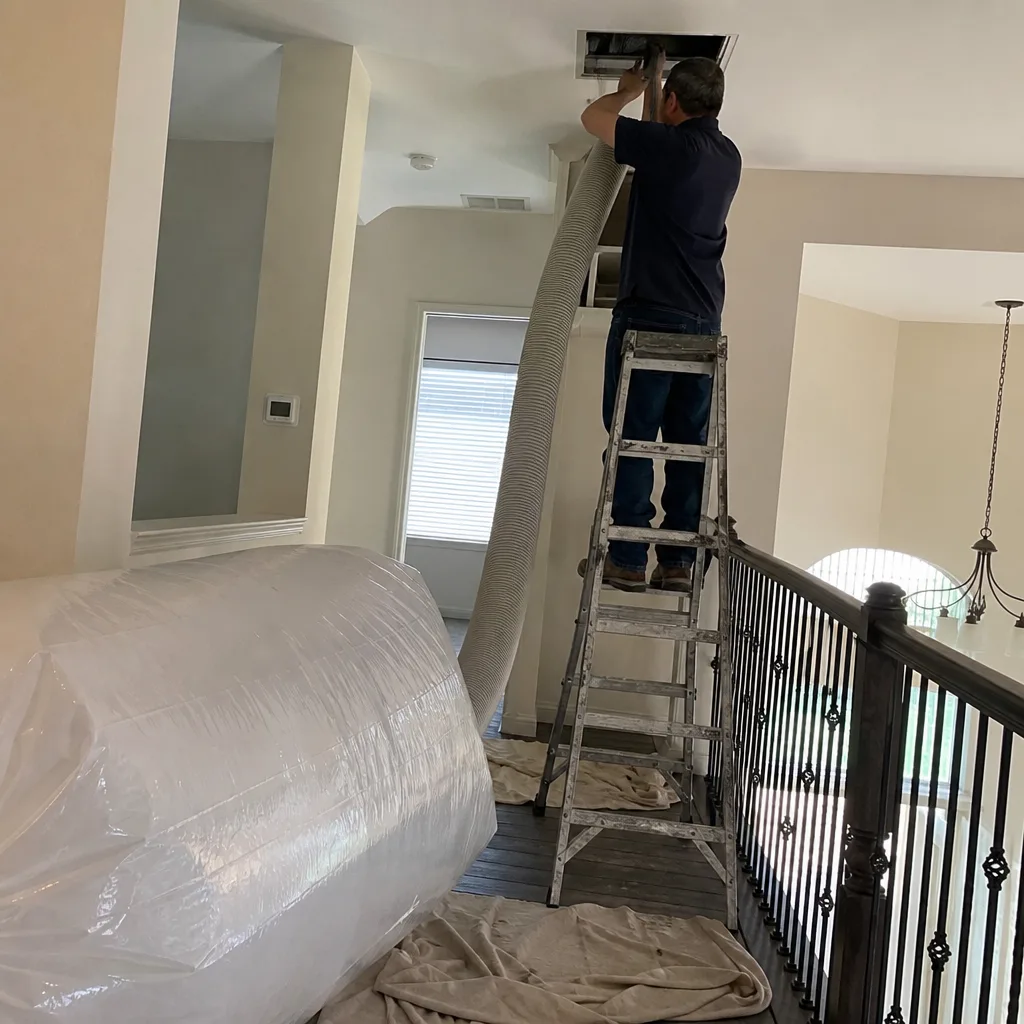
No under-floor ducts. In slab construction, all ductwork runs through the attic or, in two-story homes, through interior chases between floors. There are no crawl-space ducts to access from below, no damp soil contact, and no radon infiltration through sub-slab pathways. Every duct run is overhead, exposed to attic conditions, and dependent on ceiling register seals to prevent attic air infiltration.
Attic heat load. Austin attics routinely reach 140°F in July and August. Flex duct with standard R-6 insulation, common in homes built 1985-2005, operates at a continuous thermal stress that degrades the inner liner. The adhesive bonding the mylar liner to the wire helix softens, the liner delaminates, and the rough surface traps debris that would otherwise pass through smooth metal duct. In our photo records, we can often date duct degradation by the progression of liner roughness from register back toward the plenum.
Support spacing and sag. Flex duct should be supported at 4-foot intervals with no sag exceeding 1/2 inch per foot of run. In practice, Austin’s attic heat causes strap fasteners to pull from rafters, and original installations in neighborhoods like Allandale and Rosedale often show 12-foot unsupported spans with 6-inch sags. These low points collect debris, condensate, and - in worst cases - become rodent harborage.
Plenum connections. The plenum, the central distribution box attached to your air handler, connects to flex duct with mechanical collars. Heat cycling loosens these connections over 15-20 years, creating leakage paths that draw unfiltered attic air into the system. We photograph these connections as part of every pre-cleaning inspection; in about 30% of Austin homes over 20 years old, we find visible gaps at the plenum collar.
What this means for cleaning: Austin duct systems require attic access for every run, work in confined 140°F spaces, and often need repair of degraded supports and connections before effective cleaning is possible. A company that quotes by phone without attic inspection is estimating blind.
Source-Removal vs. Contact Vacuuming: The Equipment Difference
The air duct cleaning industry operates with two fundamentally different technical approaches. One meets NADCA (National Air Duct Cleaners Association) standards. The other meets a price point.
Source-Removal Cleaning (NADCA Standard)
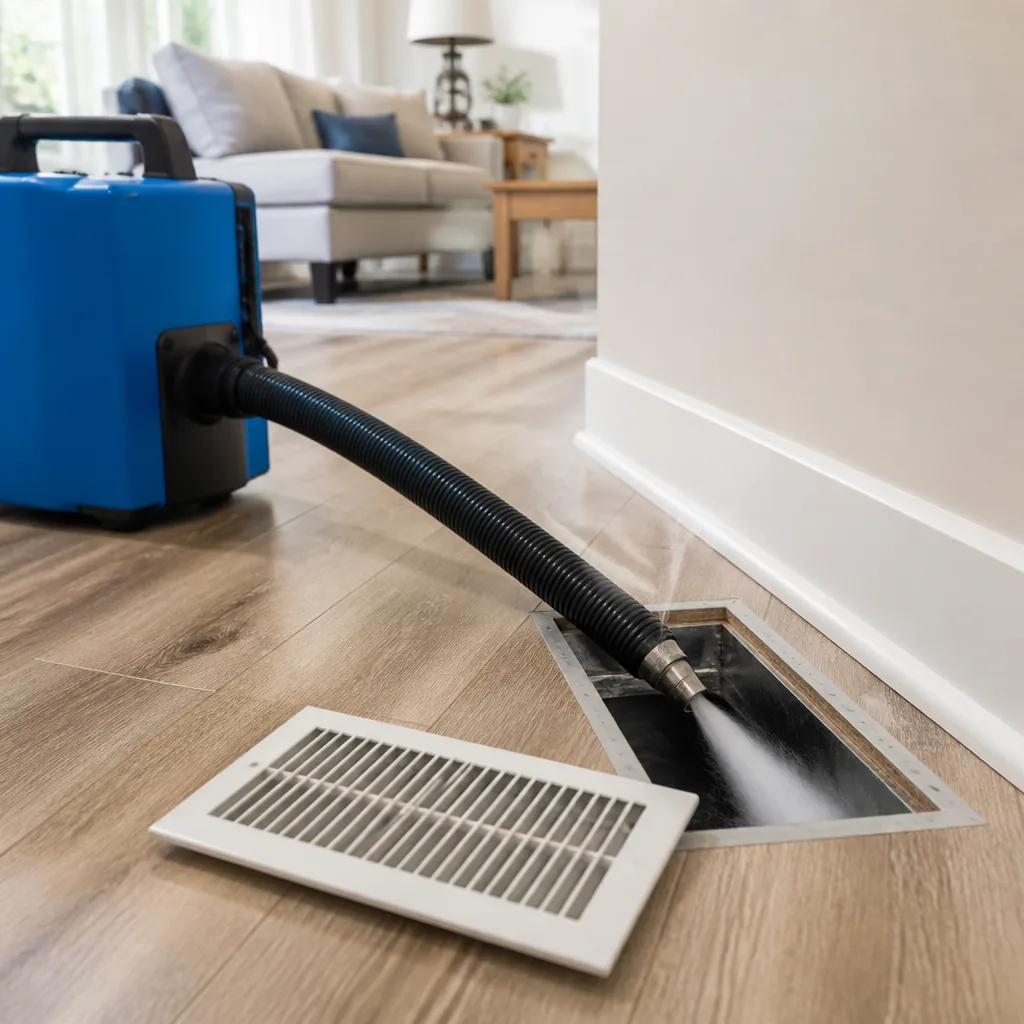
Source-removal means mechanically dislodging debris from all duct surfaces and extracting it under controlled negative pressure so nothing escapes into the living space. The equipment required is specific and verifiable:
- Negative-pressure extraction unit - typically a gas-powered or high-electric vacuum mounted on a truck or portable unit, generating 5,000+ CFM airflow at the collection point. This creates suction at every open register simultaneously, preventing debris migration.
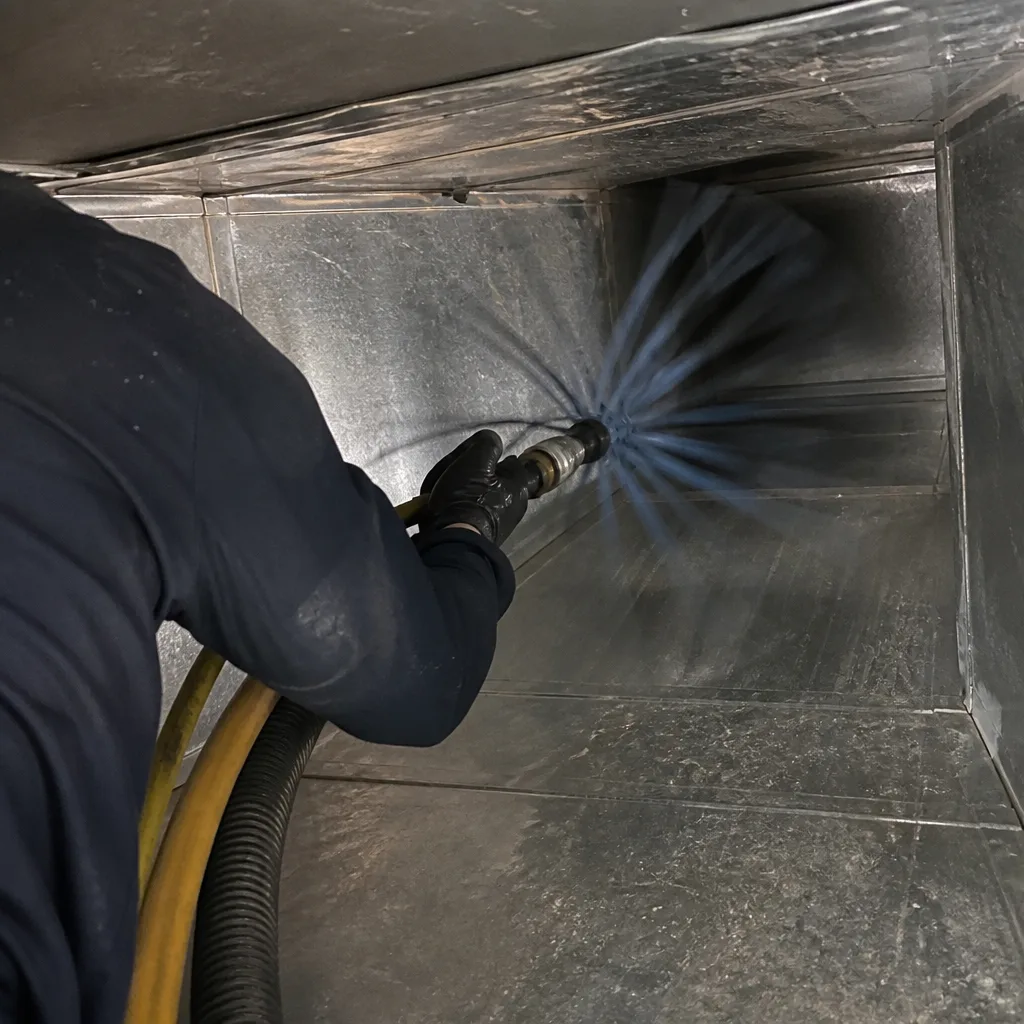
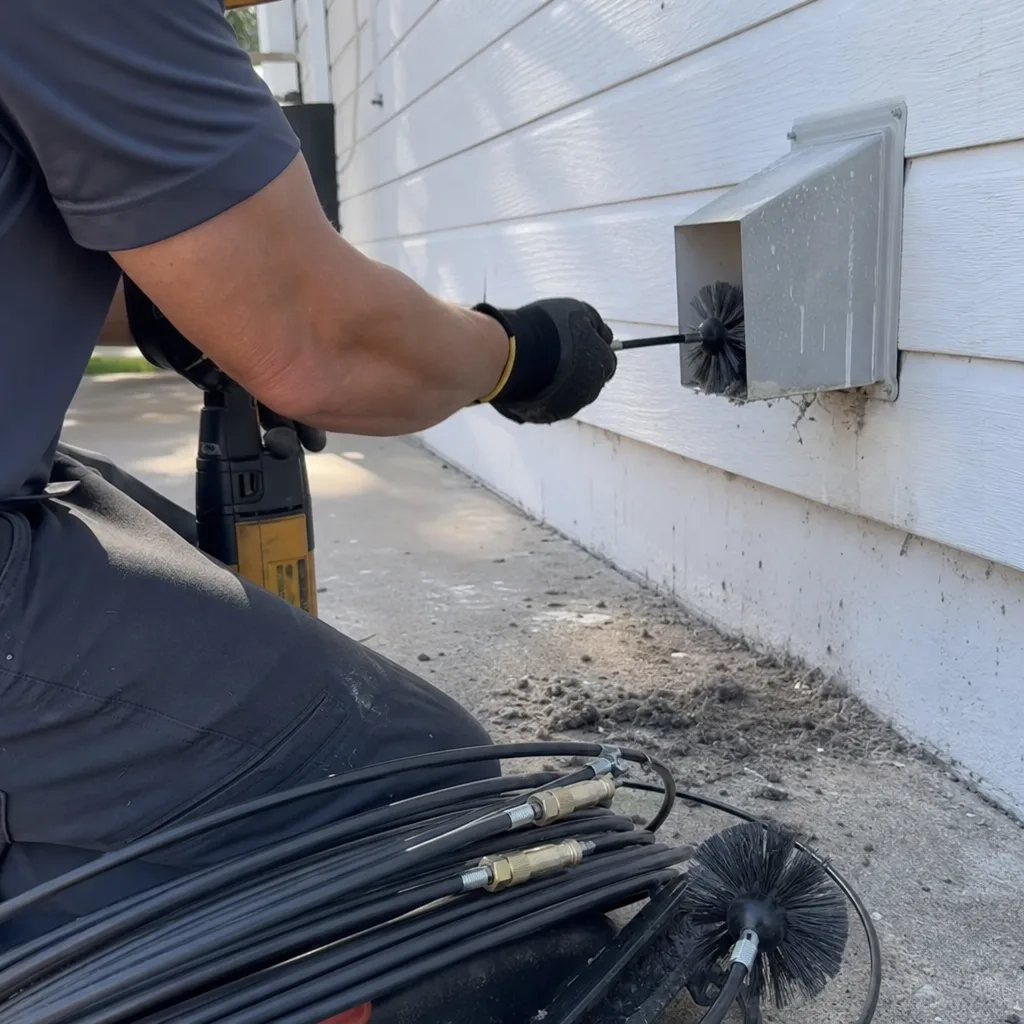
- Agitation tools - mechanical brushes, air whips, or compressed-air skipper balls that travel through duct runs to break debris free from duct walls. Rotobrush systems use rotating bristle assemblies sized to duct diameter; Nikro and Abatement Technologies manufacture pneumatic tools for metal duct applications.
- Access ports - sealed openings cut into ductwork at strategic points to insert tools and cameras, then closed with gasketed plates.
- HEPA filtration on vacuum exhaust, capturing particles down to 0.3 microns.
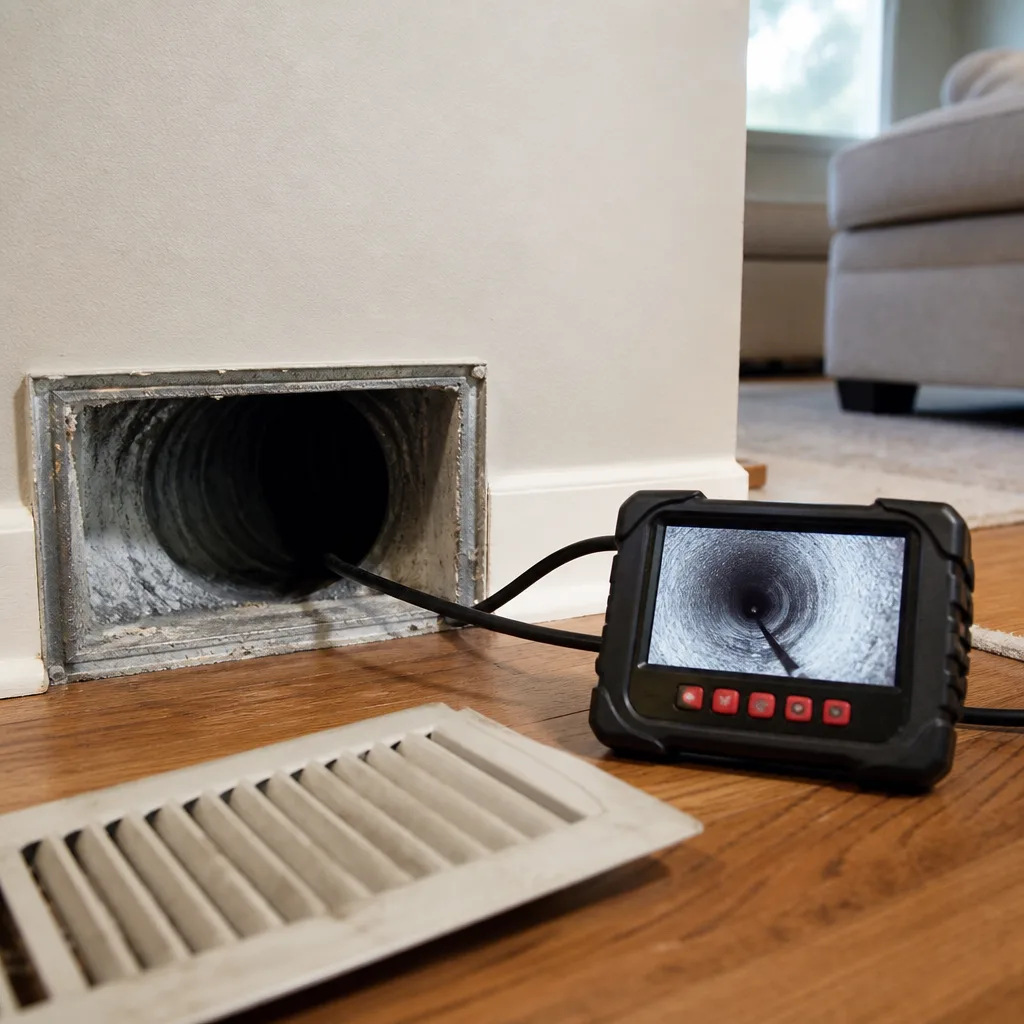
- Visual verification - borescope or camera inspection of each run after cleaning, with images recorded and delivered to the customer.
The process takes 3-5 hours for a standard Austin home, requires two technicians for safety in attic spaces, and produces a documented photo record of every duct run.
Contact Vacuuming (The $79 Coupon Model)
Contact vacuuming uses a portable vacuum (often a modified shop vac or carpet extractor) with a rotary brush attachment inserted at each register. We compare both approaches in our DIY vs Professional Air Duct Cleaning: The Austin Homeowner’s Decision Guide. The brush contacts only the first 3-6 feet of duct reachable from the opening. No negative pressure controls the duct system. No agitation reaches mid-run debris. No camera verifies results.
The equipment is recognizable: a single technician, a portable unit on wheels, completion in 45-90 minutes, and a verbal assurance that “everything looks good.” We’ve been called to Austin homes six months after these services to find cedar pollen still coating duct walls 10 feet from the register, visible on camera.
The equipment test: Ask any company to name their vacuum manufacturer and agitation method. Professional-grade answers include Rotobrush, Nikro, Abatement Technologies, or equivalent. Vague answers (“commercial-grade equipment,” “industrial-strength tools”) indicate contact vacuuming.
What a Before-and-After Photo Record Should Actually Show
At CleanRun Air Duct Cleaning Austin, we’ve delivered a documented photo record on every job since 2013. Here’s what that record contains and why each element matters.
Register drop (first 2 feet from vent opening): This is where homeowners can verify the camera actually entered their duct. The before image shows the visible debris layer at the register connection; the after image shows bare duct wall. In Austin homes, we typically find cedar pollen accumulation here, often with construction dust mixed in near growth corridors.
Mid-run section (approximately halfway to plenum): This is where contact vacuuming fails. The before image shows debris at a point no rotary brush from the register can reach. The after image confirms agitation tools traversed the full run length. We mark camera footage with distance indicators so customers can verify penetration depth.
Plenum connection: The before image documents collar condition, leakage gaps, and debris accumulation at the distribution box. The after image shows cleaned surfaces and any repair work performed. In Austin’s heat-degraded systems, this is often where we find liner delamination starting.
Flex duct support points: Not a before-and-after pair, but a condition documentation image showing strap spacing, sag measurement, and any rodent damage. This informs repair recommendations separate from cleaning.
Air handler blower wheel and evaporator coil (if accessible): These components move the air; if they’re coated in debris, clean ducts recontaminate immediately. We photograph condition and note whether HVAC cleaning is recommended as a separate service.
What “clean” looks like: On camera, a cleaned metal duct shows reflective galvanized surface with visible longitudinal seams. Cleaned flex duct shows intact mylar liner without embedded debris or delamination. Duct board shows exposed fiberglass without coating. Any remaining discoloration is noted in the written report - some staining from years of use is normal and doesn’t affect air quality.
The photo record is delivered as a digital file with run identifiers matching the written scope. Haven Standard Clause 1 requires this documentation on every job; it’s not an upgrade or add-on.
Seasonal Contamination Patterns in Austin
Austin’s climate and ecology create predictable annual patterns in duct contamination. Timing your cleaning to address these patterns improves results.
January-February: Cedar pollen deposition. Peak Ashe juniper pollen release coats outdoor surfaces, infiltrates homes through door and window gaps, and overwhelms standard HVAC filters. By late February, we find fresh pollen layers in ductwork across the metro. Cleaning in March addresses this before spring humidity sets in.
March-May: Mold spore activation. Rising humidity and 70°F+ days create condensation at duct sag points in attics. Mold spores deposited during winter activate in these microclimates. We document this pattern most frequently in shaded neighborhoods with mature canopy - Old West Austin, Windsor Park, parts of Bouldin Creek - where attic ventilation is reduced by tree cover.
June-August: Construction dust peak. Dry summer conditions maximize airborne silica from active construction sites. In Mueller, East Austin, and South Lamar corridors, we see filter degradation accelerate from 90-day to 30-day replacement intervals. Attic intake vents draw this material directly into duct systems.
September-October: Rodent activity increase. Cooling temperatures drive roof rats into attic spaces. We find fresh nesting material at duct joints, particularly in homes with tree canopy contact within 6 feet of roofline. This is also when homeowners first notice odor from accumulated debris.
November-December: Pre-holiday cleaning demand. Highest booking volume, but from a contamination standpoint, the least critical timing. If your primary concern is holiday hosting, schedule early; if your concern is allergen load, target January-March instead.
Optimal cleaning interval for Austin: Every 3-5 years for homes without specific risk factors; every 2-3 years for homes in active construction zones, with mature tree canopy, or with original flex duct over 20 years old.
What Air Duct Cleaning Costs in Austin (2025-2026)
Whole-system air duct cleaning in Austin ranges from $450 to $950 for a standard single-family home, with variation driven by system size, accessibility, and condition. Here’s how the market breaks down.
| Service Component | Typical Austin Range | What Affects Price |
|---|---|---|
| Whole-system source-removal cleaning (up to 12 duct runs) | $450-$650 | Number of runs, attic accessibility, flex vs. metal duct |
| Whole-system cleaning (13-20 duct runs, larger homes) | $650-$850 | Two-story homes, zoned systems, extended attic crawl distances |
| Systems requiring repair before cleaning (sag correction, collar replacement, rodent damage) | $850-$1,400+ | Extent of degradation, materials needed, access difficulty |
| Dryer vent cleaning (add-on or standalone) | $150-$250 | Run length, roof vs. wall termination, blockage severity |
| HVAC component cleaning (blower wheel, evaporator coil) | $200-$400 | Accessibility, contamination level, coil fin condition |
What the $79-$149 coupon covers: Contact vacuuming of 3-5 registers, no attic work, no photo documentation, no system inspection. We’ve responded to Austin homes where this “service” lasted 45 minutes and left 80% of the duct system untouched.
Red flags in Austin pricing:
- Per-vent pricing that escalates at the door. A 12-run system quoted at $15/vent becomes $450 plus “required sanitizing” plus “access fees.”
- Flat rates without home inspection. Slab-foundation attic ductwork varies enormously; a phone quote is a guess, not a price.
- “Free” inspections that convert to high-pressure sales. Haven Standard Clause 1 requires written price before work starts - no exceptions.
At CleanRun Air Duct Cleaning Austin, we provide written whole-system pricing after inspection, before any work begins. The price covers every duct run, the photo record, and the 365-Day Done Right Promise. No per-vent arithmetic, no surprise add-ons.
How to Choose a Duct Cleaning Company in Austin
The Austin market includes national franchise operations, independent contractors, and HVAC companies adding duct cleaning as a seasonal revenue line. Here’s how to distinguish documented service from marketing.
Verify equipment by brand. Ask specifically: what vacuum manufacturer? What agitation tools? Professional-grade answers include Rotobrush, Nikro, Abatement Technologies, Honeywell, Aprilaire, or Guardsman equipment. Vague answers suggest portable contact vacuuming.
Request a sample photo record. A company that photographs every run should be able to show you anonymized examples from recent Austin jobs. Look for register identifiers, distance markers, and consistent camera angles. Stock photos or single “representative” images indicate no actual documentation process. Browse our more guides & resources for additional tips on evaluating service providers.
Confirm NADCA membership or equivalent training. NADCA certifies technicians through the Air Systems Cleaning Specialist (ASCS) credential. Ask for certification numbers and verify at nadca.com. This isn’t the only valid credential, but its absence in a company focused on duct cleaning is notable.
Check license and insurance status. In Texas, duct cleaning falls under HVAC contractor licensing for any work involving system modification. Ask for license number and verify through TDLR (Texas Department of Licensing and Regulation). CleanRun publishes its license on every page; burying this information is a warning sign.
Read reviews for specificity. Generic five-star reviews (“great service,” “very professional”) are easily manufactured. Look for reviews that mention specific neighborhoods, specific findings, specific documentation received. “They showed me the pollen buildup in my Tarrytown attic ducts” carries more weight than “prompt and courteous.”
Evaluate the estimate process. Haven Standard Clause 1 requires written price before work starts. Companies that insist on “seeing the job first” or “calling the office for pricing” after arrival are operating outside this standard. The price should be fixed to the scope, not contingent on time spent or “additional issues found.”
Ask about the guarantee in writing. The 365-Day Done Right Promise means the company returns if work is incomplete - not if you’re “unsatisfied,” but if the documented scope wasn’t achieved. This requires a written scope to exist, which requires documentation to exist.
Common Mistakes to Avoid
- Booking by price alone. The $79 coupon operator who spends 45 minutes in your home and leaves 80% of debris in place has cost you $79 plus the eventual price of proper cleaning. In Austin’s market, whole-system source-removal below $400 is economically implausible for legitimate equipment and labor.
- Ignoring attic duct condition. Austin’s slab-foundation homes concentrate all ductwork overhead. A cleaning estimate that doesn’t include attic inspection and flex duct condition assessment is incomplete. We’ve found rodent damage, disconnected runs, and failed supports that make cleaning pointless until repair occurs.
- Scheduling during peak pollen season without filter upgrade. Cleaning in January without upgrading to MERV 13+ filtration means immediate recontamination. The cedar pollen window is predictable; time cleaning for March or pair it with filter and air seal improvements.
- Accepting “sanitizing” or “mold treatment” upsells without documentation. EPA-registered antimicrobial application requires specific labeling, application training, and post-treatment verification. Vague “fogging” services with no product identification or efficacy documentation are revenue generators, not health measures.
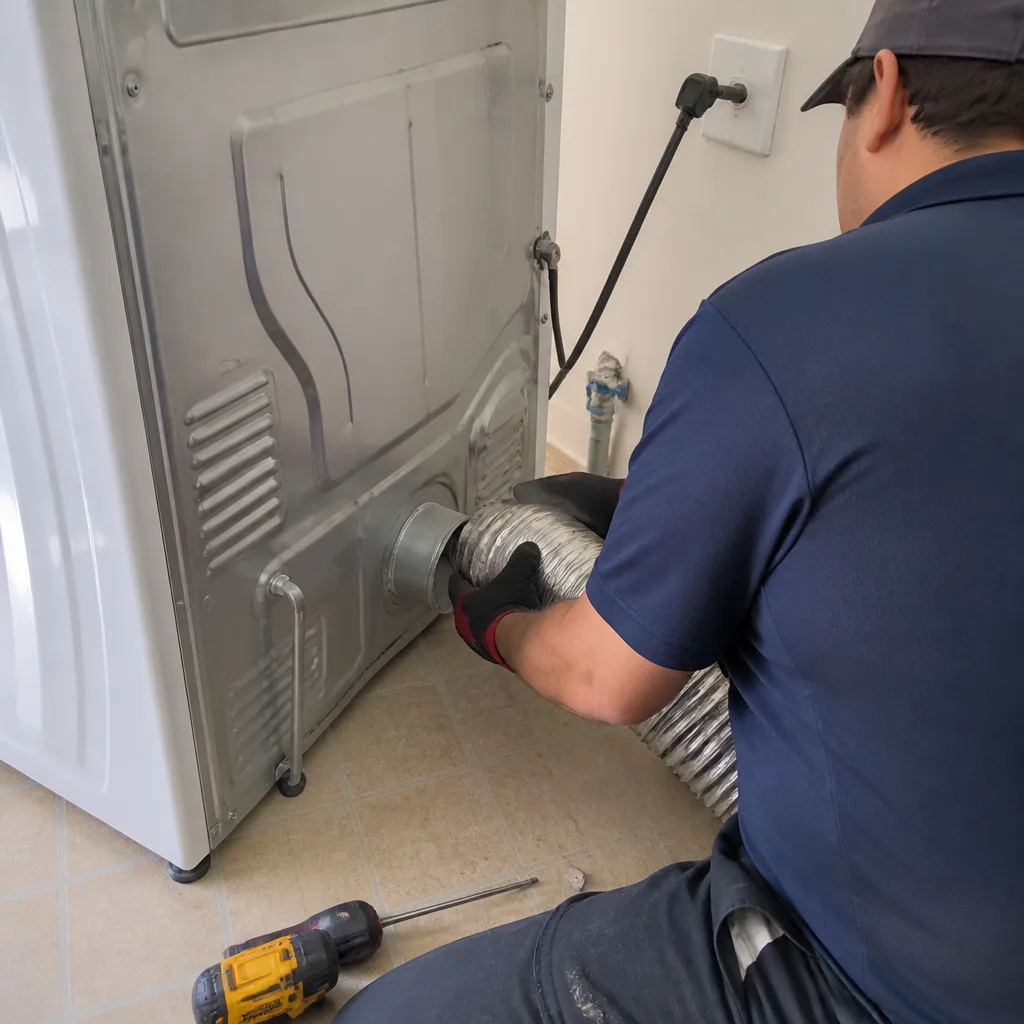
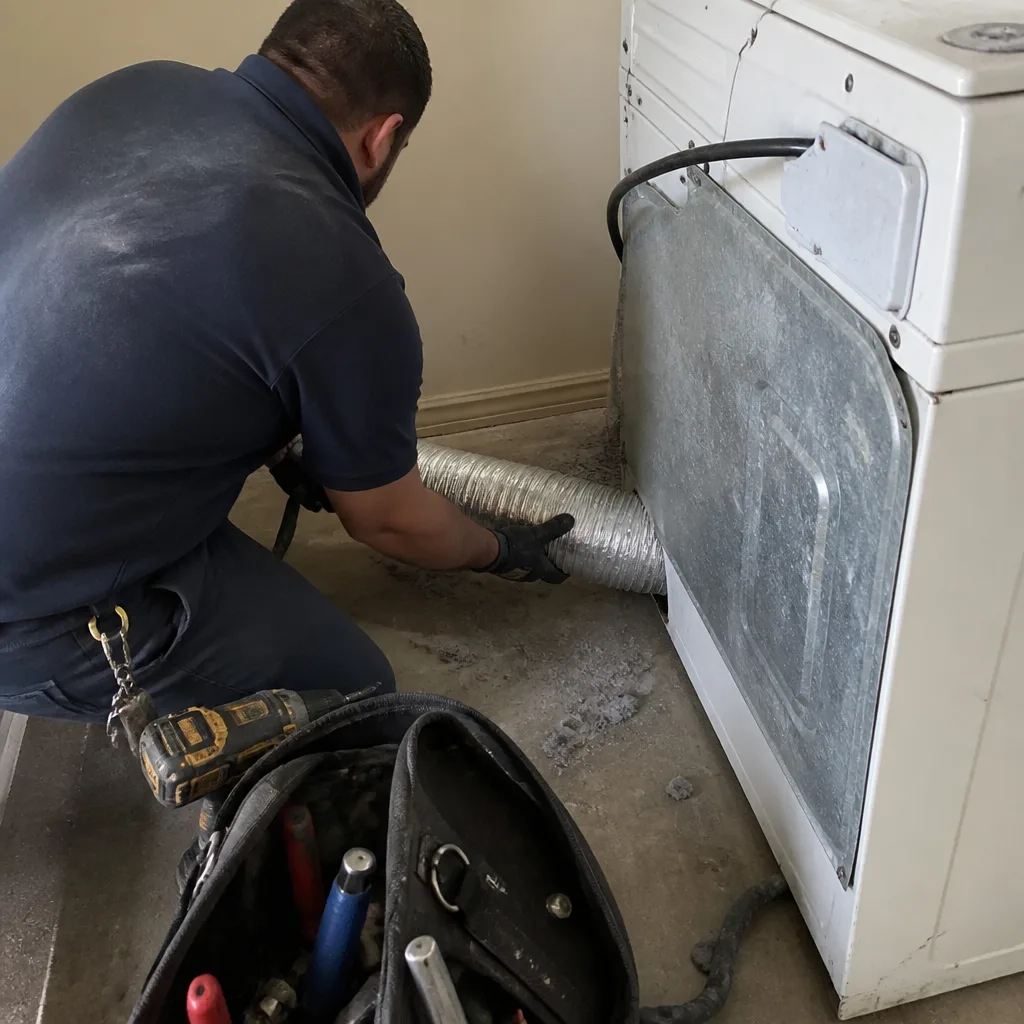
- Neglecting dryer vent cleaning. In Austin’s lint-prone climate with frequent dryer use, clogged vents are a documented fire hazard. Dryer vent cleaning is often bundled with duct cleaning at reduced add-on pricing; skipping it leaves a significant risk unaddressed.
- Failing to verify before-and-after documentation. Without photo evidence, you’re trusting verbal assurance. The photo record is your proof of work performed and your baseline for future service intervals.
- Choosing a company without local physical presence. National booking services dispatch contractors with varying standards. An Austin-based operation with local inventory, local technicians, and local reputation has accountability that transient operators don’t.
When to Call a Professional
Call for inspection if you notice visible debris at registers, reduced airflow from specific vents, musty odors when the HVAC cycles on, or unexplained allergy symptoms that worsen indoors. In Austin specifically, schedule inspection if your home has original flex duct from 1995-2005, if you’re in an active construction zone with visible dust accumulation, or if you’ve never had documented photo inspection of your attic duct runs.
CleanRun Air Duct Cleaning Austin offers free estimates in Austin - call (737) 243-9544. Every estimate includes attic inspection, written whole-system pricing under Haven Standard Clause 1, and no obligation to book. If you have a competitor’s written estimate, we’ll provide a free second opinion with our number beside it.
Frequently Asked Questions
Whole-system source-removal cleaning in Austin typically runs $450-$950 for single-family homes, depending on duct run count, attic accessibility, and whether repairs are needed before cleaning. The $79-$149 coupon services use contact vacuuming that reaches only 3-6 feet from each register. Call (737) 243-9544 for a written estimate after inspection - estimates are free and include whole-system pricing, not per-vent arithmetic.
Low quotes typically reflect contact vacuuming with portable equipment rather than source-removal with negative-pressure extraction, or they use per-vent pricing that escalates with “required add-ons” at the door. In Austin’s market, legitimate source-removal requires 3-5 hours of technician time, truck-mounted or high-CFM portable vacuum equipment, and attic work in 140°F summer conditions. A price that doesn’t cover these costs is cutting somewhere visible only after the truck leaves.
Demand a documented photo record of every duct run, with before-and-after images showing register drop, mid-run section, and plenum connection. The images should include run identifiers and camera distance markers. CleanRun has delivered this record on every job since 2013; it’s included as standard, not sold as an upgrade. Without it, you’re trusting verbal assurance against your ongoing indoor air quality.
Every 3-5 years for typical homes; every 2-3 years for homes in active construction zones, with mature tree canopy and rodent risk, or with original flex duct over 20 years old. Austin’s cedar pollen season, construction dust in growth corridors, and attic heat degradation accelerate accumulation compared to milder climates. The photo record from your last cleaning establishes the baseline for this decision.
Yes. All ductwork runs through the attic or interior chases - there are no under-floor ducts. This means every run requires attic access, work in extreme heat, and attention to flex duct support and heat degradation that crawl-space or basement systems don’t experience. A cleaner unfamiliar with Austin’s dominant construction type may underestimate access time and equipment needs.
Air duct cleaning addresses the distribution network - the ducts, registers, and plenum that move conditioned air. HVAC cleaning addresses the mechanical components - blower wheel, evaporator coil, and heat exchanger - that condition the air. Duct cleaning without HVAC component inspection leaves the source of recontamination unaddressed. We evaluate both during every estimate and scope them separately so you choose based on documented condition, not package pressure.
The Bottom Line
Austin’s combination of cedar pollen, clay-soil slab construction, attic-extreme heat, and growth-corridor construction dust creates duct contamination patterns that generic national guides don’t address. Effective cleaning here requires source-removal extraction with professional-grade equipment, attic-access capability for overhead duct runs, and a documented photo record that proves what was found and what was removed. The price should be whole-system and written before work starts, not per-vent and expandable at the door. After 52,000 homes since 2013, we’ve learned that documented evidence outperforms every marketing claim - and that Austin homeowners deserve to see inside their ducts before deciding what needs to happen next.
Written by Tomas Reyes, Owner at CleanRun Air Duct Cleaning Austin, serving Austin since 2013.