
Last updated September 23, 2026
Whole-system duct and dryer vent check with before-and-after photos - you see exactly what came out of your vents
That "$99 whole-house special" is a bait ad - the real number appears once they are in your hallway, or the "clean" is a shop-vac at the register. We photograph the inside of your ducts before and after instead.
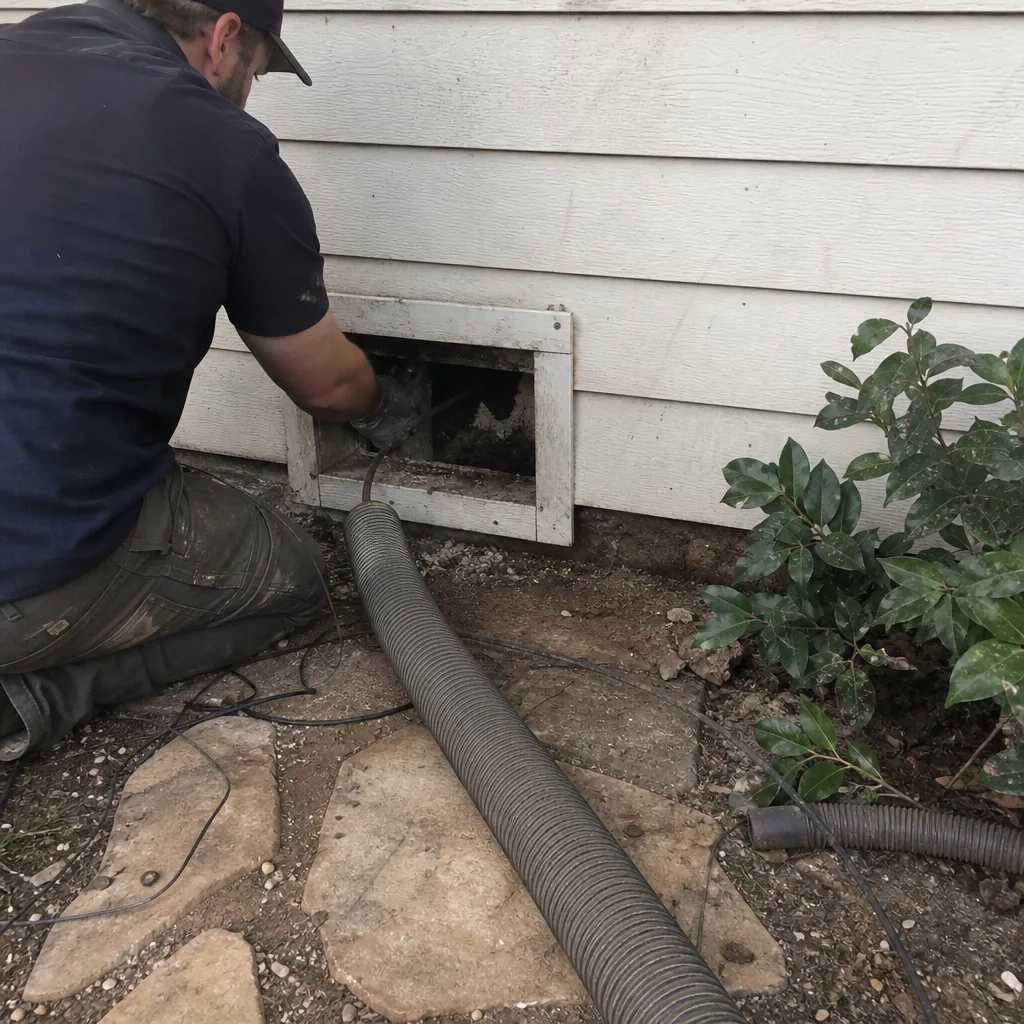 Before
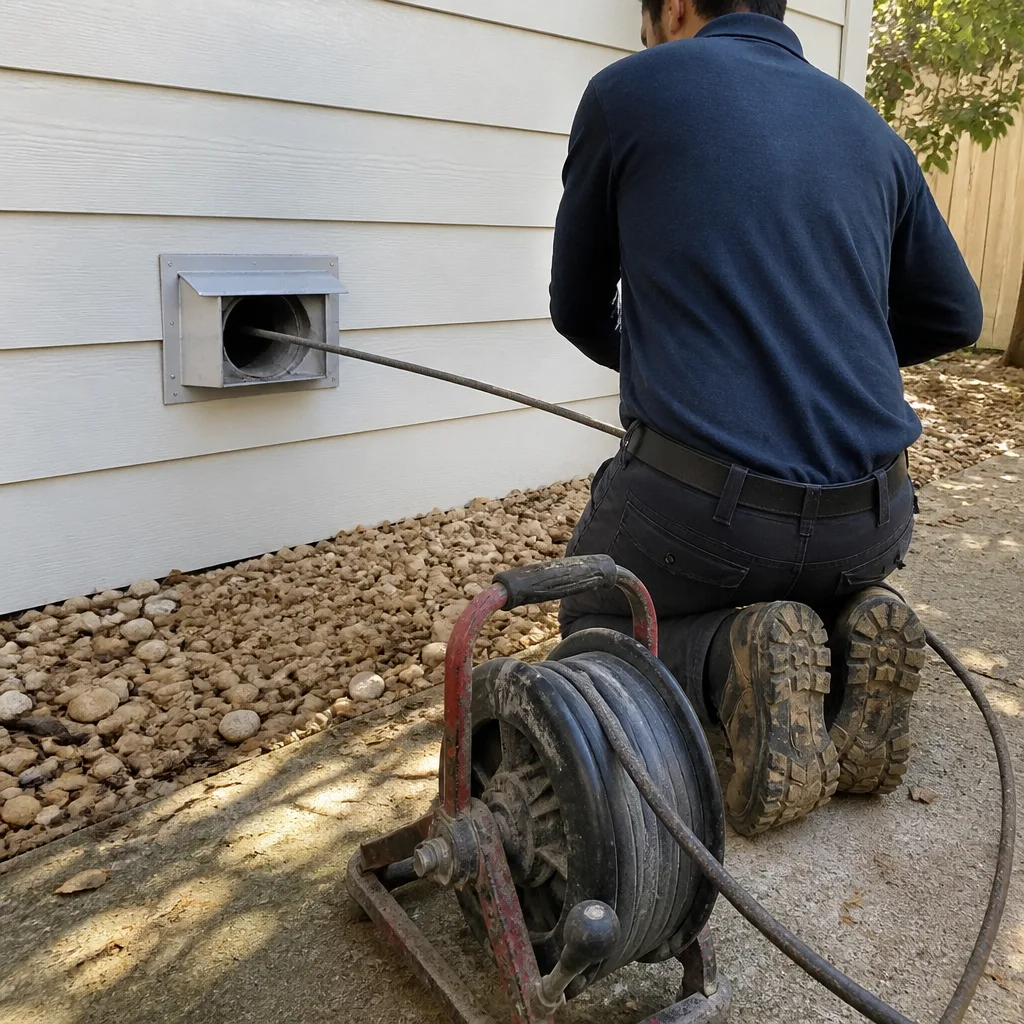 After
After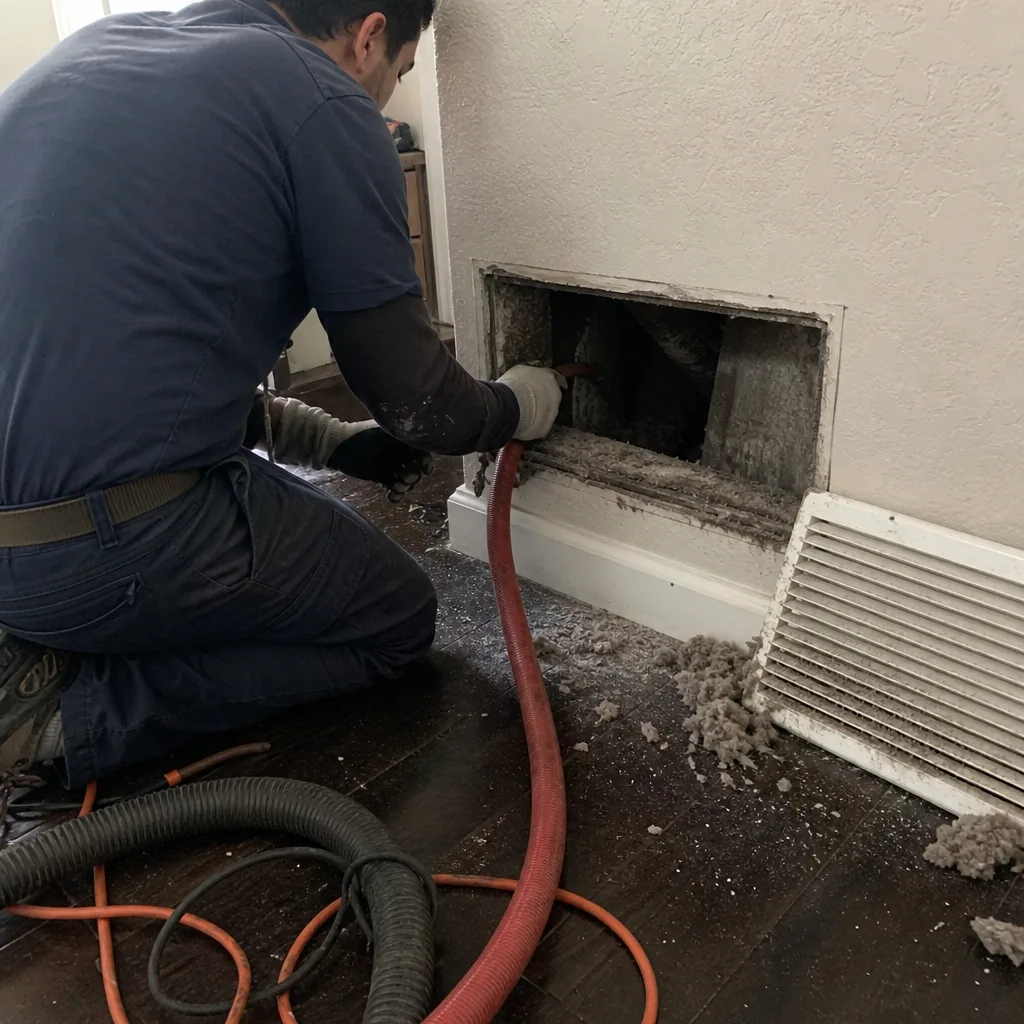 Before
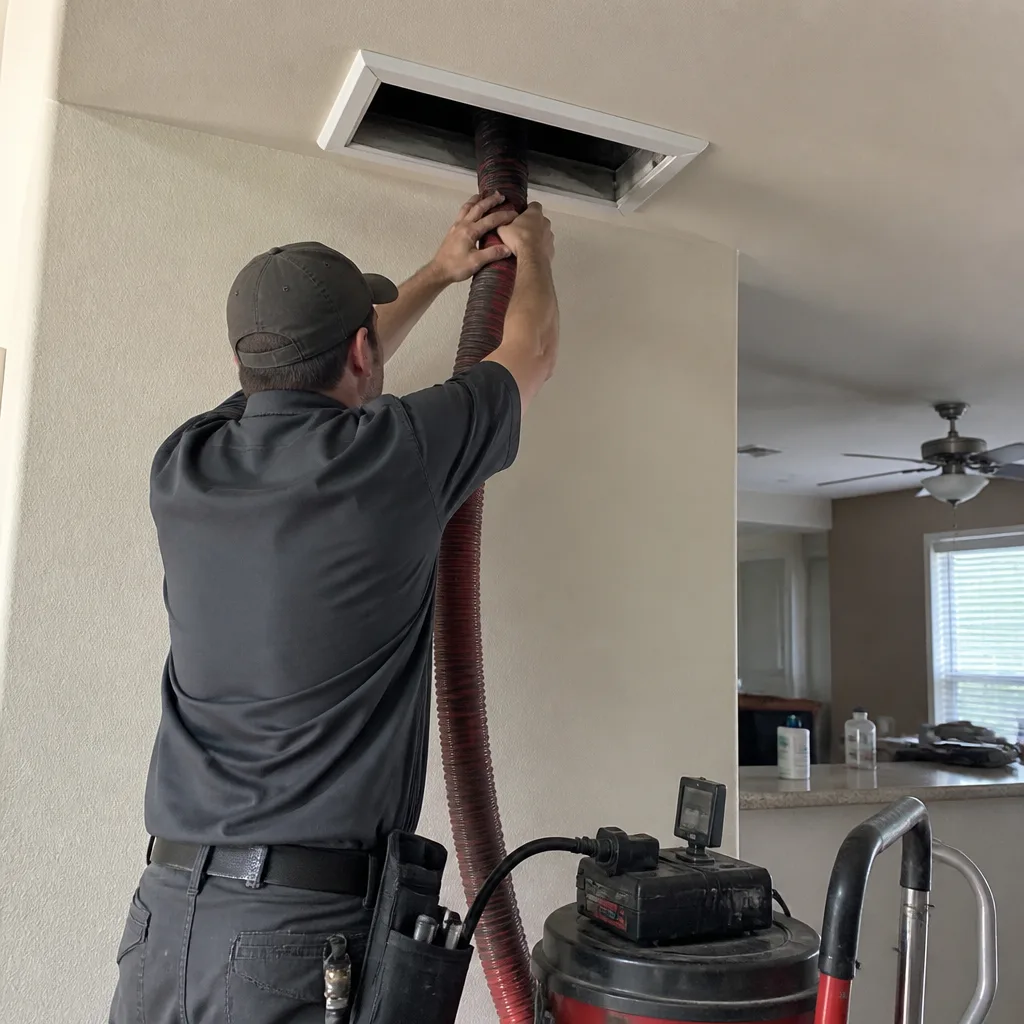 After
After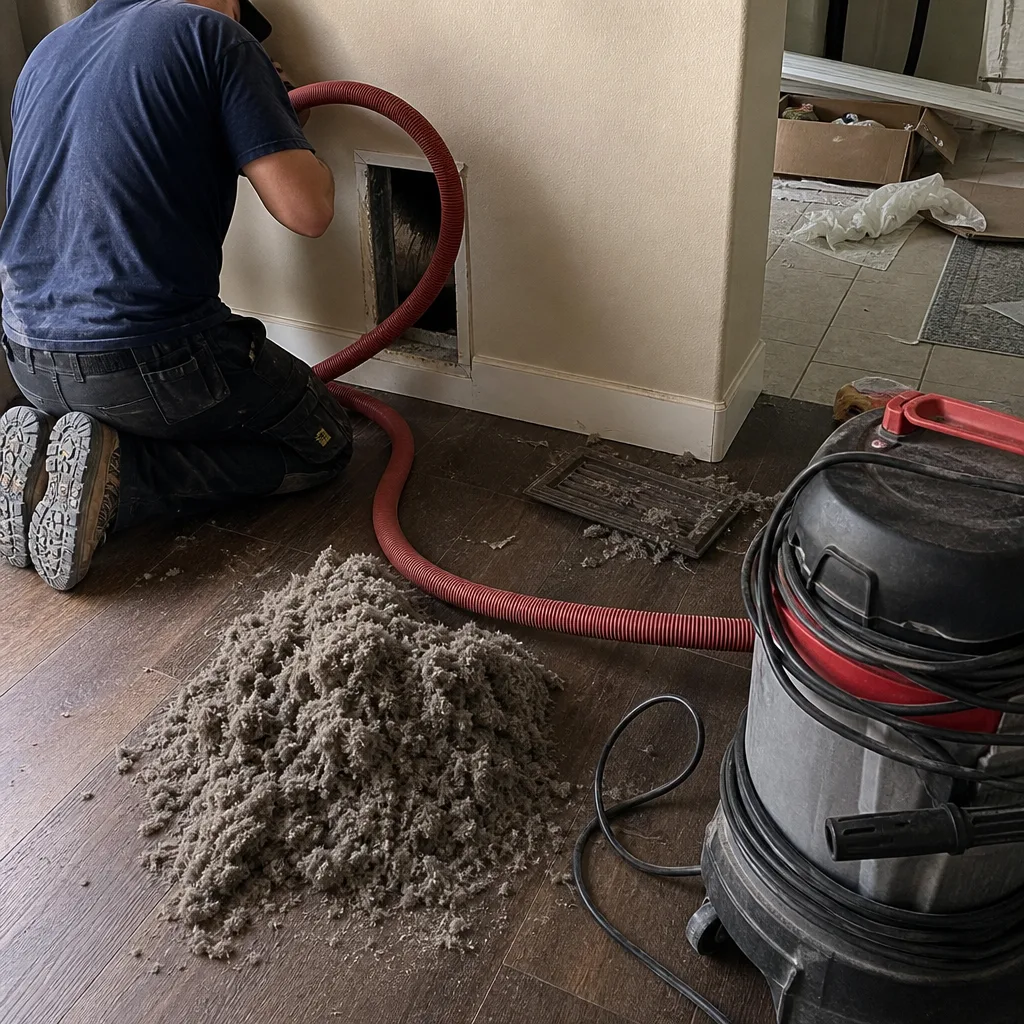 Before
 After
AfterAir Duct Cleaning Cost Breakdown: The Austin Homeowner’s Reference for 2026
A $79 duct cleaning coupon in Austin buys roughly 45 minutes of contact vacuuming at the grilles. A source-removal cleaning of a 2,000 square foot home with 10 to 14 duct runs, performed to NADCA standards, runs $350 to $600 in Austin’s 2026 market. The gap is not markup. It is method, time, and documentation. This guide itemizes every legitimate cost component so any bid can be evaluated against a documented standard rather than a gut feeling, and serves as a companion to our Air Duct Cleaning Maintenance Checklist for Austin Homeowners. You’ll learn how Austin’s attic-heavy construction affects access time, why duct count beats square footage as a pricing basis, what add-ons actually cost, and how to spot a quote designed to inflate after the truck arrives.
Quick Answer
In Austin’s 2026 market, our Air Duct Cleaning services for a typical single-zone home with 10 to 14 duct runs costs $350 to $600 when performed to NADCA source-removal standards using negative-pressure extraction. The price varies by duct count, system accessibility, and whether the home has single or dual-zone HVAC. Add-on services such as dryer vent cleaning ($89 to $150), duct sealing, or UV sanitizer installation are priced separately and should be itemized in writing before work begins.
Table of Contents
- What Legitimate Duct Cleaning Includes (and What It Does Not)
- Austin Market Pricing: The Real Numbers for 2026
- Why Duct Count Beats Square Footage as a Pricing Basis
- Labor Time Breakdown: Where the Hours Go
- Austin Construction and Access Challenges
- Add-On Services: Costs and What They Actually Do
- Red Flags in Low-Bid Quotes
- ROI and Efficiency: What Documented Work Saves in Austin
BeforeAfterWhat Legitimate Duct Cleaning Includes (and What It Does Not)
Legitimate air duct cleaning is source removal: the physical extraction of debris from the entire HVAC distribution system, not just the registers where air exits into rooms. The Air Duct Cleaning in Austin standard we follow at CleanRun specifies cleaning the supply and return ductwork, registers, grilles, diffusers, heat exchangers, cooling coils, drain pans, and the plenum (the central distribution box where conditioned air splits to individual runs).
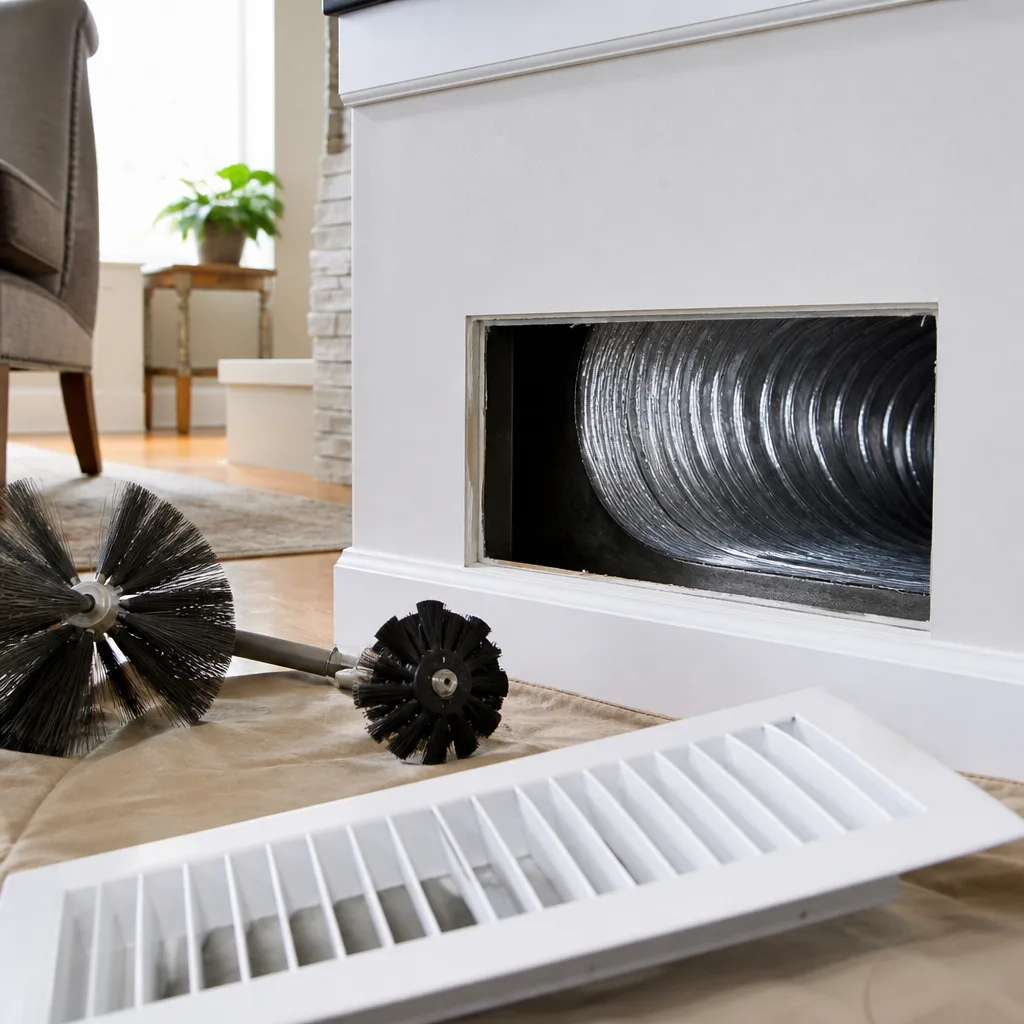
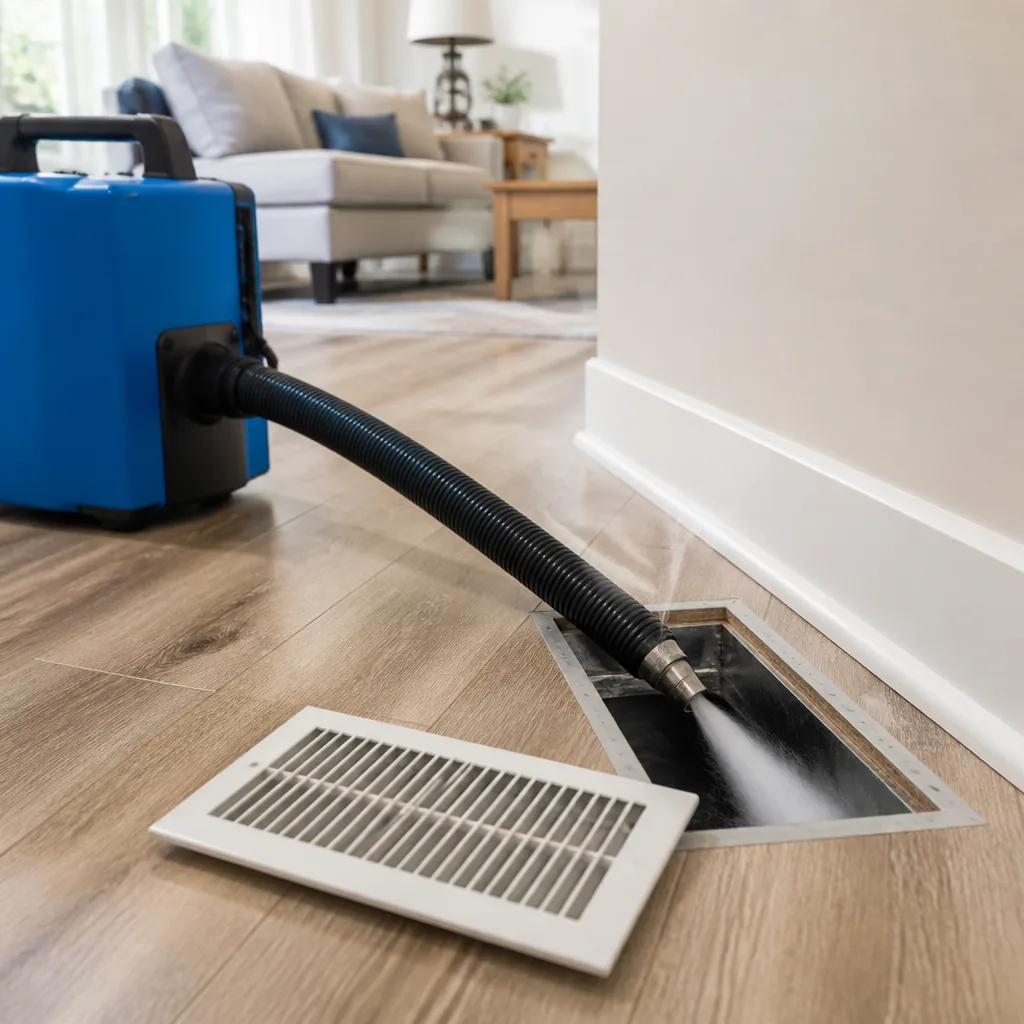
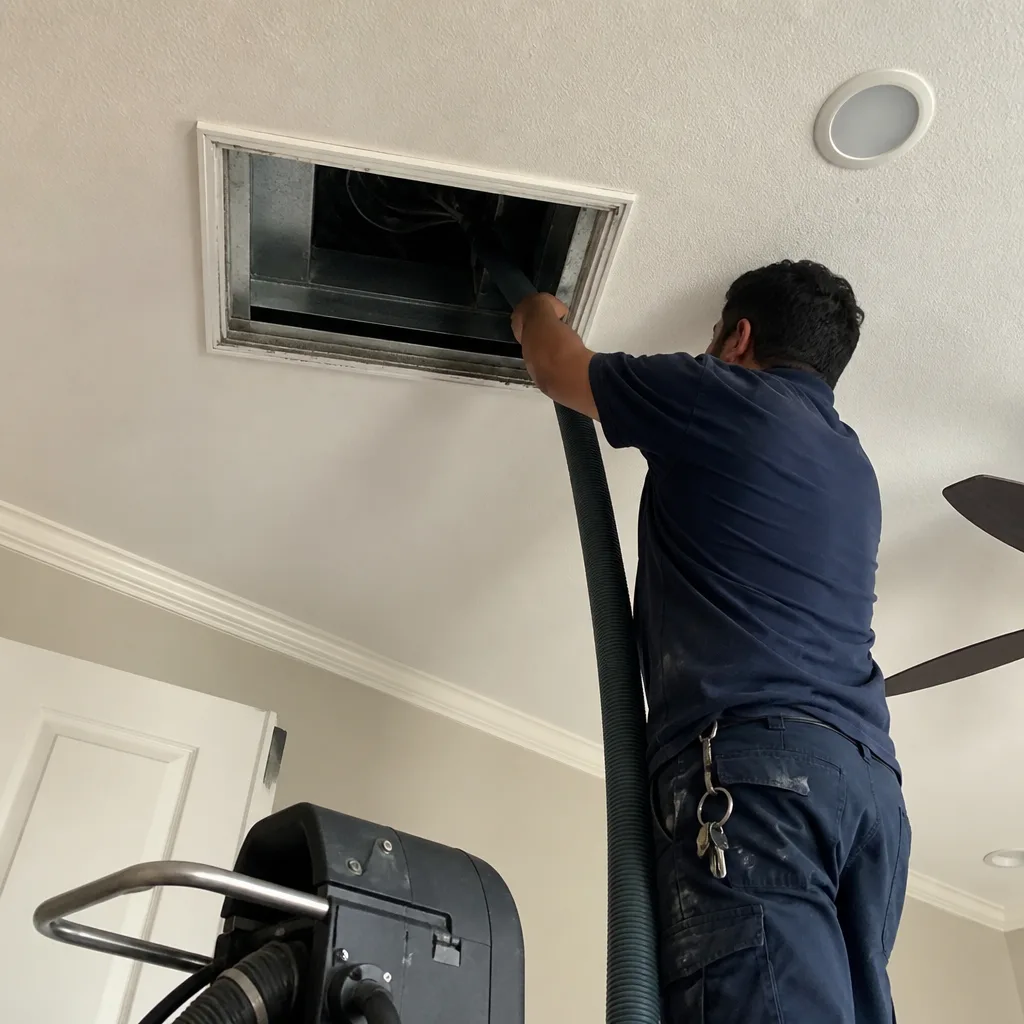
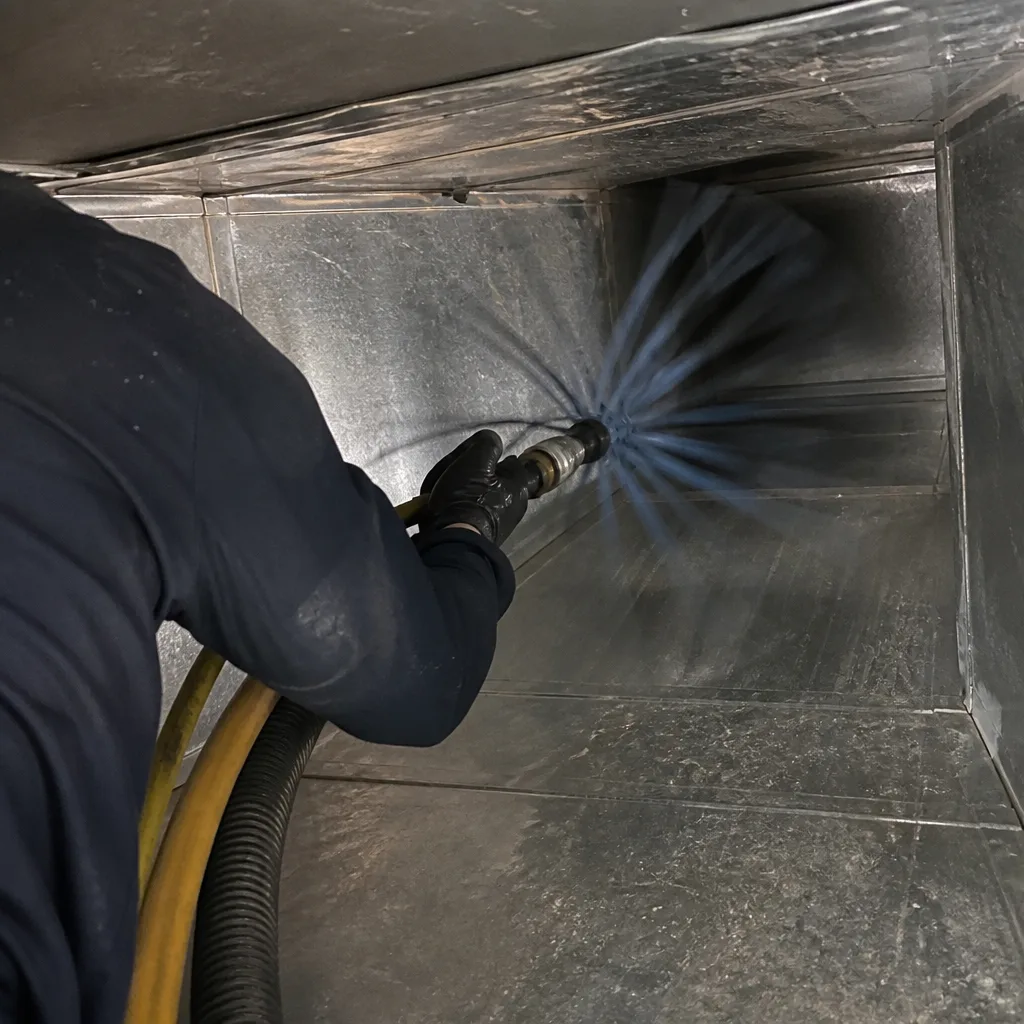
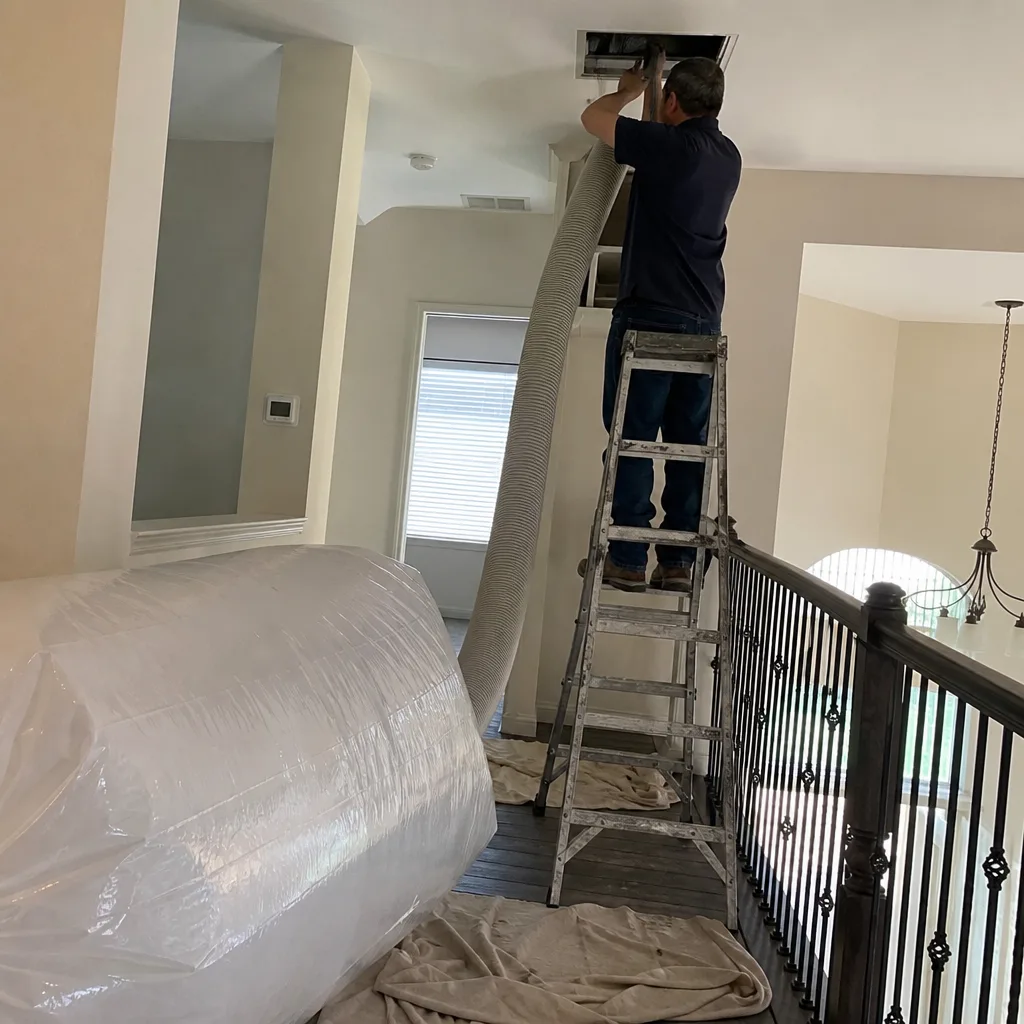
Negative-pressure extraction is the core method. A large vacuum, typically mounted on a truck or portable unit from Nikro or Abatement Technologies, creates suction throughout the system. Agitation tools, brushes, or compressed-air whips dislodge debris so the vacuum captures it rather than pushing it deeper. This is fundamentally different from contact cleaning, where a shop-vac or rotary brush is inserted at each register for a few minutes without system-wide containment.
What legitimate cleaning does not include: spraying a chemical into ducts and calling it clean, using a consumer-grade vacuum with no negative-pressure containment, or cleaning only the first three feet of each run. These methods leave the majority of debris in place. In Austin’s climate, where cooling runs eight to nine months annually and humidity supports microbial growth in stagnant debris, partial cleaning is arguably worse than none because it disturbs colonies without removing them.
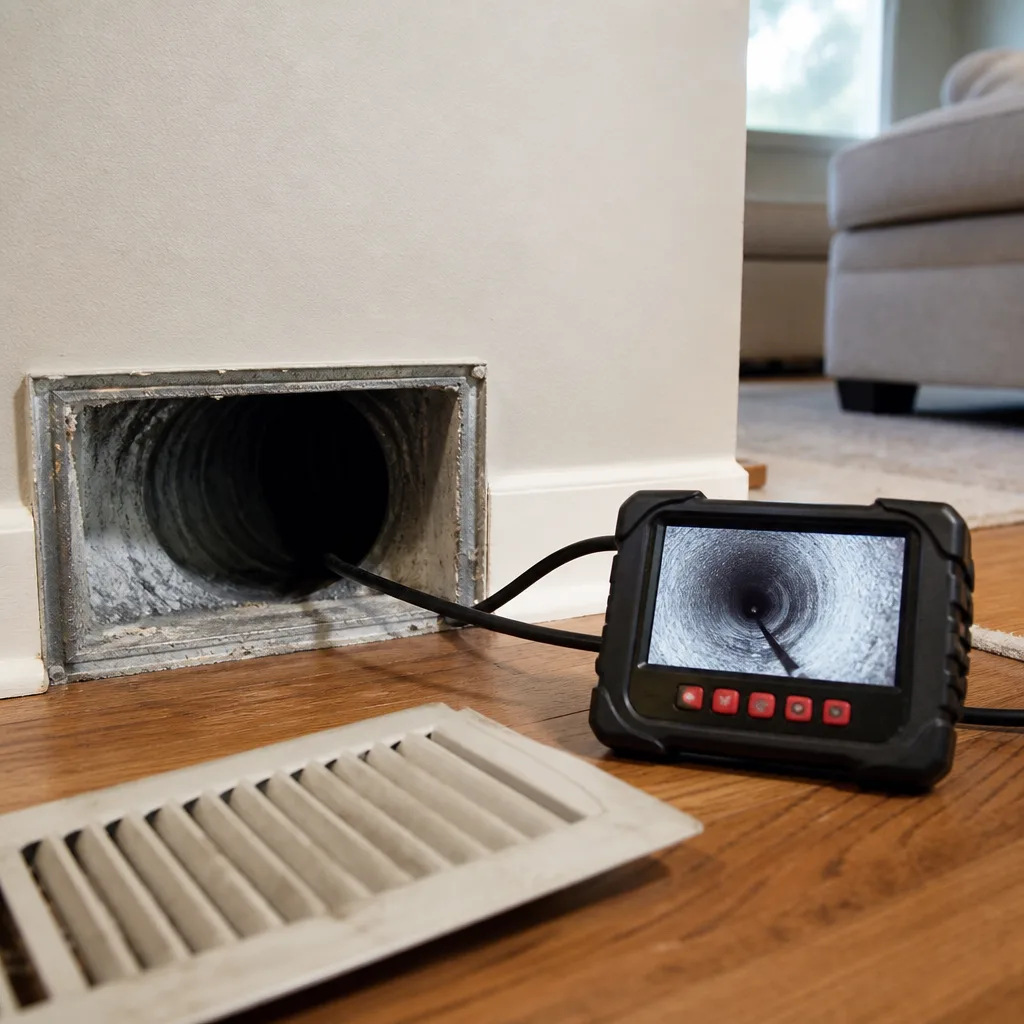
The deliverable matters as much as the method. A documented job produces before-and-after photos of every duct run, a written scope of work, and a final inspection record. At CleanRun, this Documented Photo Record has been standard on every visit since 2013. The customer receives images showing the interior condition of each run before the vacuum connects and after the agitation cycle completes. Without this record, a homeowner has no verification that the full system was addressed.
Austin Market Pricing: The Real Numbers for 2026
The following ranges reflect actual quoted prices from established duct cleaning companies in the Austin metro area during late 2025 and early 2026, collected from customer-provided written estimates and our own competitive monitoring. These are whole-system prices, not per-vent teaser rates.
| Service Description | Austin Market Range | Typical Home Profile |
|---|---|---|
| Single-zone residential cleaning, 8-12 duct runs | $300 - $450 | 1,200-1,800 sq ft, one HVAC unit |
| Single-zone residential cleaning, 13-18 duct runs | $400 - $600 | 1,800-2,800 sq ft, one HVAC unit |
| Dual-zone residential cleaning | $650 - $950 | Two HVAC units, any square footage |
| Dryer vent cleaning (standalone) | $89 - $150 | Any residential dryer vent configuration |
| Dryer vent cleaning (bundled with duct cleaning) | $69 - $120 | Added to whole-system service |
| Duct sealing with mastic, per linear foot | $4 - $8 | Accessible ductwork in attic or crawl |
| UV-C sanitizer installation | $350 - $600 | Single unit, coil-mounted or in-line |
| Whole-home sanitizer/fogging treatment | $150 - $300 | Add-on to cleaning, not a substitute |
Prices at the lower end of each range typically indicate straightforward access, standard flex duct or sheet metal construction, and minimal contamination. Prices at the higher end reflect difficult attic access, heavy debris accumulation requiring extended agitation time, or homes in Austin’s older neighborhoods like Clarksville or Hyde Park where original ductwork may be wrapped in deteriorating insulation that requires careful handling.
These ranges exclude the extreme low bids that populate mailer coupons and social media ads. A $79 “whole house” offer in Austin covers approximately 45 to 60 minutes on site, using portable equipment without negative-pressure containment, and addresses only the register face and immediate boot. The technician may photograph the register area but cannot produce images from inside the duct run because the equipment never enters it.
Why Duct Count Beats Square Footage as a Pricing Basis
Square footage is the pricing basis most homeowners expect. It is also the least accurate predictor of actual cleaning time and equipment deployment. Two homes of identical square footage in Austin can have dramatically different duct configurations based on builder, era, and HVAC design philosophy.
Consider two 2,200 square foot homes in Circle C Ranch and Mueller Development. The Circle C home, built in 1998, might have a single 4-ton HVAC unit with 10 duct runs serving large open rooms. The Mueller home, built in 2015 with green-building certification, might have a dual-zone system with 16 runs serving smaller, individually conditioned spaces. Same square footage. Six additional runs. Roughly 50 percent more cleaning time, agitation cycles, and photo documentation.
Duct count correlates directly with:
- Number of access cuts required if the system lacks sufficient clean-out ports
- Linear feet of hose and agitation cable deployed
- Number of before-and-after photo pairs in the documented record
- Total negative-pressure vacuum runtime
- Technician hours on site
A legitimate quote should specify the duct count the price is based on and note how additional runs are handled. At CleanRun, our written price under Haven Standard Clause 1 states the included duct count and the per-run price for any runs discovered during inspection that exceed the initial scope. This prevents the “we found extra vents” mid-job price adjustment that defines bait-and-switch operations.
Square footage has one legitimate use: as a rough screening tool for homeowners calling multiple companies. If a company quotes $400 for “any house up to 3,000 square feet,” that should prompt questions about duct count, equipment type, and whether the price holds after a site visit or floor plan review.
Labor Time Breakdown: Where the Hours Go
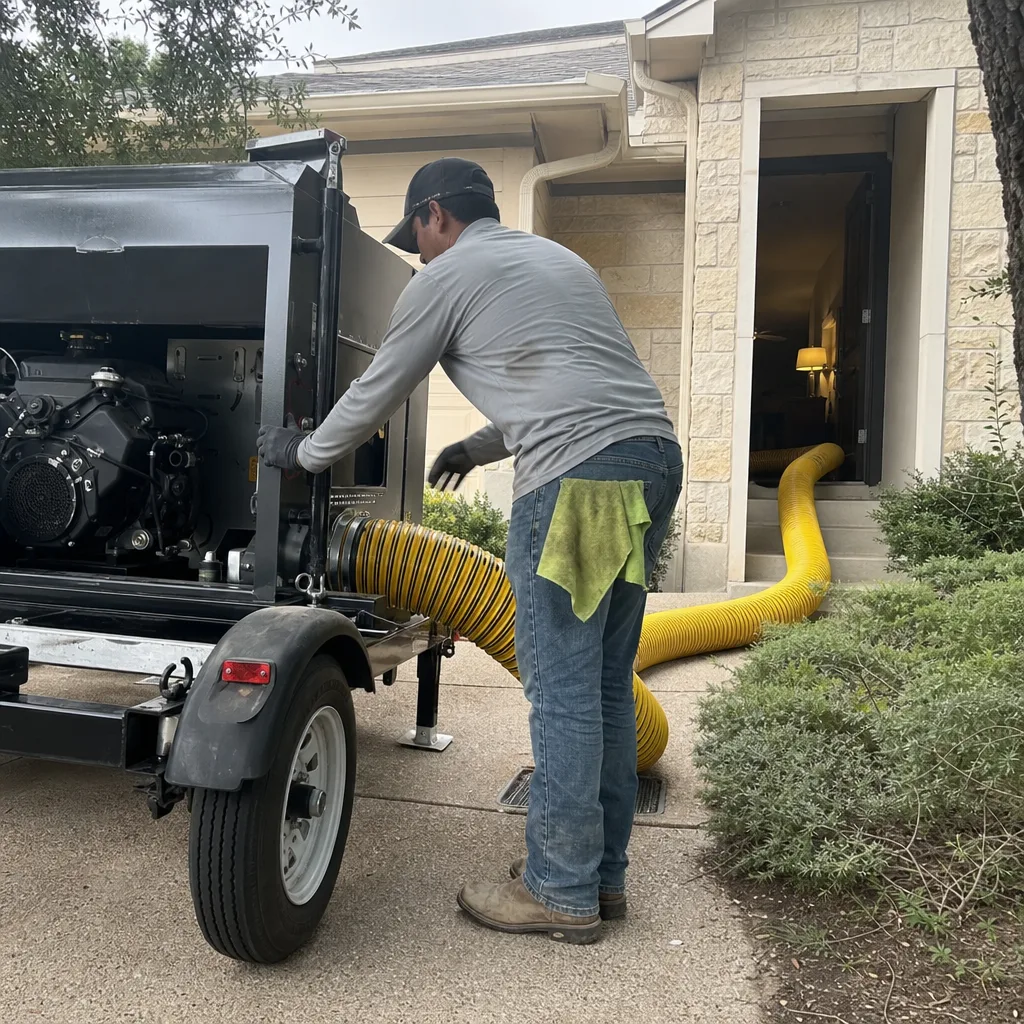
The time difference between a coupon cleaning and a NADCA-method job is not marginal. It is the difference between a 45-minute visit and a 3.5 to 5-hour operation. Understanding where the hours go explains why the price gap exists and why it is not negotiable without cutting documented steps.
- Equipment setup and system protection (30-45 minutes). The vacuum unit is positioned, hoses are routed to the HVAC location, and drop cloths or protective barriers are placed at work areas. Return and supply plenums are accessed. If the system lacks a main trunk clean-out, an access port is cut and later sealed.
- Pre-cleaning inspection and photography (30-45 minutes). Each duct run is accessed with a borescope or inspection camera. Images are captured showing debris type, accumulation depth, and any damage to duct walls or insulation. In Austin’s market, we regularly see 2 to 4 inches of compacted debris at the first elbow in return runs from homes near construction zones or with recent foundation work.
- Negative-pressure extraction and agitation (2-3 hours for 12-14 runs). Each run is individually addressed: the vacuum maintains system-wide negative pressure while agitation tools dislodge debris. A typical supply run requires 8 to 12 minutes of active agitation. Returns, which pull air and debris toward the filter, often require 12 to 18 minutes. Long runs in Austin’s sprawling single-story homes, particularly in Steiner Ranch or River Place where ducts may traverse 40+ feet of attic, extend this time.
- Component cleaning (30-45 minutes). Coils, drain pans, and blower assemblies are addressed if included in the scope. These components are not “ducts” but directly affect airflow and air quality. Cleaning them without cleaning ducts is incomplete; cleaning ducts without addressing them leaves a contamination source in place.
- Post-cleaning photography and documentation (20-30 minutes). Each run is re-inspected and photographed. The photo record is compiled. The written scope is finalized with any notes on conditions found, repairs recommended, or limitations encountered.
- Equipment breakdown and site restoration (15-20 minutes). Access ports are sealed with code-compliant materials. Drop cloths are removed. The work area is left as found.
A shop-vac visit skips steps 1, 2, and 5 in practice. The equipment is a portable unit carried to each register. There is no system-wide negative pressure, no pre-cleaning documentation, and typically no post-cleaning verification. The technician may spend 3 to 5 minutes per register, totaling 45 to 75 minutes for a 12-run home, then depart.
The labor cost difference is not theoretical. At Austin’s prevailing wage rates for trained HVAC technicians, the 3.5-hour NADCA method carries approximately $140 to $200 in direct labor cost alone, before equipment amortization, fuel, insurance, and documentation systems. The $79 coupon covers perhaps $30 in labor, with the remainder consumed by customer acquisition cost and the upsell that typically follows.
Austin Construction and Access Challenges
Austin’s housing stock spans six decades of construction methods, and the attic environment where most ductwork lives varies dramatically by era and neighborhood. These variations directly affect cleaning time and therefore price.
Pre-1990 homes in central Austin. Tarrytown, Bryker Woods, and parts of East Austin contain original ductwork in tight, unconditioned attics with blown-in insulation. Ducts may be wrapped in asbestos-containing material (ACM) or early fiberglass that crumbles on contact. Access requires careful navigation of joist bays, and disturbed insulation must be replaced or repaired. Cleaning time extends 30 to 60 minutes, and some homes require asbestos testing before work proceeds.
1990-2010 suburban construction. Circle C, Avery Ranch, and Cedar Park homes of this era typically have flex duct in ventilated attics. The duct is lightweight and accessible, but the plastic inner liner degrades in Austin’s heat, becoming brittle after 15 to 20 years. Agitation must be gentle to avoid tearing. We regularly find disconnected runs in this vintage, particularly at plenum connections where the zip-tie or clamp has failed. A disconnected run cannot be effectively cleaned until reconnected, adding repair time.
Post-2010 energy-efficient builds. Mueller, Easton Park, and Whisper Valley homes often feature sealed attics or conditioned crawl spaces with spray-foam insulation. Ductwork is within the thermal envelope, which improves efficiency but complicates access. Some sealed attics have no permanent access hatch, requiring temporary panel removal. Spray foam may encase duct sections, making damage assessment difficult without partial excavation.
Hill Country and waterfront homes. Westlake, Lakeway, and Lake Travis properties frequently have multi-level HVAC systems with ductwork in conditioned and unconditioned spaces, including exterior soffits and pier-and-beam crawl spaces subject to moisture. These configurations add zone complexity and may require additional equipment mobilization.
The access factor is why phone quotes without floor plan review or site visit are unreliable. A company quoting $350 for “any house” has not accounted for a 45-minute attic navigation in Tarrytown or a sealed-attic access in Mueller. The price will adjust on arrival, or the work will be abbreviated to fit the quoted time.
Add-On Services: Costs and What They Actually Do
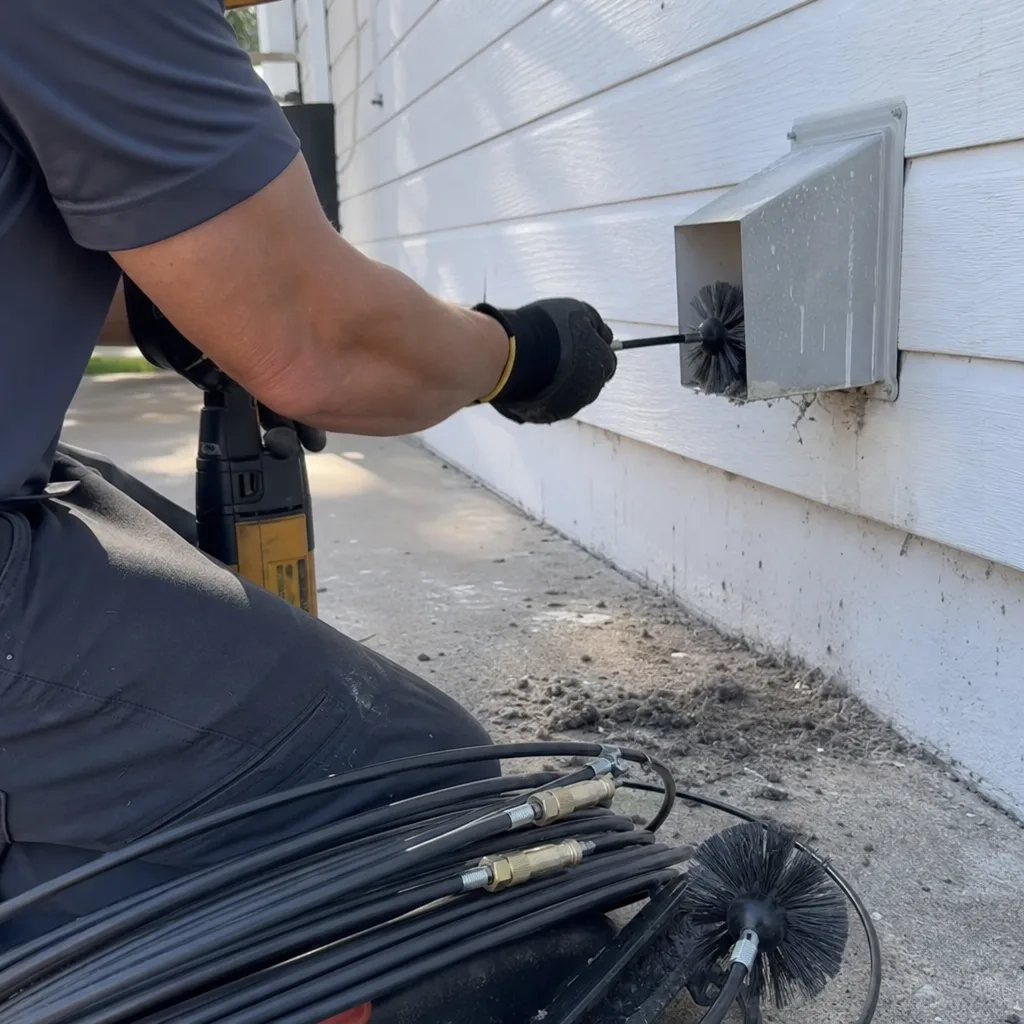
Add-ons should be priced and described separately from the core duct cleaning, with each service’s scope defined in writing. Bundling everything into a single “whole house” price obscures what is actually being performed and complicates comparison between bids.
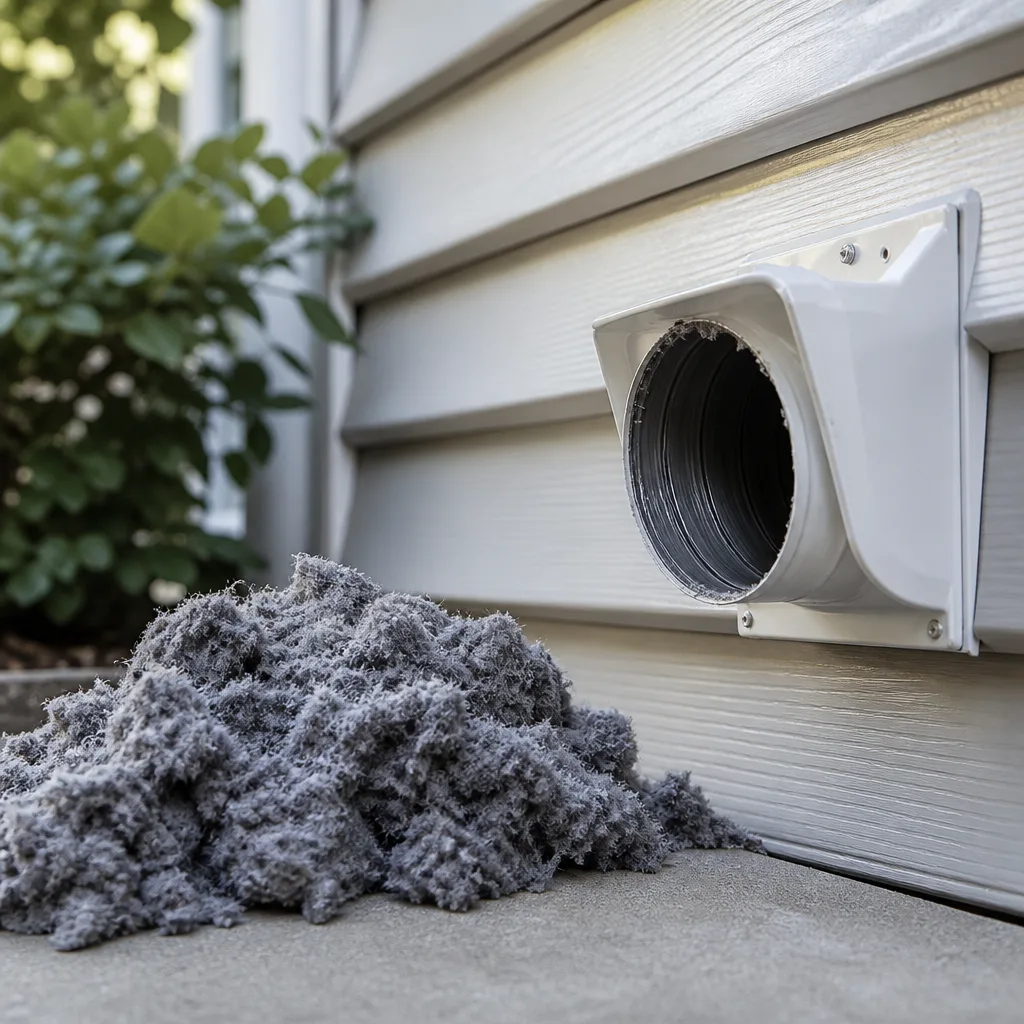
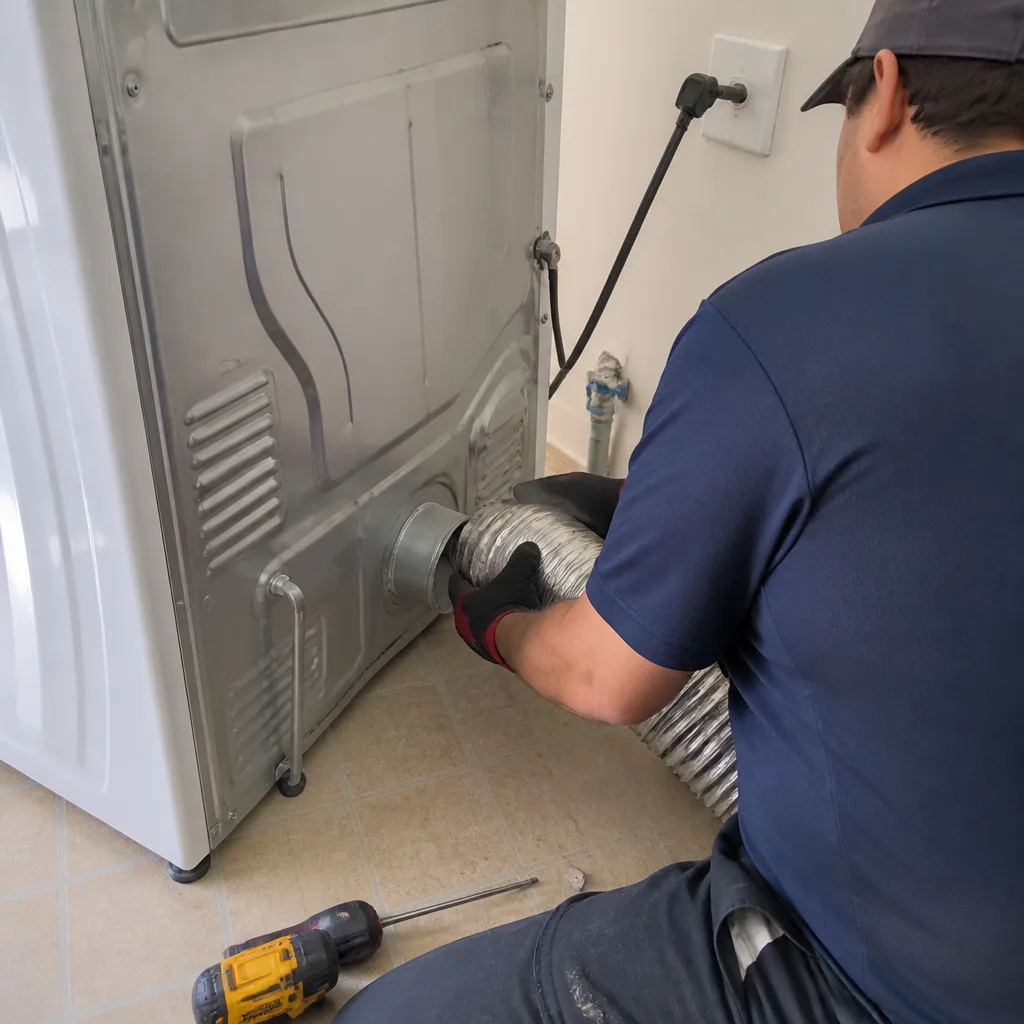
Dryer vent cleaning. Market range in Austin: $89 to $150 standalone, $69 to $120 when bundled with duct cleaning. This service addresses the exhaust duct from dryer to exterior termination, not the lint screen inside the dryer. A clogged vent extends drying time, increases fire risk, and in Austin’s hard-water environment can compound with mineral buildup in the moisture exhaust. The Dryer Vent Cleaning in Austin service at CleanRun includes airflow measurement before and after, with the reading documented in the job record. A properly flowing vent should move 1,500+ feet per minute at the exterior termination.
Duct sealing with mastic. $4 to $8 per linear foot of accessible duct. Mastic is a thick, fiber-reinforced sealant applied to joints, seams, and connections in the duct network. It is not tape; tape fails in Austin’s attic heat within 3 to 5 years, while properly applied mastic lasts the life of the duct. Sealing is performed after cleaning so the mastic adheres to clean surfaces. The primary benefit is leakage reduction: Austin Energy’s published efficiency data indicates that typical unsealed duct systems lose 20 to 30 percent of conditioned air to attic or crawl space. Sealing can recover 15 to 25 percentage points of that loss, with cooling-bill reductions of 10 to 20 percent in documented cases.
UV-C sanitizer installation. $350 to $600 for a single unit, coil-mounted or in-line. UV-C lamps emit ultraviolet light at germicidal wavelengths, suppressing microbial growth on wet evaporator coils and in the immediate plenum area. They do not sterilize air passing through the duct at speeds typical of residential HVAC; the exposure time is insufficient. What they do well is prevent the biofilm buildup that reduces coil efficiency and produces musty odors. In Austin’s cooling-dominant climate, where coils operate wet 8 to 9 months annually, this is a legitimate application. They are not a substitute for physical debris removal.
Whole-home sanitizer or fogging treatment. $150 to $300 as an add-on. These treatments apply an EPA-registered antimicrobial to interior duct surfaces after cleaning. The chemical does not remove debris; it addresses residual microbial contamination on clean surfaces. It should not be sold as a primary cleaning method, and homeowners with chemical sensitivities should request SDS sheets before agreeing.
Equipment note: CleanRun’s service roster includes professional-grade tools from Rotobrush, Nikro, Abatement Technologies, Honeywell, and Aprilaire. These are trade-recognized brands with published specifications, not proprietary or unverifiable equipment. Customers can research manufacturer capabilities independently before approving work.
Red Flags in Low-Bid Quotes
The $79 coupon survives because the math is designed to be invisible until the technician is in the home. Recognizing the structural elements of a bait-and-switch quote protects against the invoice that quadruples on the kitchen table.
Per-vent pricing. A quote of “$15 per vent” sounds precise. A typical Austin home has 10 to 14 supply registers and 2 to 4 return grilles. At $15 each, that is $180 to $270 - already above the coupon price, and the coupon rarely specifies whether returns are included. Some companies then classify certain grilles as “main returns” or “jumper ducts” at higher rates. The per-vent structure also incentivizes the technician to work quickly at each opening rather than thoroughly, since additional time reduces job profitability.
“Whole house” without a duct count. Any quote that does not specify the number of duct runs included is unenforceable. The company can claim the price applied to a smaller scope than the home actually contains, or discover “additional” runs mid-job. A written quote under Haven Standard Clause 1 specifies the count and the price for runs beyond it.
Quotes without site visit or floor plan review. In Austin’s varied construction environment, phone quotes based on square footage alone cannot account for access conditions. A legitimate company will request a floor plan, perform a brief video walkthrough, or schedule an in-home inspection before committing to a written price. CleanRun offers this inspection at no cost; the written price delivered afterward is binding.
Equipment that cannot be verified. A truck-mounted vacuum system from a recognized manufacturer (Nikro, Abatement Technologies, etc.) represents a capital investment that correlates with serious operation. Portable units can be effective for certain applications, but a company that cannot name its equipment brand or show the unit on request may be operating consumer-grade tools inadequate for source removal.
Absence of documentation commitment. If a company will not commit in writing to before-and-after photos of every duct run, the verification mechanism does not exist. Verbal assurances of “we’ll show you” are not deliverables.
Pressure to decide immediately. The “today only” discount is a classic sales tactic unrelated to service value. A written price under the Haven Standard is valid for a defined period without urgency manipulation.
ROI and Efficiency: What Documented Work Saves in Austin
The return on professional duct cleaning and sealing is measurable in three domains: energy cost, equipment longevity, and indoor environmental quality. In Austin’s climate, the energy case is the most quantifiable.
Austin Energy publishes efficiency guidance indicating that duct leakage in typical existing homes ranges from 20 to 30 percent of total airflow. This is conditioned air paid for that never reaches the living space. In a 2,500 square foot home with a 5-ton system, that leakage represents approximately 1 to 1.5 tons of effective cooling capacity lost to the attic.
Documented duct sealing, performed after cleaning on clean surfaces, typically reduces leakage to 5 to 10 percent. The cooling load reduction translates directly to runtime savings. Austin Energy’s published estimates suggest 10 to 20 percent cooling bill reduction in homes with previously unsealed ducts, with higher savings in older homes and those with attic ductwork. At Austin’s summer residential electricity rates and typical cooling-season usage of 2,500 to 4,000 kWh monthly, annual savings of $200 to $500 are realistic for homes with significant prior leakage.
The payback period for cleaning plus sealing typically falls between 2 and 4 years, depending on pre-existing leakage severity and electricity rate tier. This does not include the avoided cost of premature compressor failure from excessive runtime, or the comfort improvement from rooms that previously received inadequate airflow due to disconnected or leaking runs.
Indoor environmental quality returns are harder to monetize but significant in Austin’s allergy profile. The city’s cedar pollen season, spring oak pollen peaks, and year-round mold spore loads from humidity create a high baseline allergic load. Clean ductwork does not eliminate outdoor pollen, but it removes the accumulated reservoir that recirculates between outdoor peaks. For households with asthmatic members, the reduction in airborne particulate reservoir is a legitimate health consideration.
The HVAC Cleaning in Austin service scope addresses the components that interact most directly with this reservoir: coils, drain pans, and blowers that can harbor microbial contamination independent of duct conditions.
Common Mistakes to Avoid
- Accepting a phone quote without duct count confirmation. A price based on square footage alone cannot be compared across bids and invites mid-job price adjustment when the actual run count exceeds the estimator’s assumption.
- Treating sanitizer as a substitute for physical cleaning. Chemical treatments address microbial films on clean surfaces. They do not remove the debris that feeds microbial growth. A quote that leads with sanitizer and minimizes mechanical extraction is selling decoration, not remediation.
- Ignoring attic access conditions in older Austin neighborhoods. Homes in Clarksville, Hyde Park, or Bouldin Creek may have asbestos-wrapped ducts or deteriorating insulation. A company that does not inspect before quoting may disturb hazardous material without containment protocol.
- Comparing coupon prices to full-method quotes as equivalents. The $79 offer and the $450 NADCA-method service are different products with different deliverables. Comparing them on price alone is comparing a car wash to an engine rebuild.
- Neglecting dryer vent cleaning as a bundled service. In Austin’s lint-heavy environment with hard water mineral contribution, dryer vents clog faster than many homeowners realize. Bundling with duct cleaning typically saves $30 to $50 versus standalone scheduling.
- Failing to request the photo record before payment. The documented deliverable is your verification. A company that produces it readily has performed the work. A company that deflects or offers excuses has not.
- Overlooking the written warranty scope. The 365-Day Done Right Promise at CleanRun specifies that if work is not right, we make it right - backed in writing, not subject to manager discretion. Vague “satisfaction guaranteed” language without defined remedy is not equivalent.
When to Call a Professional
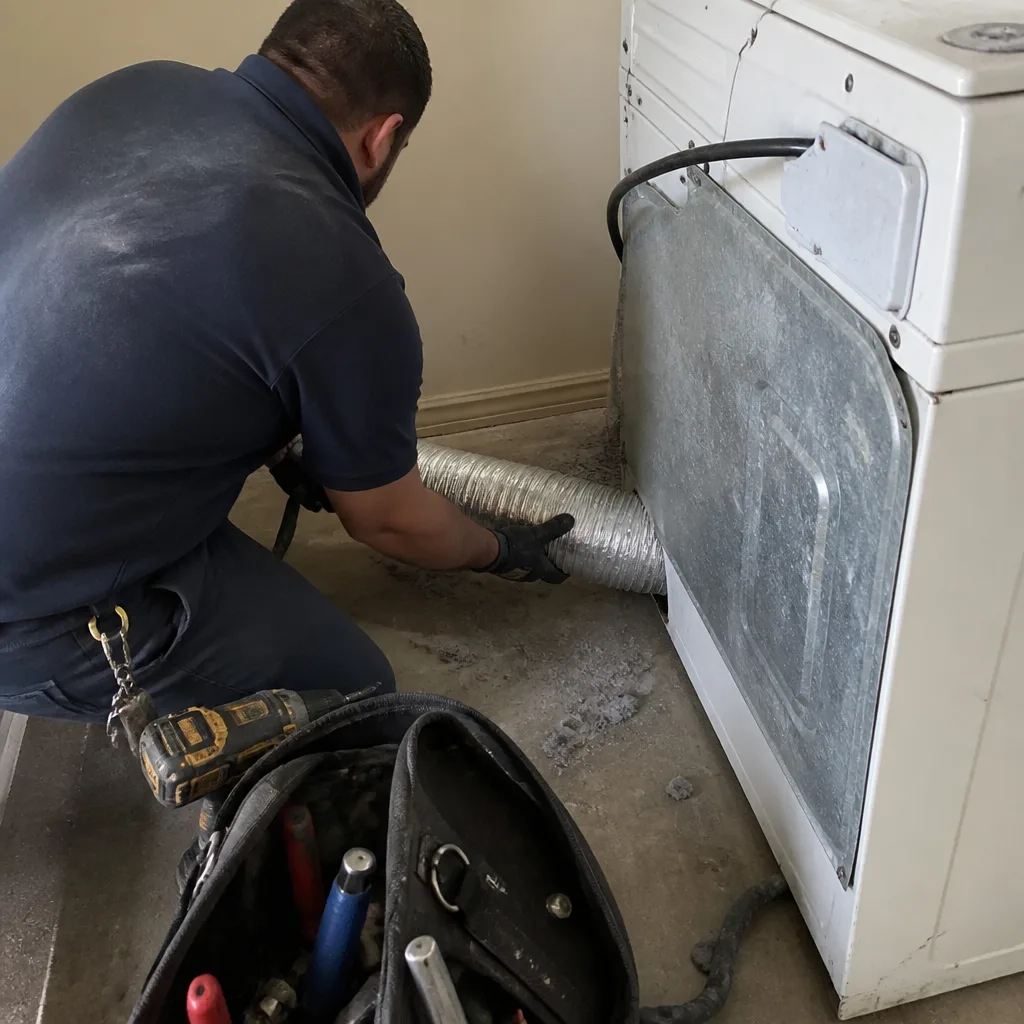
Call for professional duct cleaning when you can see debris accumulation at registers, when airflow is noticeably uneven between rooms, when your HVAC filter loads faster than manufacturer specifications suggest, or when you’ve completed renovation work that generated drywall dust or sawdust. In Austin’s market, we also recommend inspection after foundation repair or major landscaping work that may have disturbed underground duct connections in pier-and-beam homes. For additional guidance, see Air Duct Cleaning Permits, Codes & Inspections in TX: What You Need to Know.
Do not attempt DIY cleaning of the full duct network. Consumer vacuums lack the negative-pressure capacity to contain dislodged debris, and without borescope verification you cannot confirm results. The rotary brushes sold at hardware stores can damage flex duct liners and dislodge connections.
CleanRun Air Duct Cleaning Austin offers free estimates throughout Austin - call (737) 243-9544 to schedule a written quote with no obligation. Every estimate includes a duct count, access assessment, and itemized pricing under Haven Standard Clause 1.
Frequently Asked Questions
A complete residential duct cleaning in Austin costs $350 to $600 for a typical single-zone home with 10 to 14 duct runs, and $650 to $950 for dual-zone systems. The price depends on duct count, system accessibility, and contamination level, not square footage alone. Call (737) 243-9544 for a written estimate specific to your home - estimates are free and include a duct count.
The price gap reflects different service definitions. A $79 to $149 quote typically covers contact vacuuming at registers for 45 to 60 minutes without system-wide negative-pressure extraction or documentation. A $350 to $600 quote covers 3.5 to 5 hours of source-removal cleaning with agitation, negative-pressure containment, and before-and-after photography of every duct run. The cheaper service leaves most debris in place and provides no verification.
Request a documented photo record showing the interior of every duct run before and after cleaning. At CleanRun, this is standard on every job and delivered as part of the closing documentation. Without dated, location-labeled images from inside the ductwork, you have only the technician’s word. A legitimate company produces this record without being asked.
For most Austin homes, every 3 to 5 years is adequate under normal conditions. Homes with pets that shed heavily, residents with significant allergies, recent construction activity, or located near major roadways or construction zones may benefit from 2 to 3 year intervals. Annual cleaning is rarely necessary unless specific contamination events occur. The NADCA guideline of “as needed” based on inspection is more accurate than any fixed calendar interval.
Yes, for homes with unsealed attic ductwork. Austin Energy data indicates typical unsealed ducts lose 20 to 30 percent of conditioned air. Sealing recovers 15 to 25 percentage points, with cooling bill reductions of 10 to 20 percent in documented cases. In a market where cooling dominates 8 to 9 months annually, the payback period is typically 2 to 4 years. Sealing should be performed after cleaning so mastic adheres properly.
Duct cleaning addresses the distribution network: supply and return ductwork, registers, and plenums. HVAC cleaning adds the mechanical components: evaporator coils, condensate drain pans, blower assembly, and heat exchangers. The CleanRun Air Duct Cleaning Austin home service can include both scopes, but they are distinct operations with different equipment and time requirements. Cleaning ducts without addressing contaminated coils leaves a significant contamination source active.
The Bottom Line
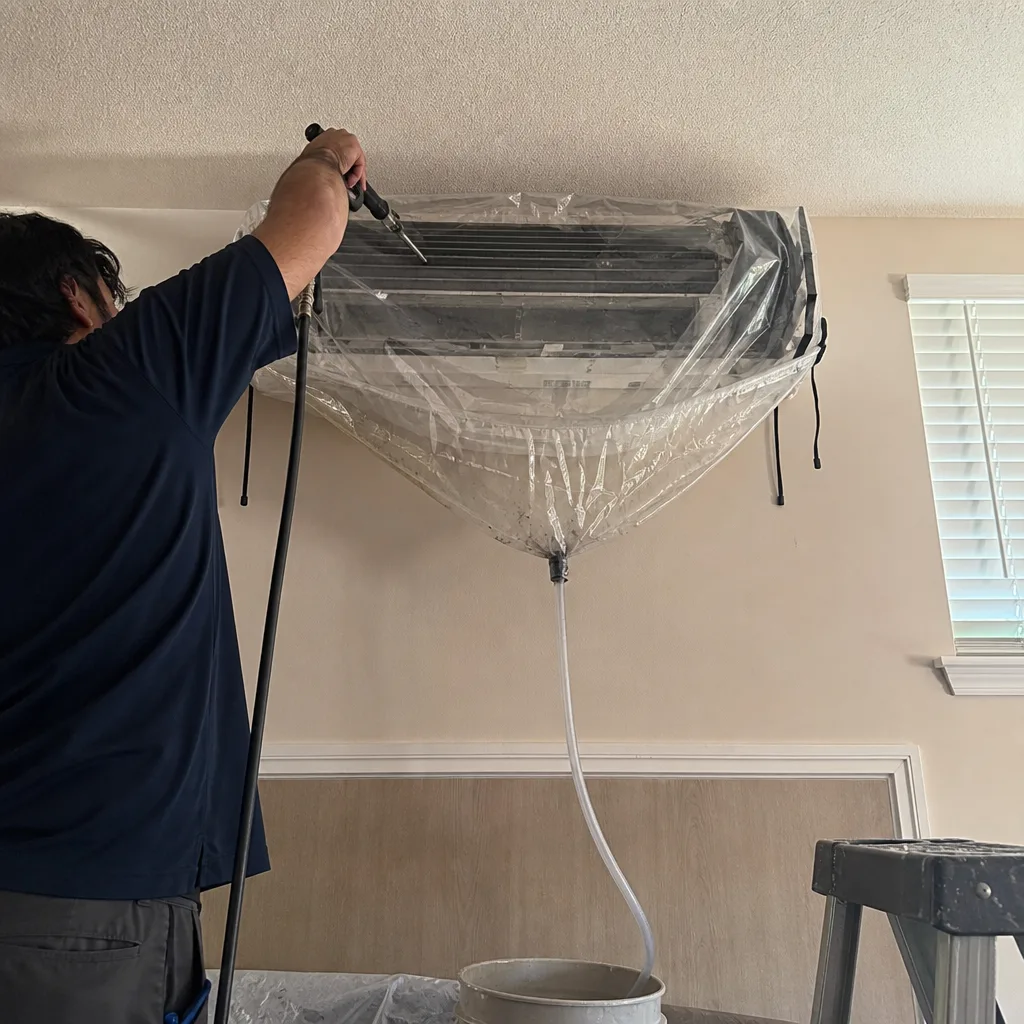
Air duct cleaning in Austin costs what it costs because of verifiable labor time, equipment capacity, and documentation standards. The $350 to $600 range for a typical single-zone home reflects 3.5 to 5 hours of methodical work with negative-pressure extraction, agitation, and photographic verification - not a premium, but a transparent accounting. The $79 alternative is a different product entirely, one that disturbs debris without removing it and leaves no record behind. Evaluate every bid against the components itemized in this guide: duct count basis, equipment specification, labor time, documentation commitment, and written price validity. A quote that cannot answer these specifics in writing is not a quote. It is an opening offer.
Written by Tomas Reyes, Owner at CleanRun Air Duct Cleaning Austin, serving Austin since 2013.